How U8's Football Drills Stay Effective When Sessions Focus on One Simple…
For U8s, effective practice comes from keeping things simple: one clear objective, lots of ball time and game-like repetition. This approach matches what coaching research and practical guides recommend for very young players.
Quick answer
U8's football drills work best when a session uses a single, age-appropriate objective delivered through playing forms and small-sided activities that increase repetition, clarity and enjoyment.
What you will learn here
- Why one objective helps attention and retention for U8 players.
- How to shape space, numbers and rules so drills become effective playing forms.
- Practical coach behaviours: simple language, clear demos and limited corrections.
Quick access
What beginner coaching drills really need to do
At U8 the job of a drill is not to teach complex tactics but to create repeated, meaningful ball contacts and simple decision moments that look like the game. Verified coaching guidance emphasises ball time, fun and a very small number of coaching points. That means drills should:
- maximise touches for each player; and
- present one clear behaviour or choice to rehearse (for example: pass to a teammate, turn with the ball, or dribble into space).
Research and practice summaries recommend using playing-form activities and small-sided games because they combine technical work with decisions similar to match situations, increasing the chance that what is practised will transfer into play.
Simplicity, clarity and attention span
Children in the U6–U9 range learn best when coaching is brief, direct and limited in scope. A single coaching objective keeps verbal instruction short and allows coaches to repeat a demonstration or key phrase without confusing young players.
Limiting content reduces cognitive load: players get more consistent repetition of the same action or decision, which supports retention. Practical coaching templates and guides for very young players consistently advise one or very few objectives per activity for this reason.
How young players actually learn early skills
Learning at U8 is driven by experience—frequent, successful attempts at a simple task build both skill and confidence. Game-based pedagogies are supported by randomized trials and observational studies: small-sided games naturally create the problems players will face in matches, so each repetition includes perception, choice and execution.
Because the playing form integrates decision-making, a single objective (for example: keep possession through short passes) becomes the lens through which many small actions are practised together, improving match transfer more efficiently than isolated technical drills alone.
Session organisation and repetition without chaos
Organise a U8 session around one explicit objective and then use three short, related activities that escalate gently in challenge. Coaching research shows youth sessions allocate substantial time to small-sided games; following that pattern keeps players engaged while preserving repetition.
Key practical organisation points:
- Adapt pitch size: smaller areas force more touches and quicker decisions; larger areas can be used sparingly for a finishing or dribbling objective.
- Control player numbers: fewer players per side increases involvement—2v2 or 3v3 formats are common and effective for this age range.
- Limit transitions: keep activity changes short and direct so attention isn’t lost during long explanations or reorganisations.
Correction, demonstration and coaching language
At U8, correction should be minimal and specific. Use one short coaching point tied to the session objective and show it visually. Demonstrations and short guided questions (e.g., "Where can you pass?"), followed by immediate return to play, are more effective than long technical lectures.
Research-backed guidance and practice templates encourage coaches to focus on a few repeatable cues and to prioritise demonstrations and environmental adjustments (space, numbers, simple constraints) over continual verbal correction.
How to progress a drill without losing the group
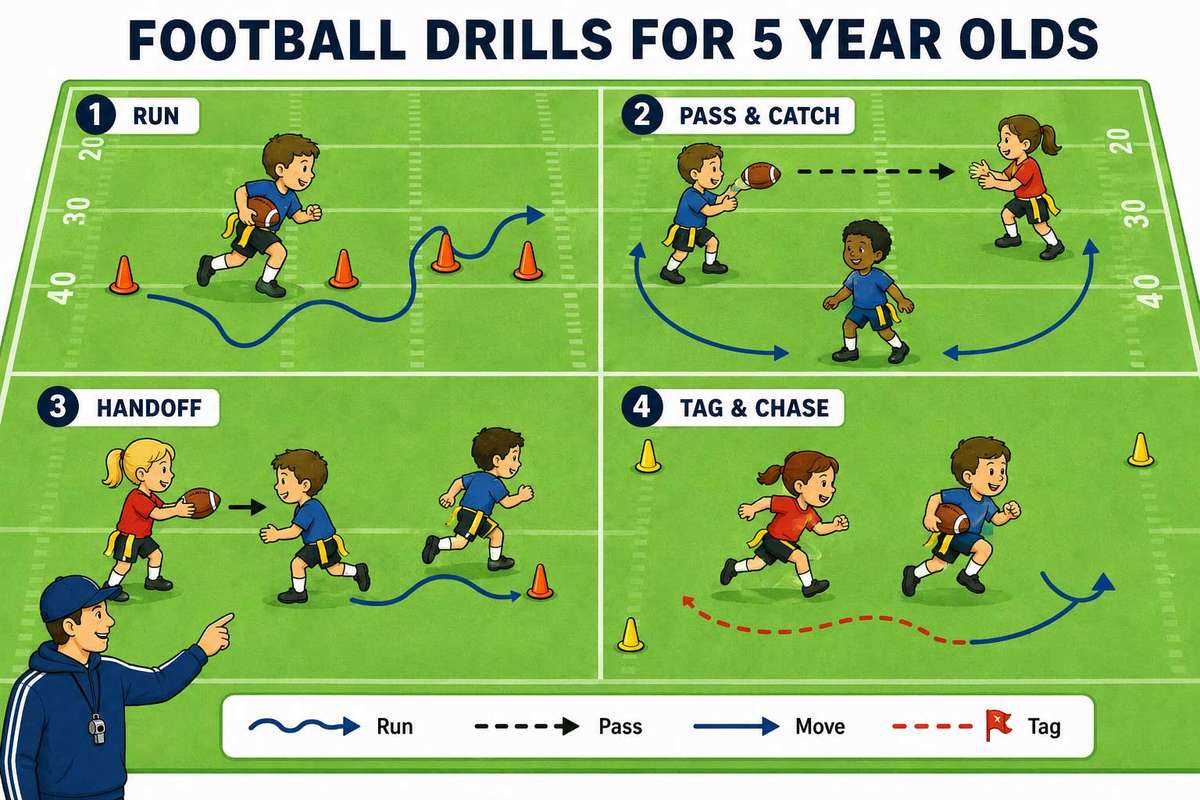
Progress in small steps so the group stays successful. Start with an easy version of the objective, then add one constraint: reduce space, add a passive defender, or require two passes before scoring. Each change should keep the core objective visible and preserve high involvement.
When progress causes repeated failure, revert to the simpler version immediately. The verified literature supports this playing-form progression because it sustains engagement and growth while maintaining the link to match-like behaviour.
Common mistakes new coaches make
Typical errors include trying to teach too many points at once, overusing long isolated drills, changing activities too often, and giving lengthy feedback between repetitions. These practices reduce meaningful ball time and dilute the single objective, which undermines learning for players with short attention spans.
Instead, choose one objective, design small-sided playing forms that emphasise it, and deliver brief, simple corrections tied directly to the immediate behaviour you want to see.
Foundations that transfer into real play
A session focused on one objective builds transferable foundations because each repetition combines perception and action. When the practice environment mirrors match constraints—appropriate space, numbers and simple rules—young players rehearse decision-making under conditions close to what they will face in games.
Evidence supports using game-based formats for enjoyment and skill acquisition; aligning a session to a single objective helps coaches make deliberate choices about the environment so young players experience useful, transferable problems rather than disconnected drills.
Closing interpretation
For U8 coaching, less is more: one clear objective, repeated through playing forms and small-sided games, gives children meaningful touches, clear decisions and enjoyable practice. The combined evidence from coaching guides and peer-reviewed studies points to the same practical conclusion—focus, adaptation of space and numbers, and simple coaching language deliver the best learning environment for very young players.
Author: Eric M.