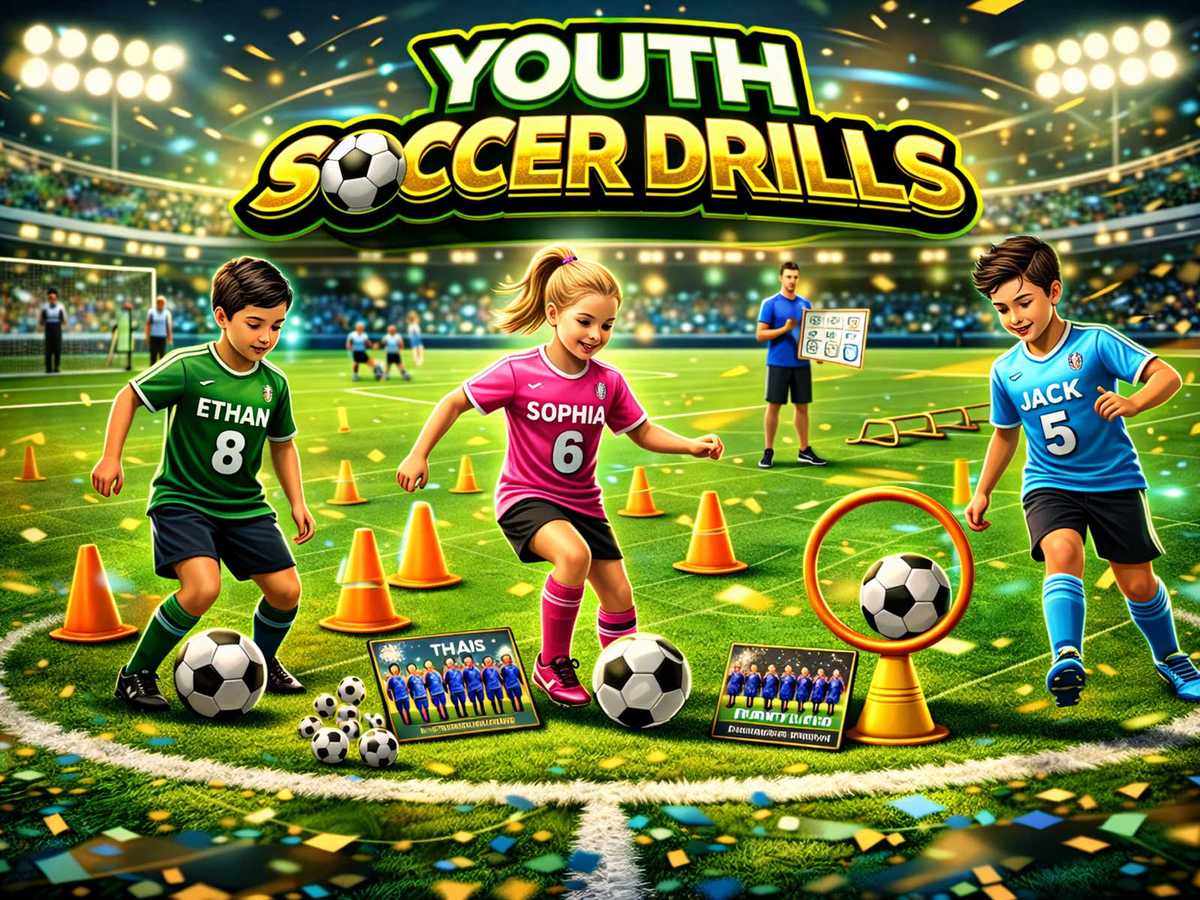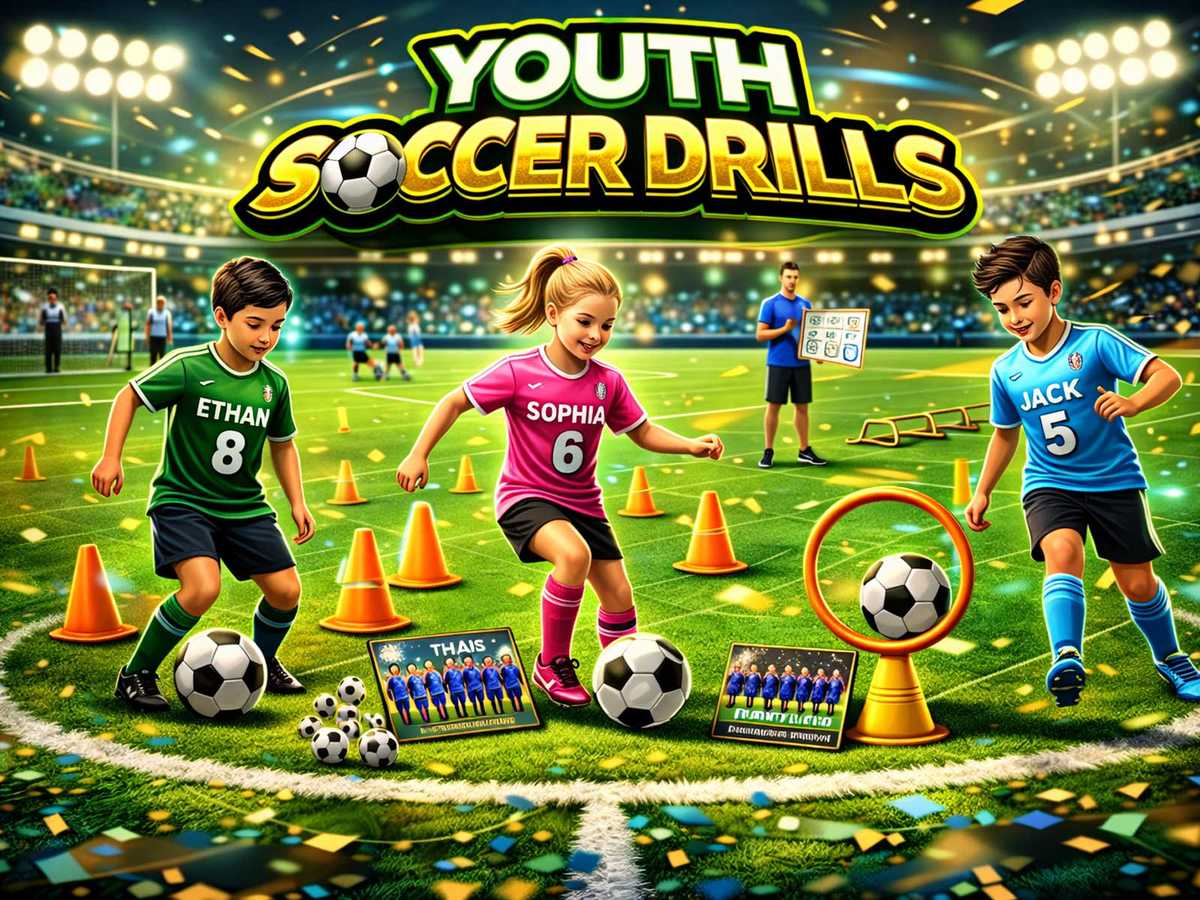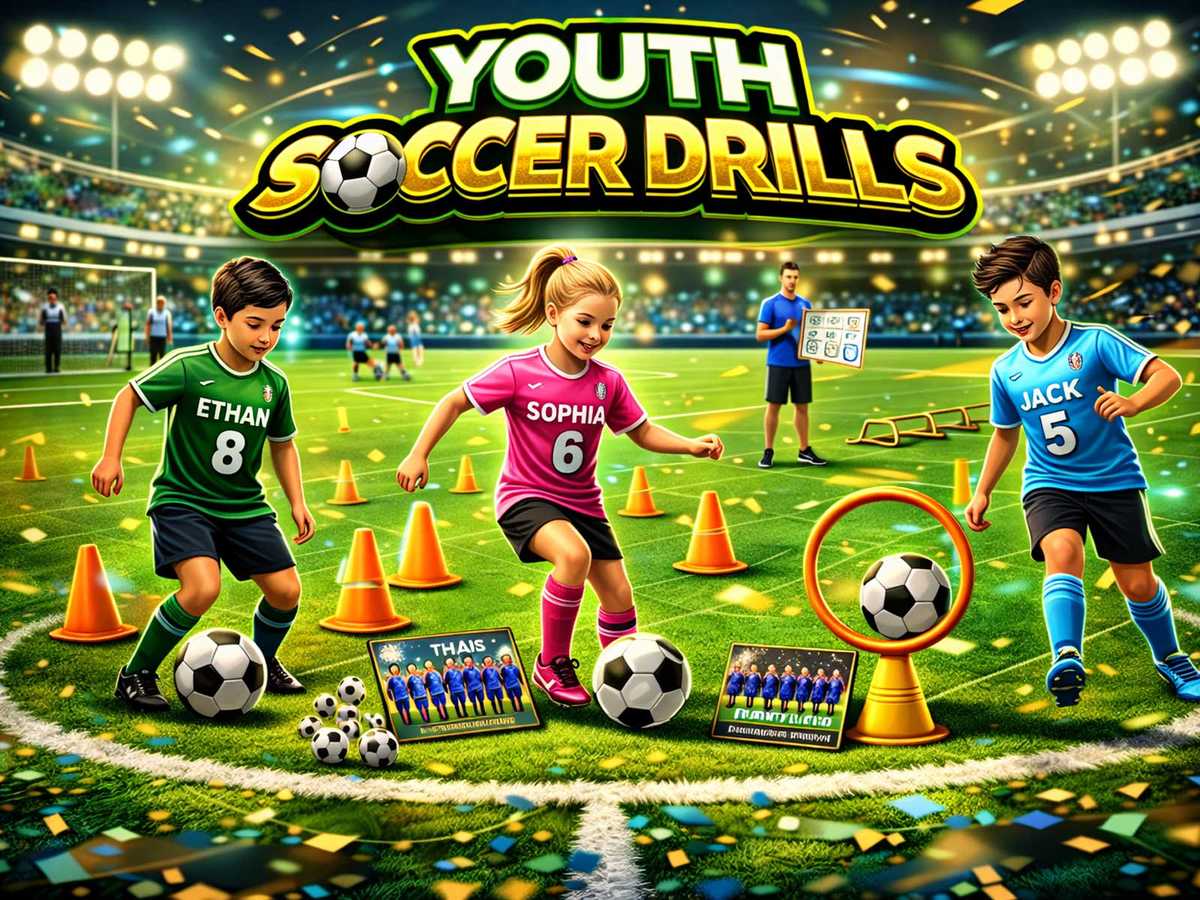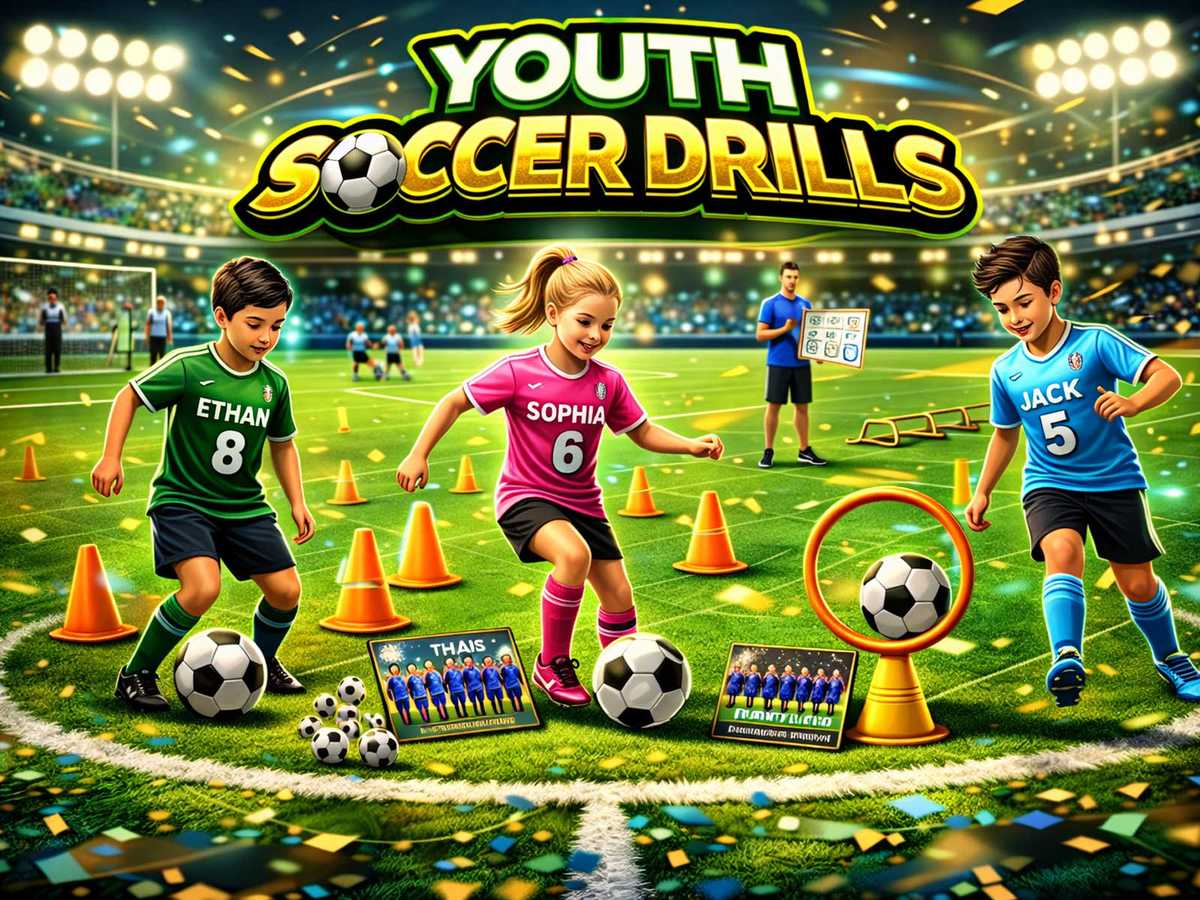
U8 Soccer Drills: Simple Ball Contact, Movement Games and Short Coaching Cues
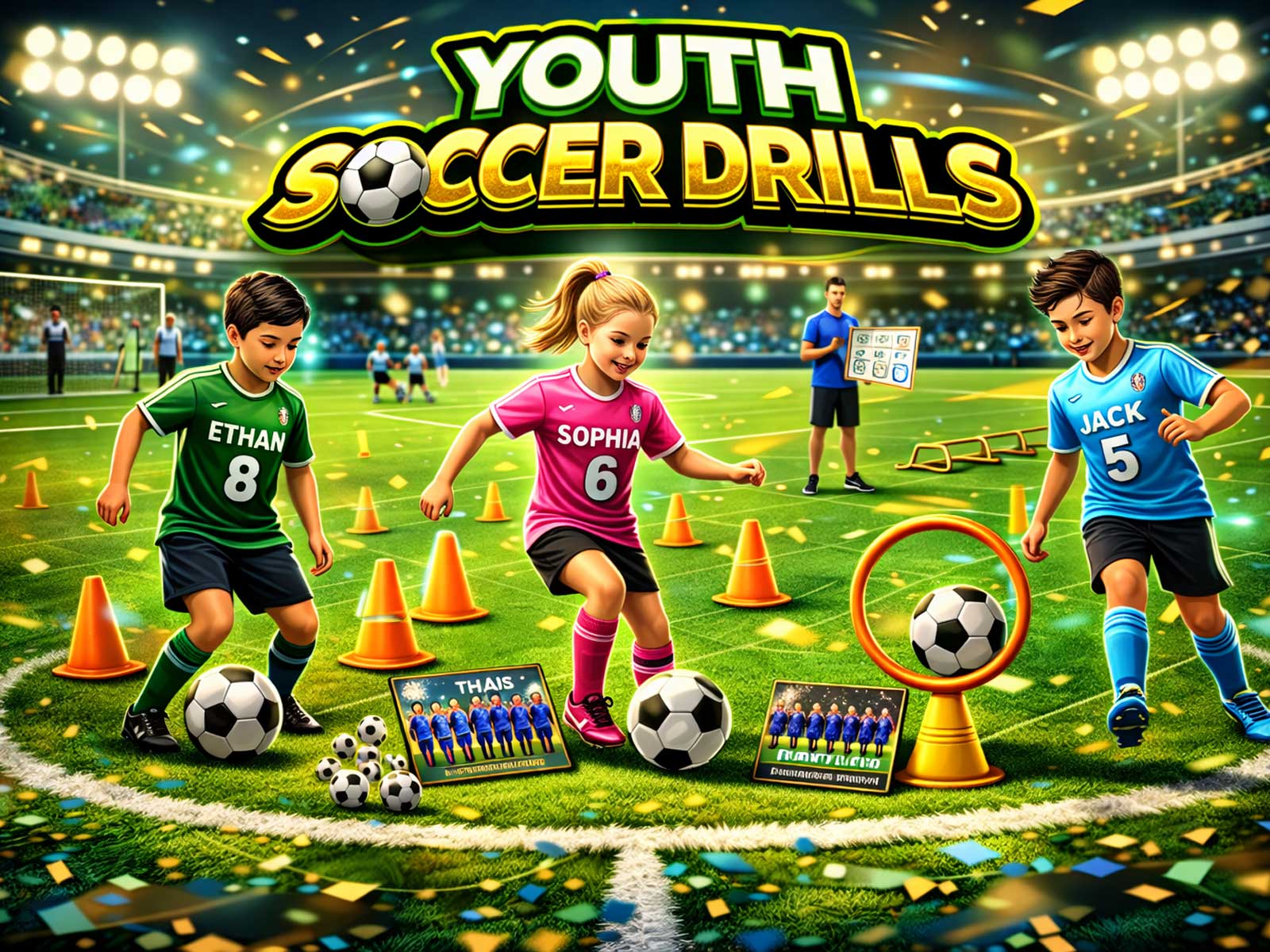
At U7–U8 the best training is play that puts a ball at every player's feet, keeps them moving and relies on very short coaching cues. This article explains which U8 soccer drills combine simple ball contact, movement games and concise coaching language — and why those elements work together to build early confidence and match comfort.
Quick answer
Choose drills that put the ball in every player's hands (or at their feet), use tag and movement games to increase touches and spatial awareness, and limit coaching to one or two short cues. Use size 3 balls and small-sided formats up to 5v5.
What you will learn here
- Why ball contact, movement games and short cues are the priority at U7–U8.
- Concrete drill examples that fit small-sided formats (1v1–3v3) and gate/maze games.
- How to structure a brief session block and common coaching mistakes to avoid.
What beginner coaching drills really need to do
Drills for U7–U8 should be designed around three simple outcomes: maximise individual ball contacts, keep players moving (including off-the-ball movement), and create situations where short coaching cues change behaviour. The emphasis is on play and repetition rather than formal tactics. Practically, that means drills that are small-sided, fast to set up, and allow children to try things with low consequence.
Simplicity, formats and equipment
Follow grassroots guidance: use size 3 balls and keep game formats small — 1v1, 2v2, 3v3 and up to 5v5 where appropriate. Avoid practices that require long explanations. Keep areas small enough so players can find the ball quickly and get repeated touches; use gates or cones to define simple targets rather than full-size goals. Also, do not include heading practice for U7–U8; guidance specifies heading frequency as none for these ages.
Three reliable drill types that combine ball contact, movement and short cues
Below are drill families used widely in U8 coaching resources. Each one naturally fits the principle: every player gets the ball, the format forces movement, and the coach offers one or two cues.
1) Arrival ball‑mastery circuit — Individual stations with short tasks: toe taps, inside/outside touches, pull‑backs. Mechanism: repeated, low-pressure contacts build comfort with first touch and different surfaces of the foot. Coaching cue: one short phrase (e.g., "small touches" or "take a touch") per station. Use this as a warm-up block.
2) Gate or maze dribbling games — Players dribble through gates or follow a simple maze, sometimes racing a partner or trying to collect cones. Mechanism: adds movement and spatial decisions to basic dribbling; increases touches while encouraging scanning. Coaching cue: one cue like "bend your knees" or "look up at the gate"; keep rounds short to match attention span.
3) 1v1 / 2v2 duels and 3v1 possession builds — Small-sided duels where winning a ball earns a point or allows the attacker to run to a target. Mechanism: game‑like pressure teaches ball protection, change of direction and simple decision-making. Coaching cue: two points max (e.g., "shield the ball" and "turn away").
How young players actually learn early skills
At U7–U8 learning comes primarily from doing. Players need frequent, varied touches and immediate, visible outcomes: success in a short race, beating a defender in 1v1, or passing through a gate. Movement games and tag-style activities increase engagement and spatial awareness without heavy instruction. Short, repeated play cycles let children experiment and consolidate motor patterns: quick touches, simple turns and running with the ball.
Session organisation and repetition without chaos
A common and effective structure is: arrival ball mastery (5–10 minutes), two short activity blocks (10–12 minutes each) that mix technical work with small-sided play, and a short scrimmage (5–10 minutes) to finish. Keep each drill or game short — typically 2–4 minutes per repetition — and use quick resets. Practical tips: set clear start/stop signals, limit player lines by giving every child a ball, and use small playing areas so the ball is recovered quickly.
Correction, demonstration and coaching language
Coaches should prioritise demonstration and one-word or two-word cues. Research-backed guidance and coaching handouts for U7–U8 recommend short cues like "inside", "touch", "turn" or "shield". If you need to correct, do so between repetitions in one short sentence, then let play continue. Demonstrate the action quickly and get players immediately back into the game — young players learn better from trying after a visible example than from long explanations.
Common mistakes new coaches make
Frequent errors include over-coaching (too many cues), creating large spaces that reduce touches, and using formats that emphasize waiting in line. Another mistake is teaching technical detail before players have had simple repetition and fun; at U7–U8, allow play to create the need for technique. Keep coaching reactive and minimal: watch for a recurring behaviour you want to change and address it with one concise demonstration.
How to progress a drill without losing the group
Progress by changing constraints, not by adding long explanations. Examples: make gates smaller, add a passive defender to a dribbling course, switch from 1v1 to 2v2, or introduce a clear reward (first to X gates wins). Each progression should be reversible — if the group becomes confused or the ball contact rate drops, return to the simpler version. These progressions keep the activity game-like and support transfer into small-sided scrimmages, where the same decisions (dribble, turn, pass) appear under mild pressure.
Closing interpretation
U8 soccer drills that best combine simple ball contact, movement games and short cues are those that prioritise play, maximise touches and use coaching language sparingly. Use size 3 balls, small areas and small-sided formats (1v1–5v5) to create frequent, meaningful repetitions. Keep sessions short, demonstrative, and flexible — let the game situations guide what to coach next. That approach aligns with grassroots guidance and produces players who are comfortable with the ball and ready to learn through play.
Author: Eric M.