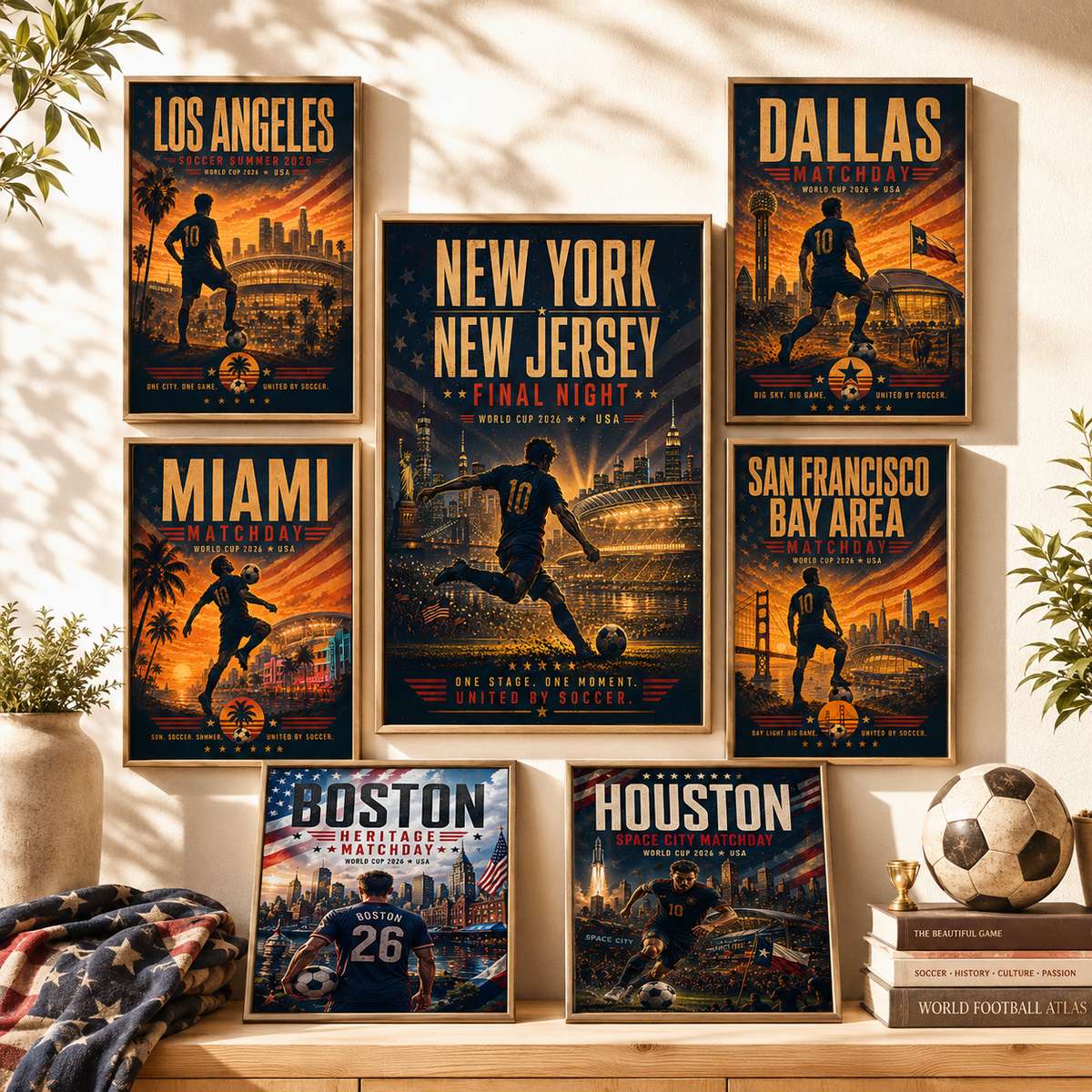
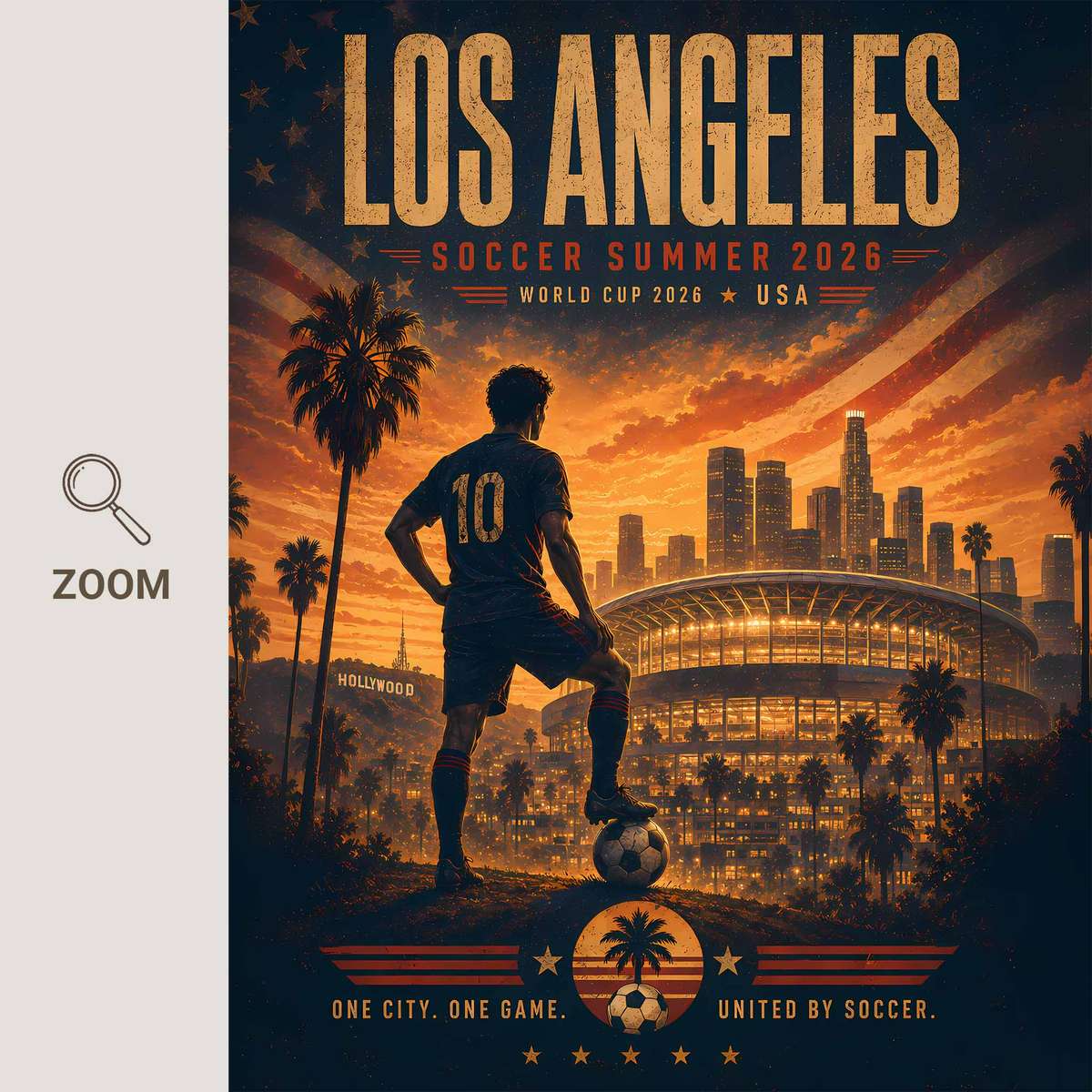
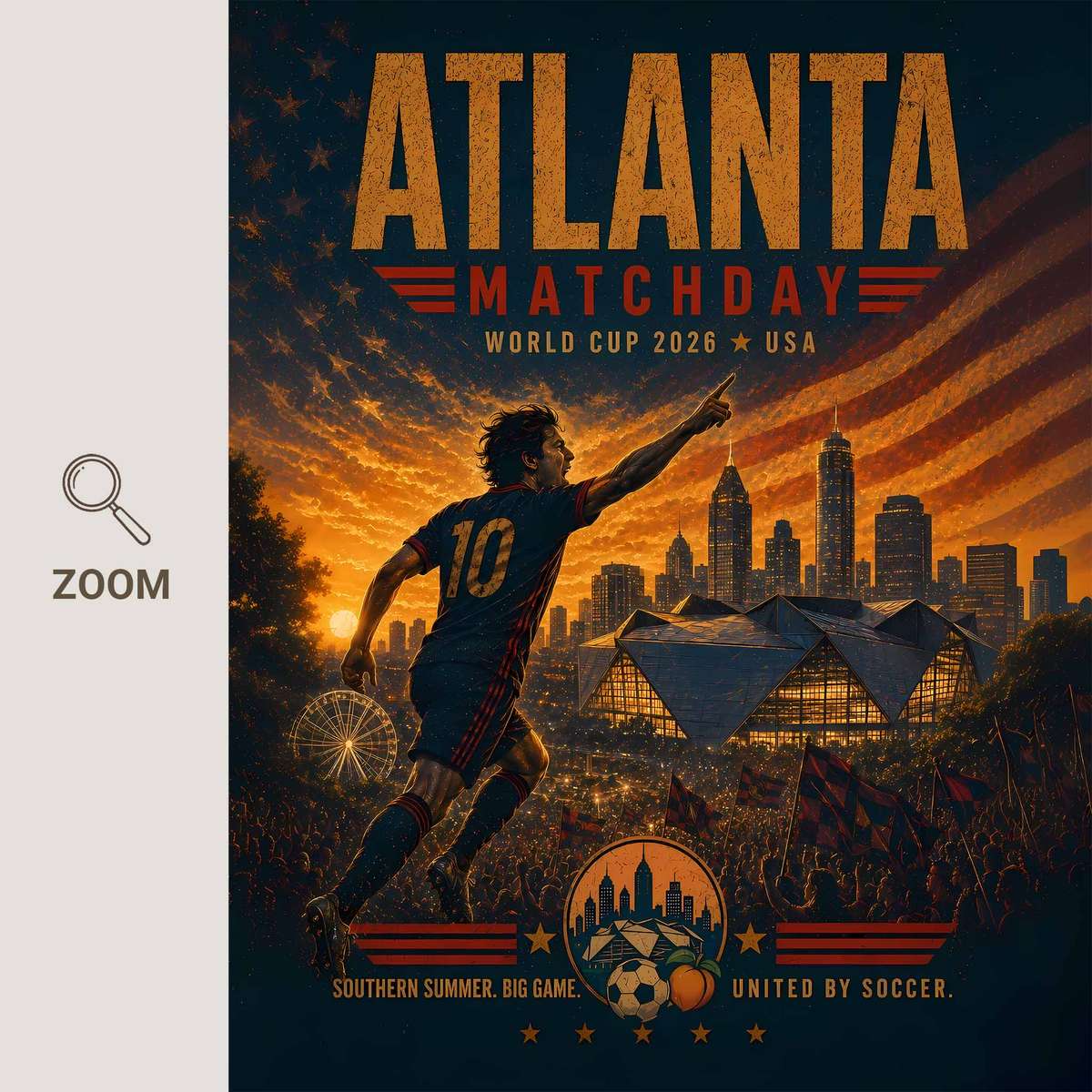
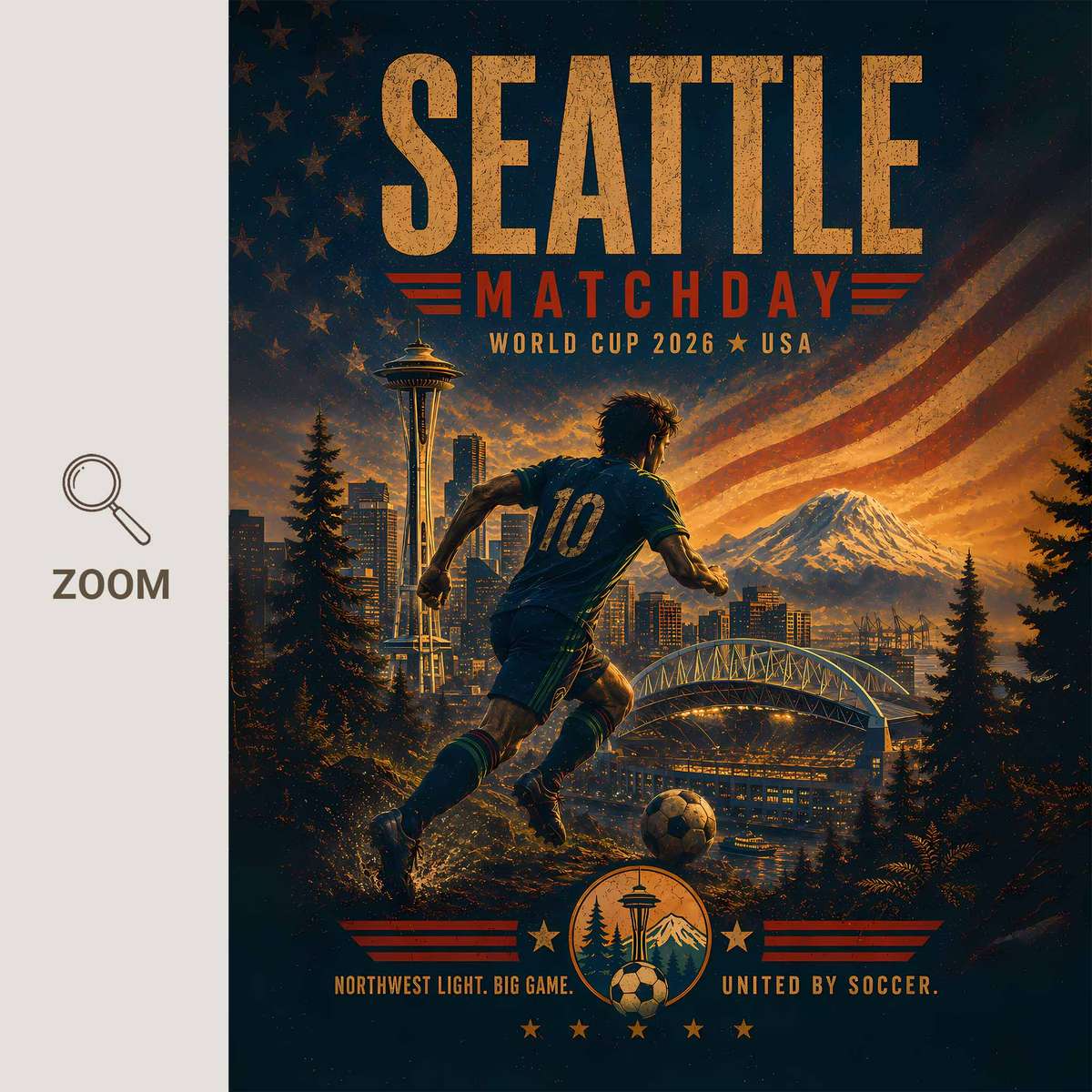
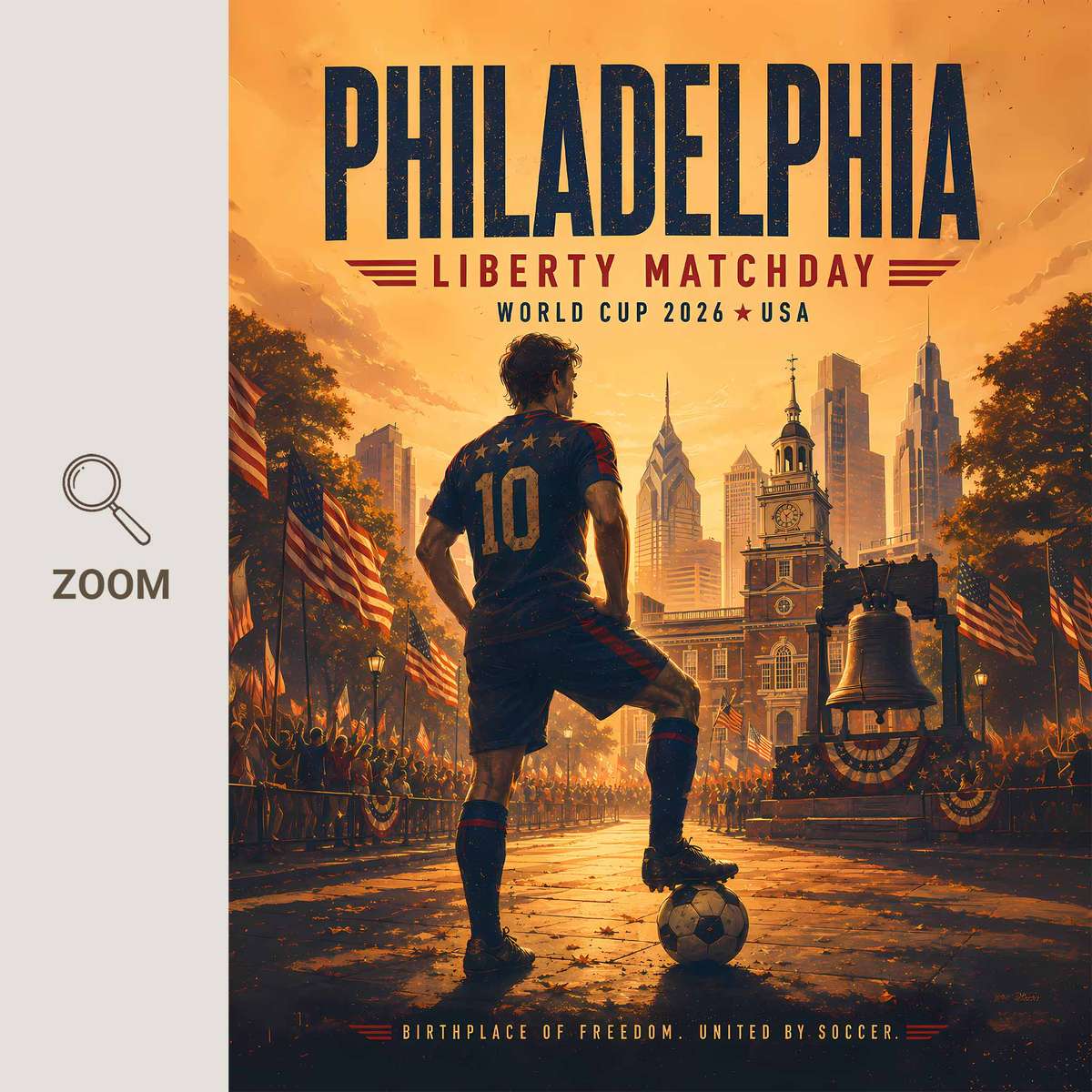
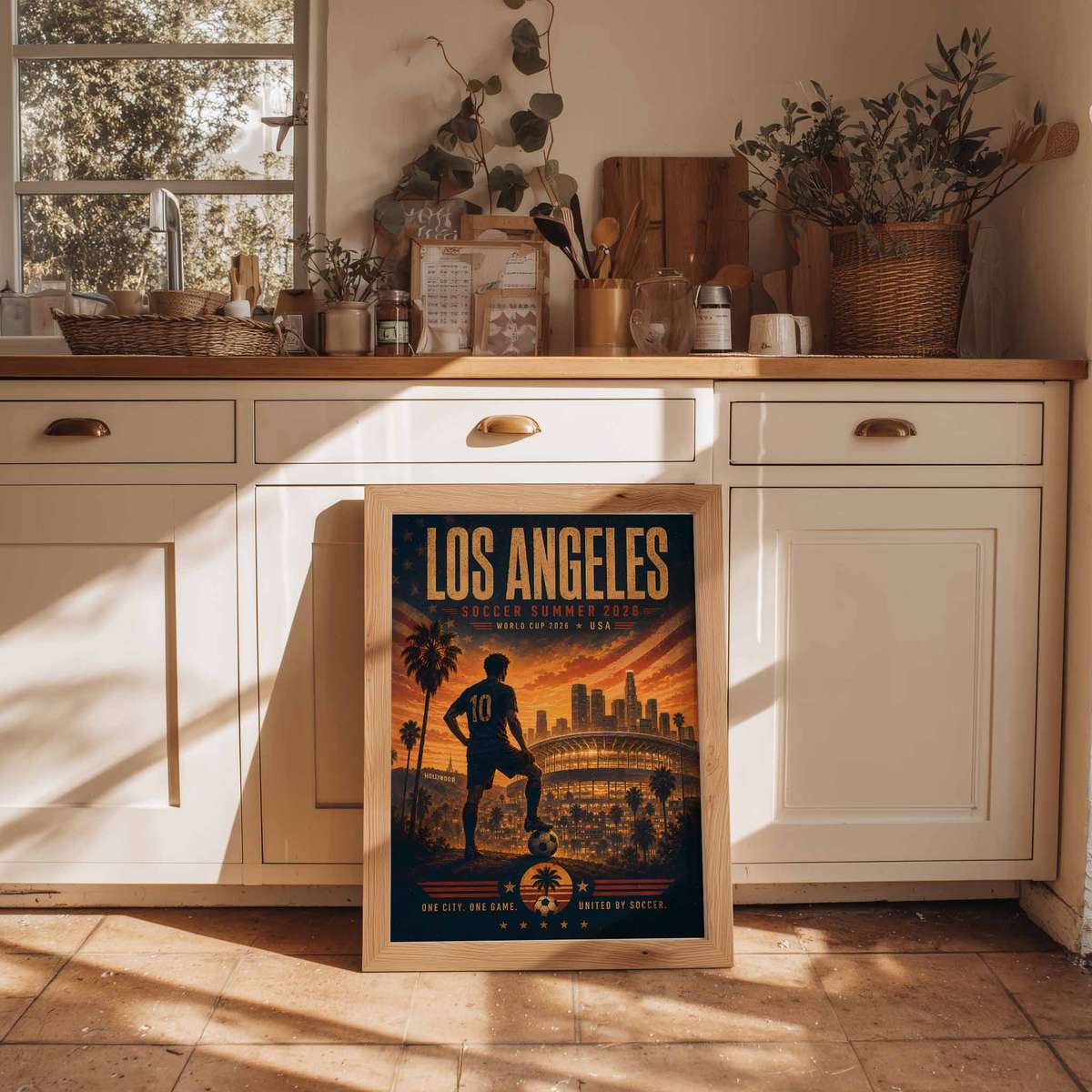
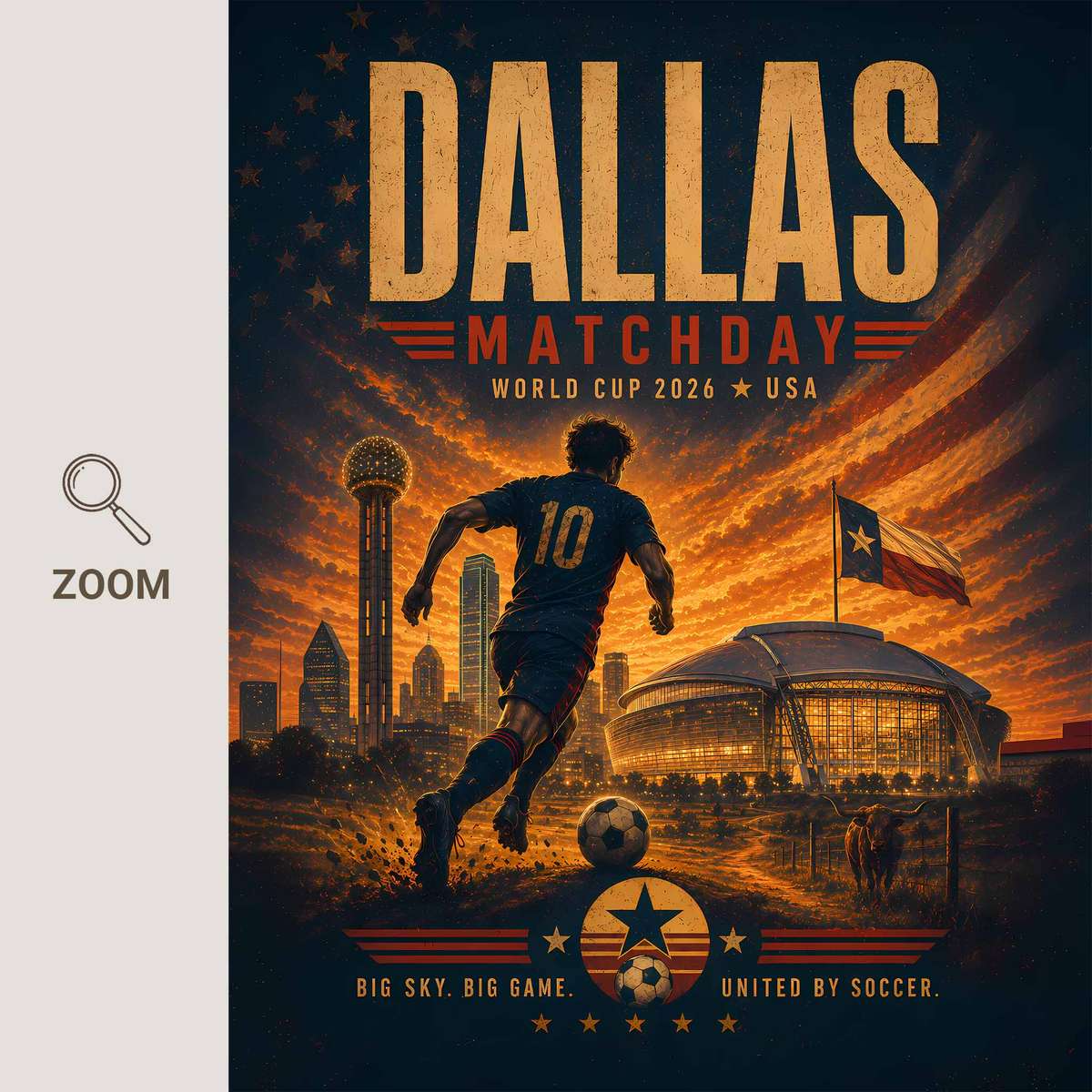
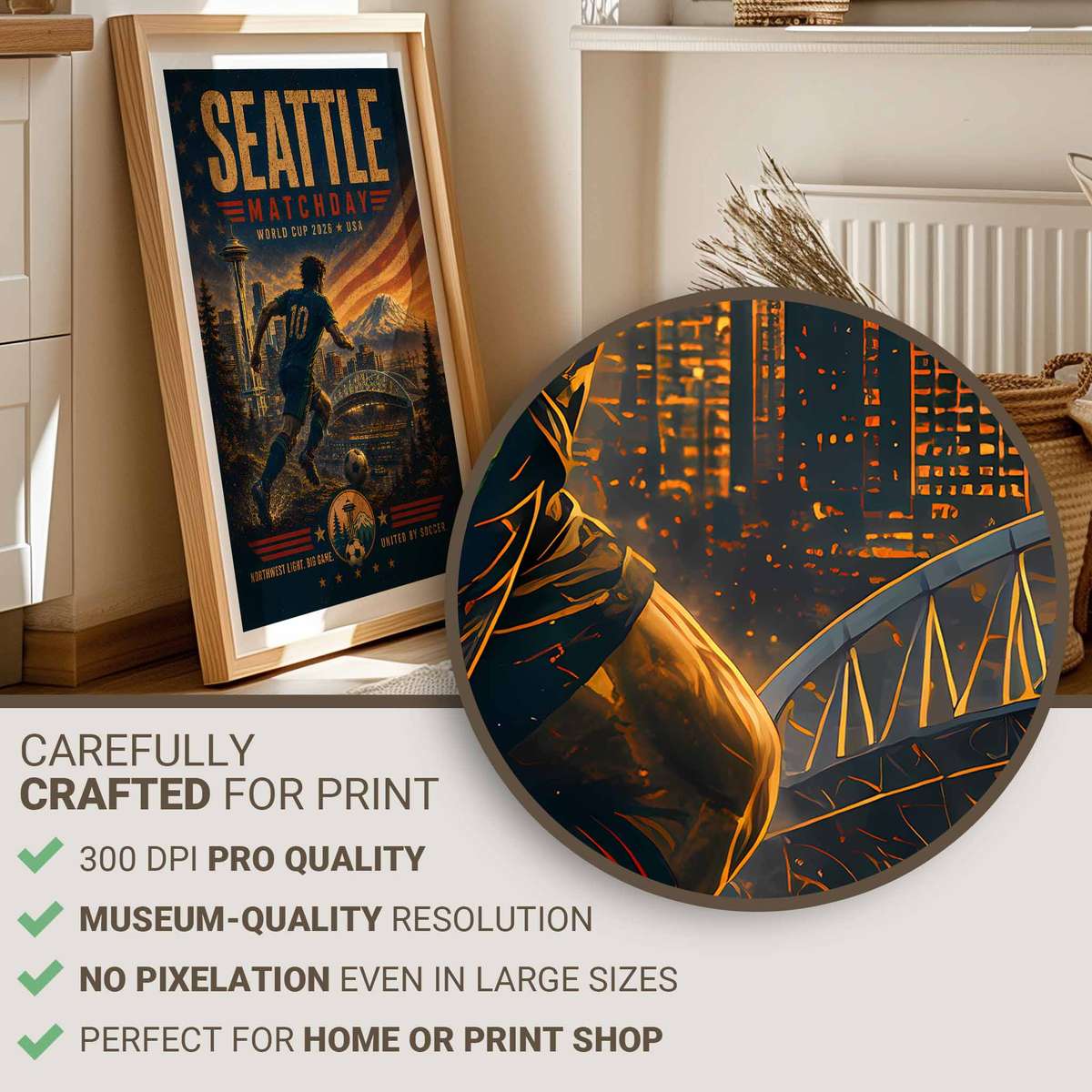
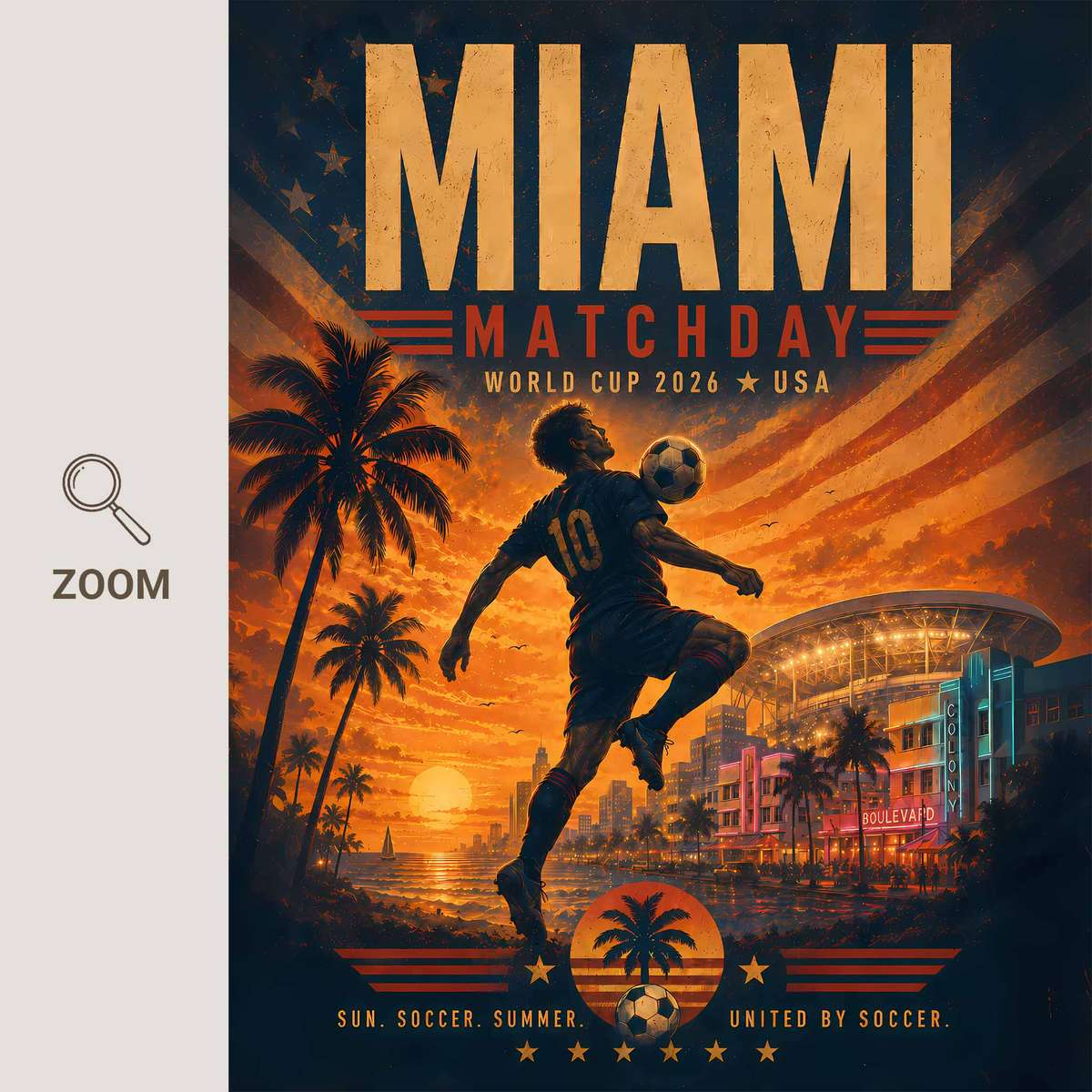
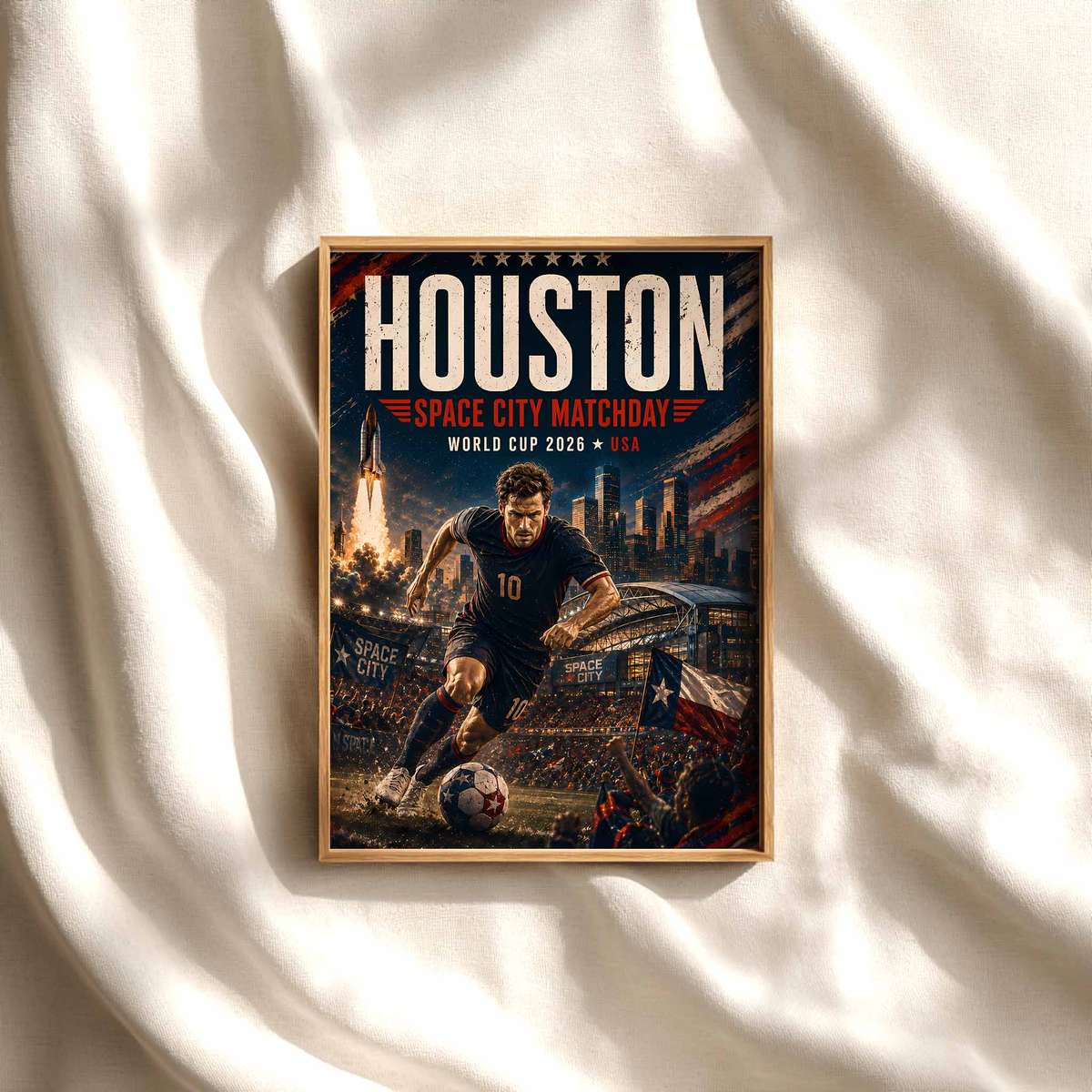
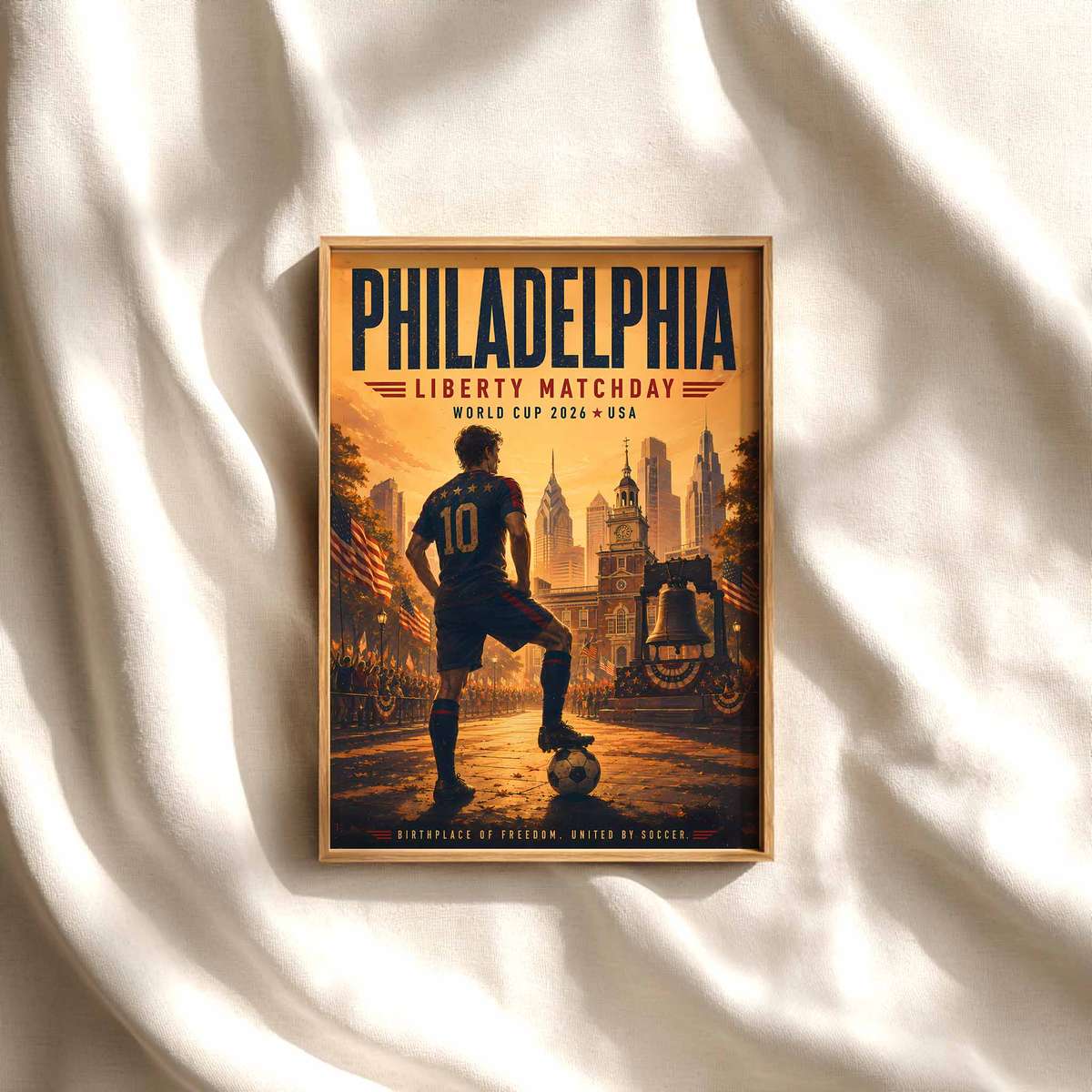
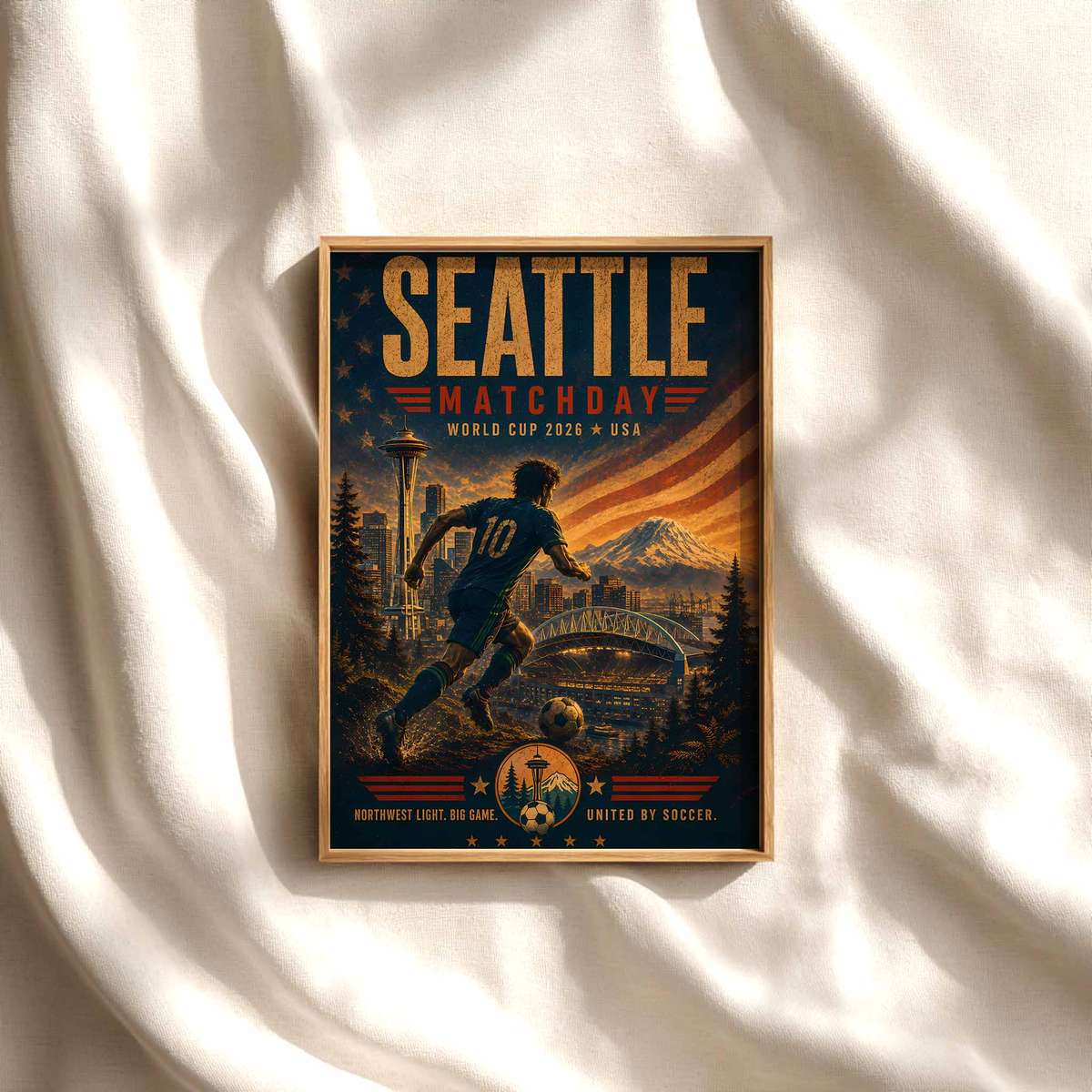
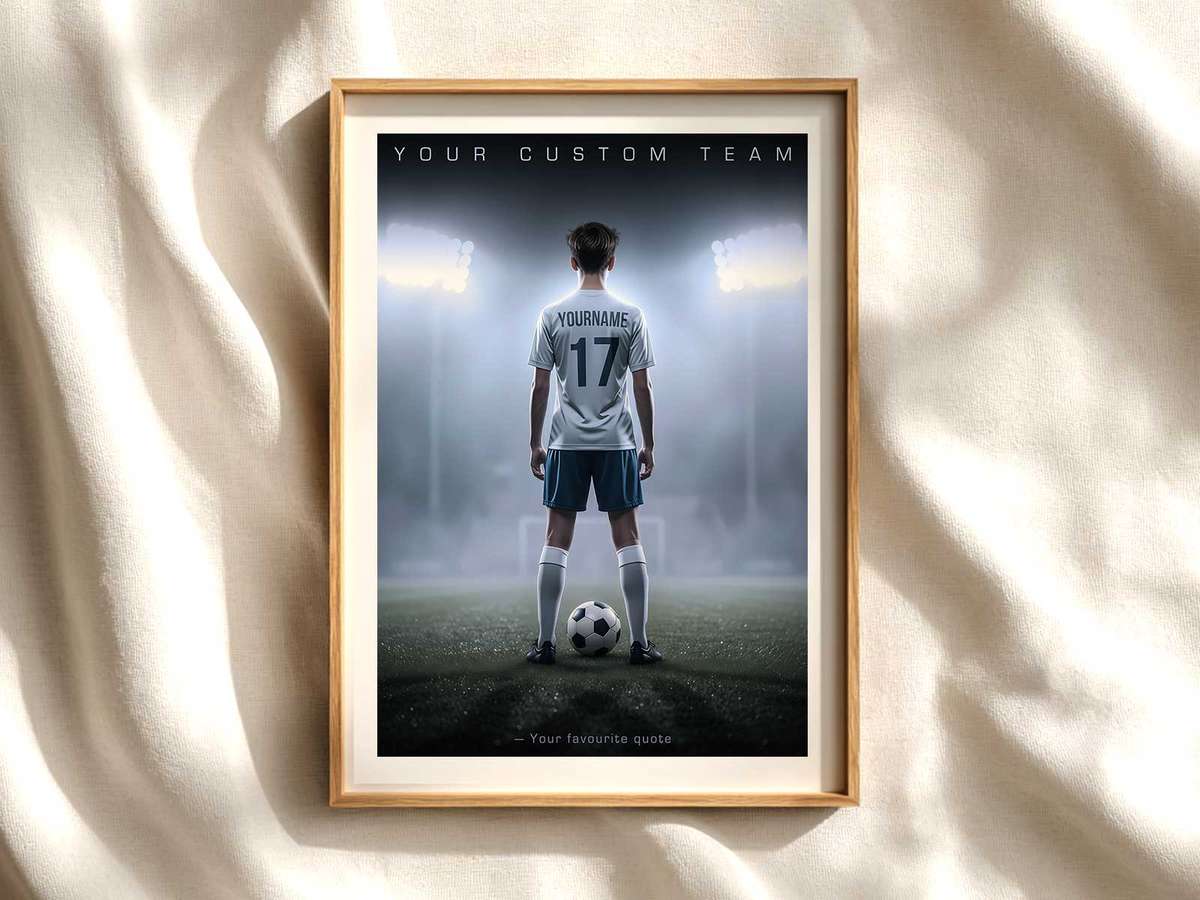
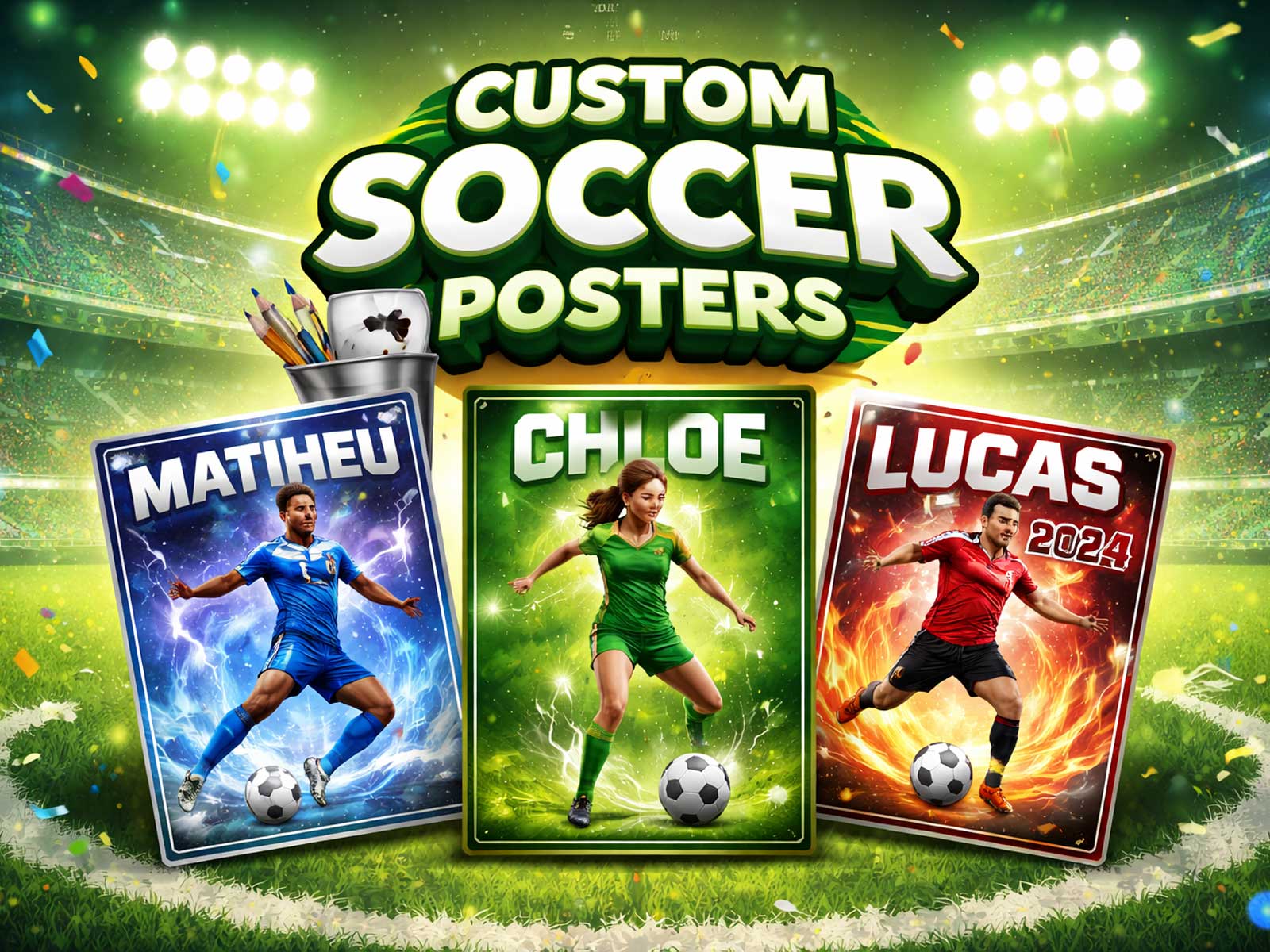
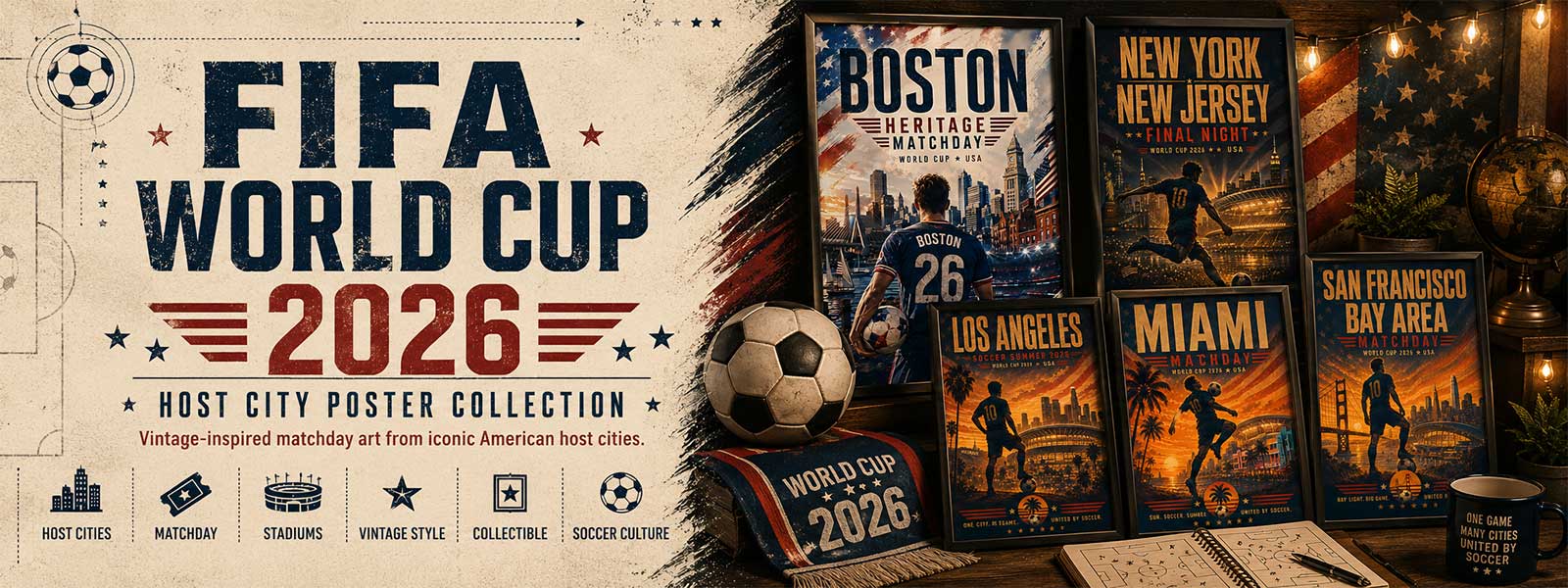
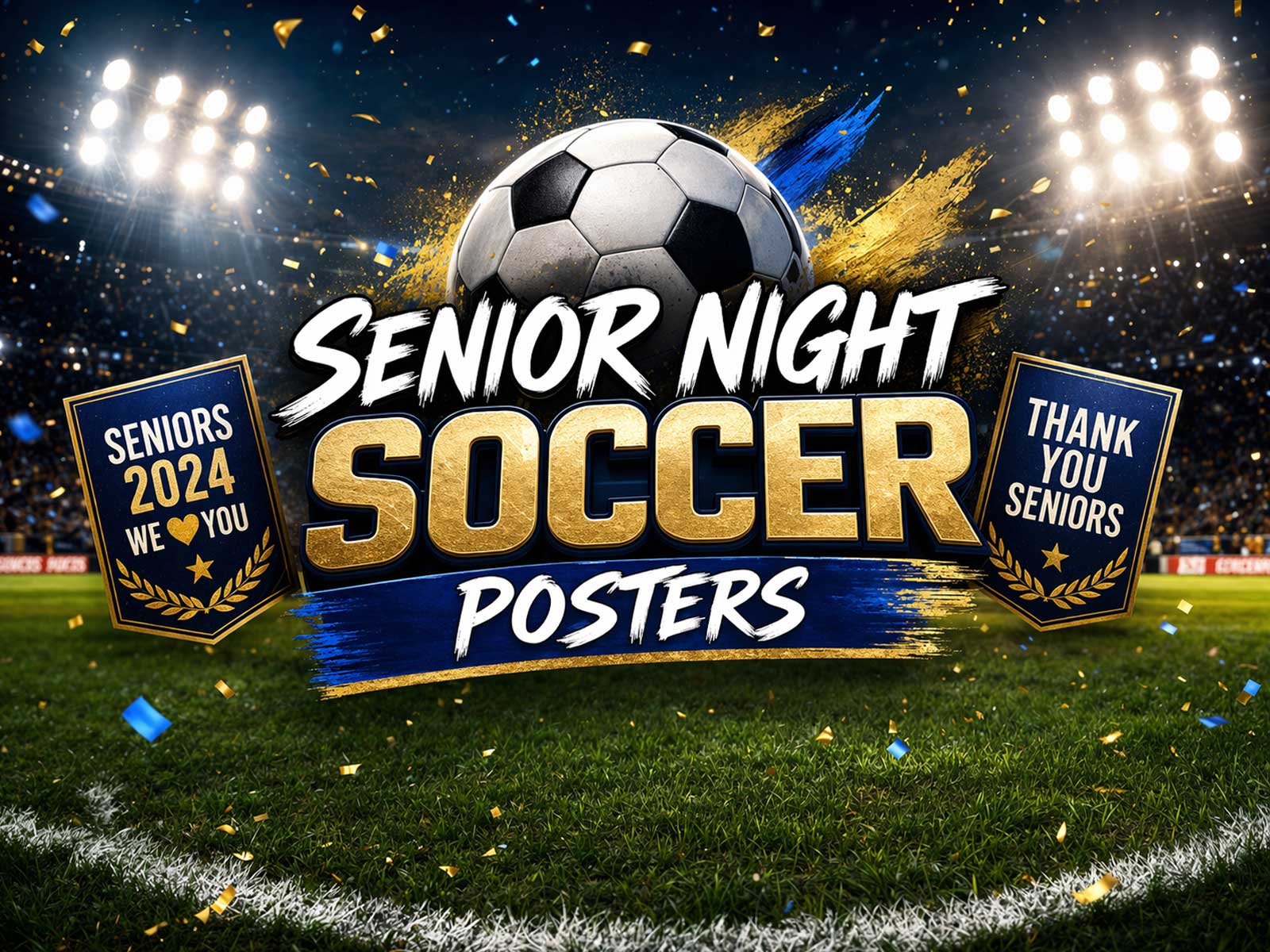
There is a quiet power in a framed moment. A custom series of 10 posters—each dedicated to a World Cup 2026 match played in New York, Los Angeles, Miami, Dallas, San Francisco, Seattle, Atlanta, Boston, Philadelphia and Houston—can do more than decorate a wall. When a poster pairs a city skyline with the specific light of a final whistle, a player’s name and number, and subtle team colors, it becomes a focused memory: the season you grew, the match your kid scored in, the final your neighborhood watched together.
What makes these posters feel personal is detail. A generic soccer print shows a ball mid-flight; a keepsake poster anchors that ball in a place and time. The skyline tells where the story happened. The final-match light—golden, dramatic, celebratory—sets the tone: triumph, near-miss, or the hush after the whistle. Layering a player’s name, jersey number, or team color into that scene turns an image into a marker of identity. For a teenager’s bedroom, a playroom or a coach’s office, it reads as recognition: this season mattered, this player was seen.
Think about how these posters fit into real rooms. In a bedroom they can sit above a desk with trophies below, a daily reminder of commitment and progress. In a family room or game den, a row of city posters traces a narrative—home games, away challenges, a hometown’s pride next to national excitement. In a locker area or small clubroom, the visuals create a collective identity: same sport, different stages, one shared drive. Clean, bold soccer imagery—strong silhouettes, decisive light, recognizable skylines—works as art because it reads instantly from across the room and rewards closer inspection with personal details.
There is also a practical emotional logic to keepsake-style posters. Names and numbers celebrate individual effort without erasing team belonging. A poster that references a season or a decisive match preserves the mood of that time: the training grind before a tournament, the nervous energy of a last-minute goal, the shared chants on the ride home. For parents, gifting such a poster after a season-ending ceremony or senior night acknowledges more than performance; it recognizes growth, routines, early mornings, the supportive rides to practice. For coaches, a poster that highlights a pivotal match or a core group of players becomes a tangible record of leadership and teamwork.
Compared to mass-market sports decor, a curated 10-city World Cup collection adds narrative scale. Each city becomes a chapter. Placed together, the posters transform raw match energy into a composed gallery—skylines act as geographic anchors, while consistent design choices (light, palette, type treatment) give the set cohesion. That cohesion makes the series feel intentional rather than random: it’s a chronicle of matches that mattered, either to a fan, a player, or a program.
Finally, these posters age with the people who own them. A fourteen-year-old’s “first big goal” print can hang through high school, reminding them of where they started. A wall of city posters can grow into a family archive: kids’ names, seasons, and small handwritten notes on the back of frames. That is why a poster can be more than decoration—it becomes a portable memory, a social object you point to when recounting a comeback, a road trip, or a rainy practice that finally paid off.
Choosing a keepsake poster is a choice about storytelling as much as style. Whether you want a single framed moment for a player’s room or a matched series that celebrates ten World Cup 2026 stages across American cities, the result is the same: a visual reminder of effort, belonging and a season frozen in light. These are the kinds of pieces people return to not because they match the couch, but because they remember who they were when the whistle blew.