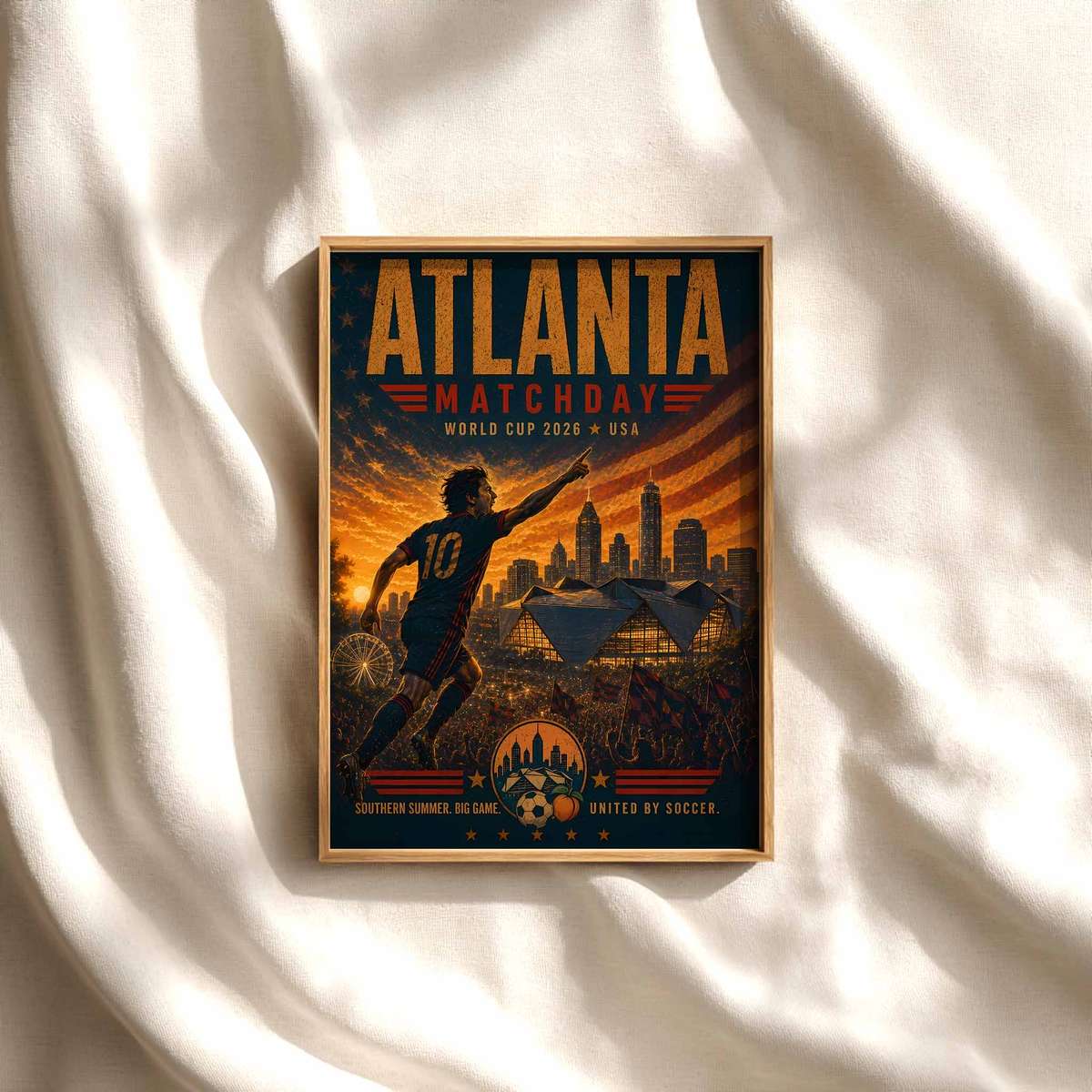
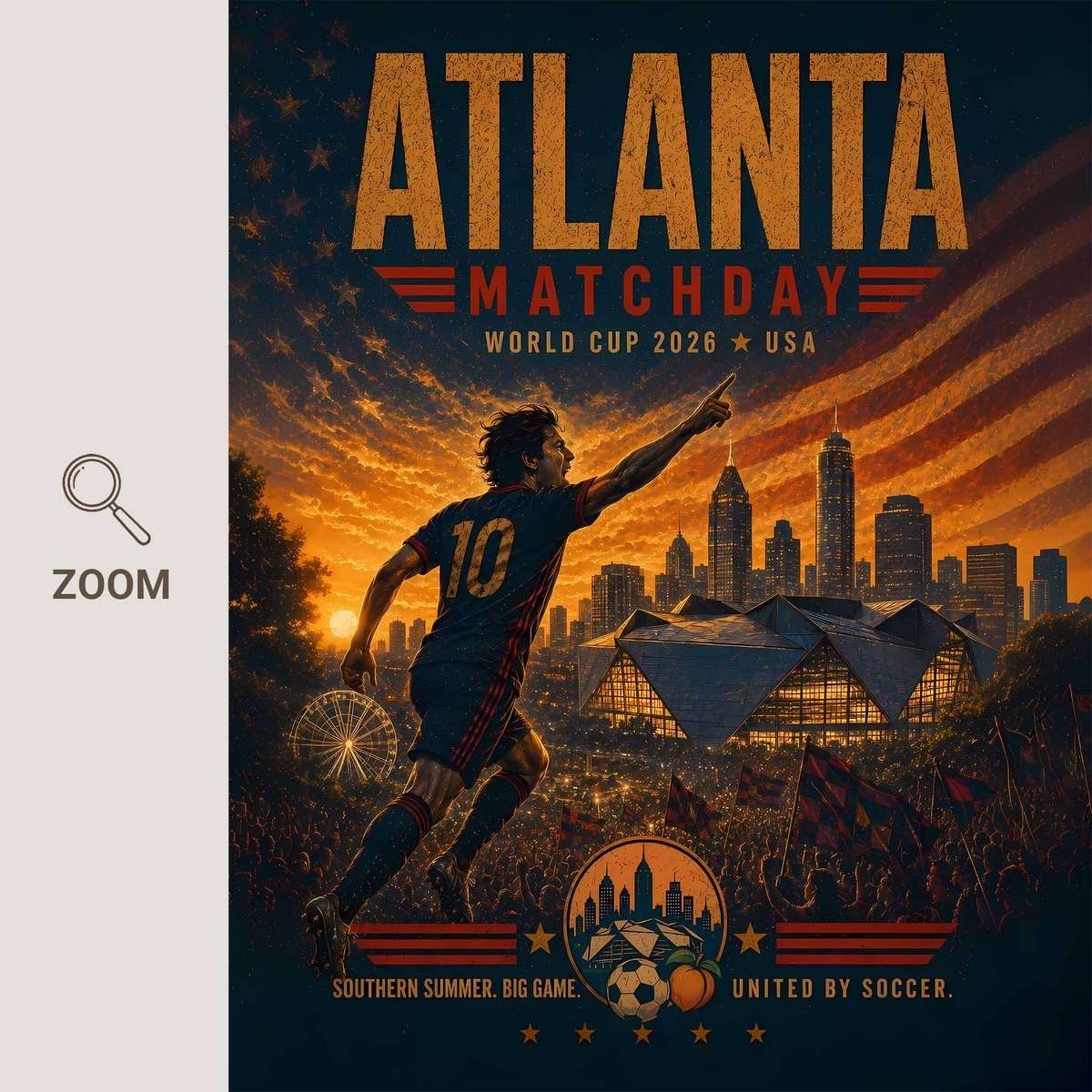
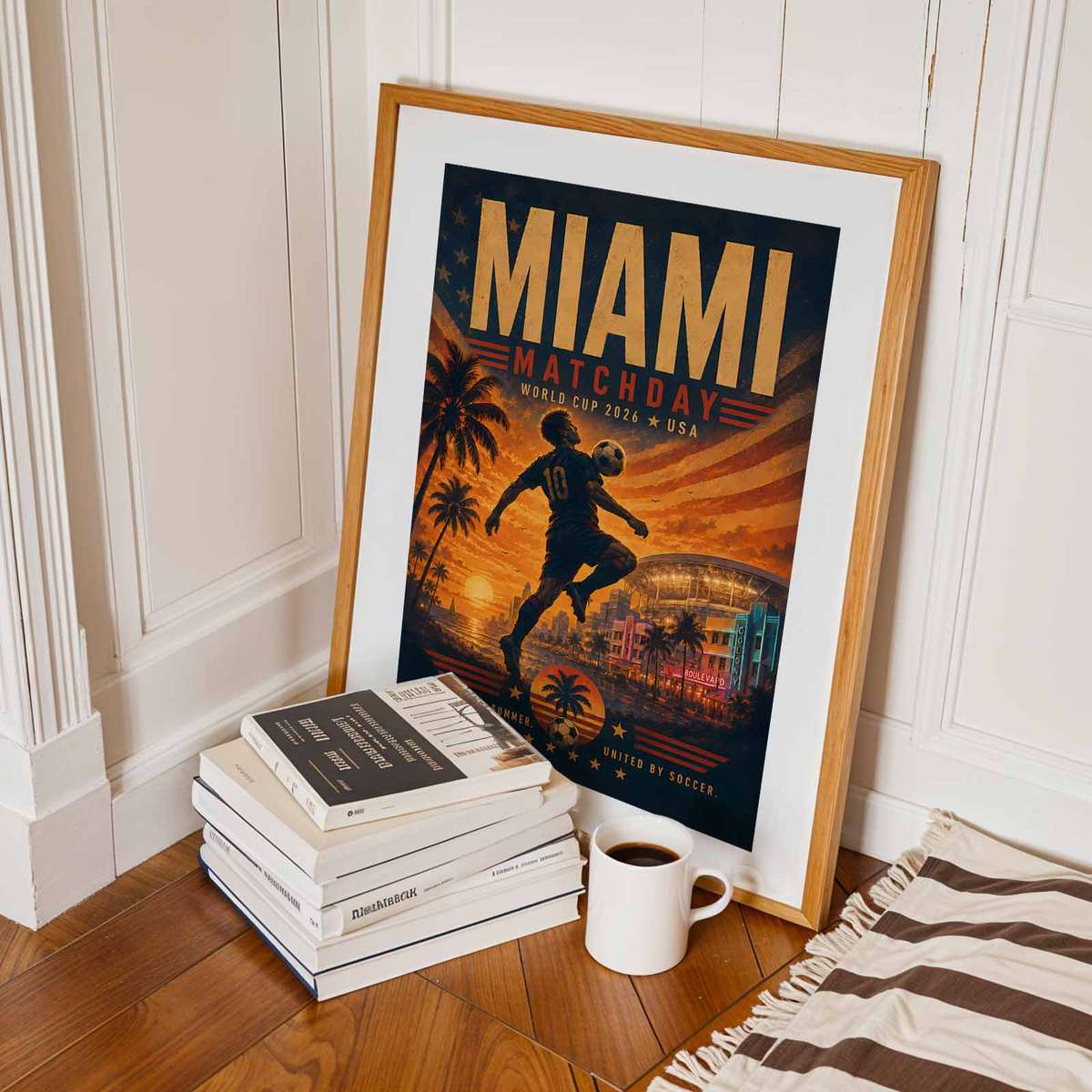
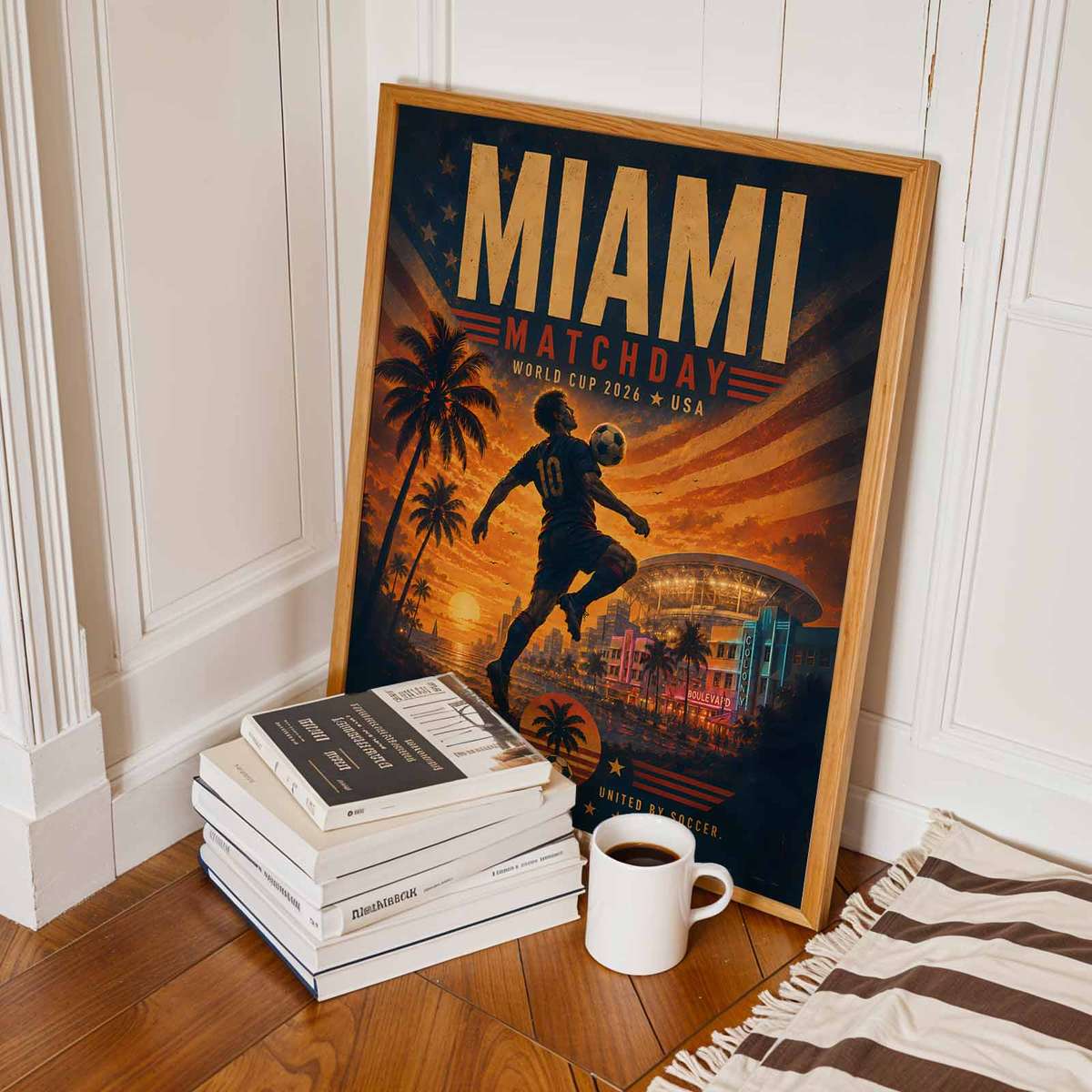
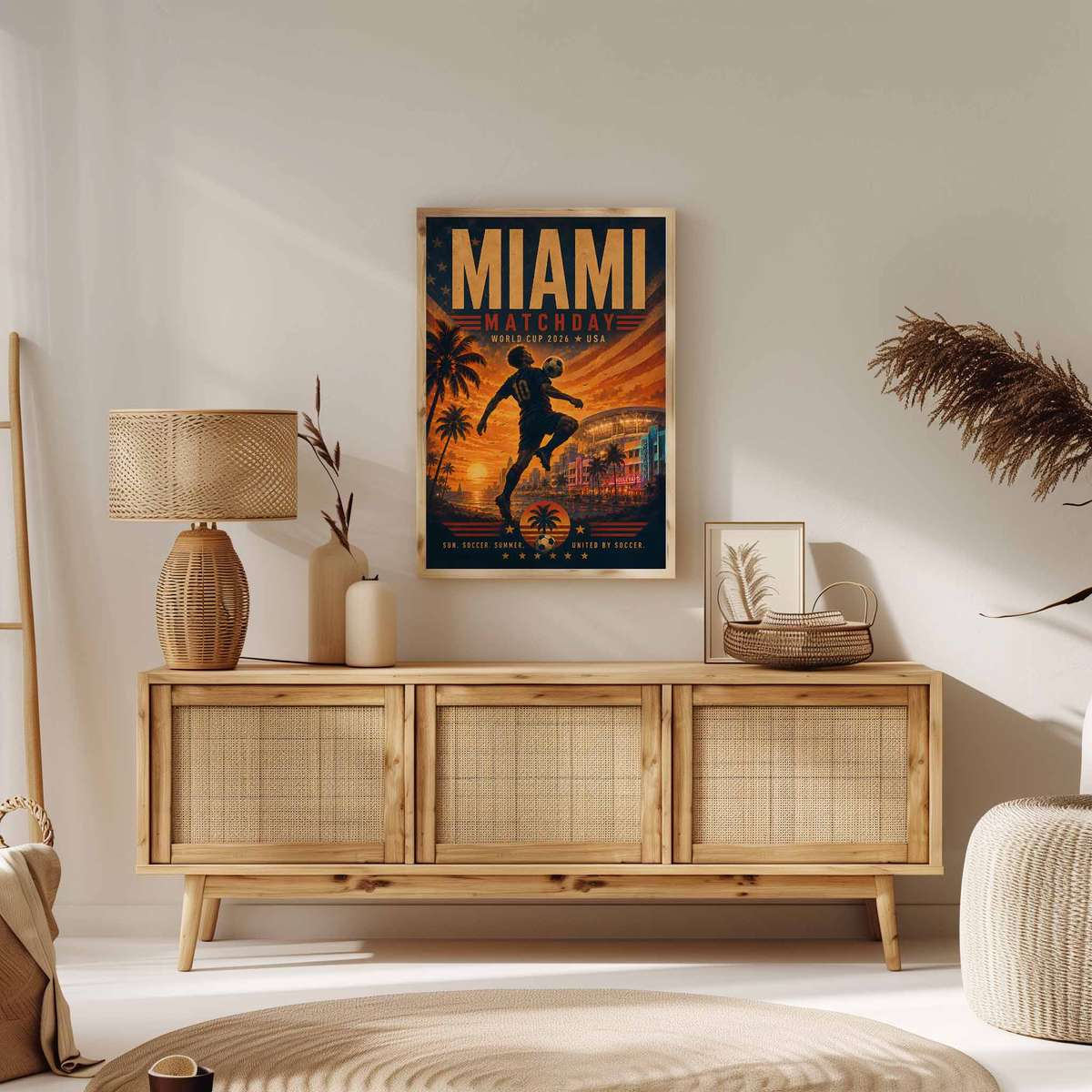
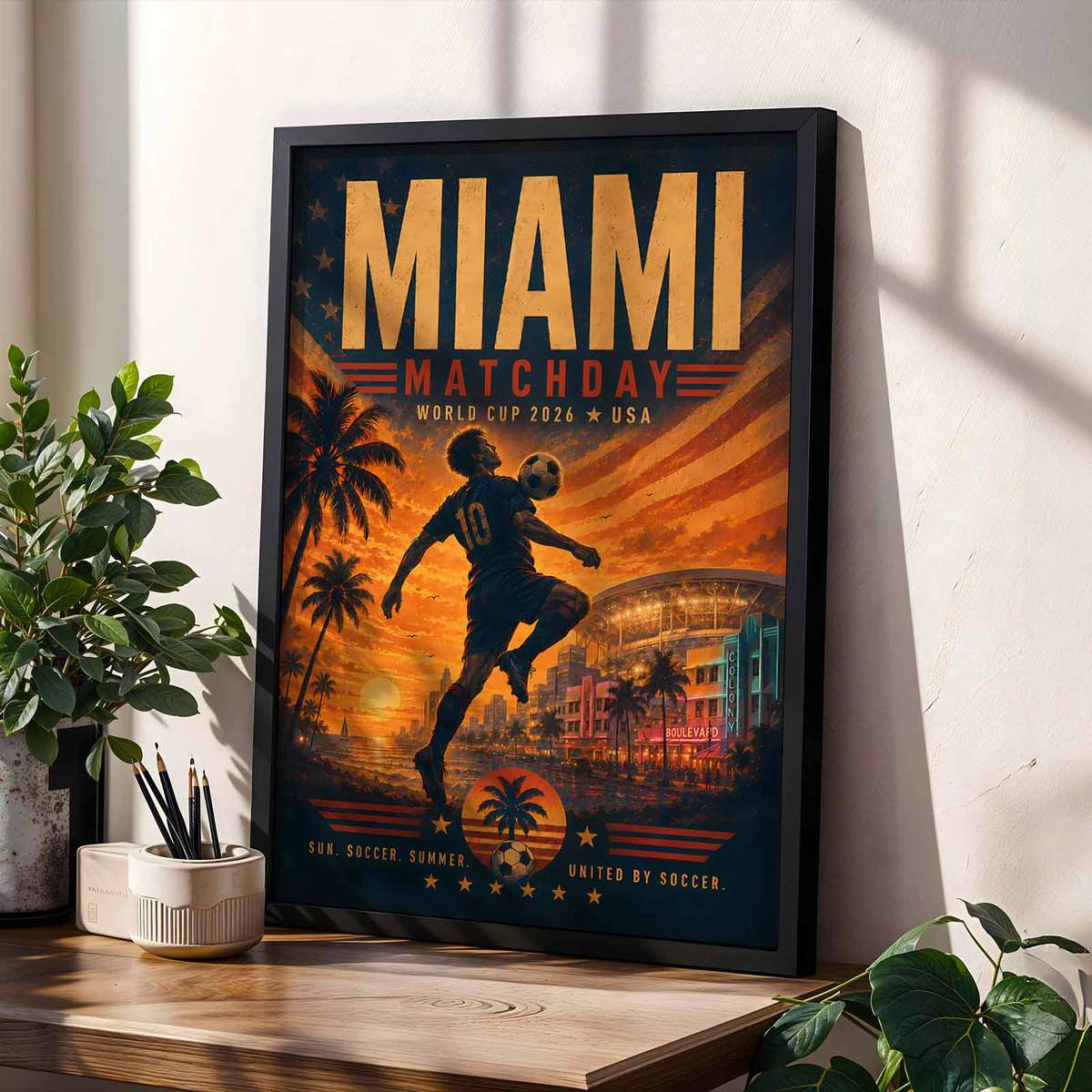
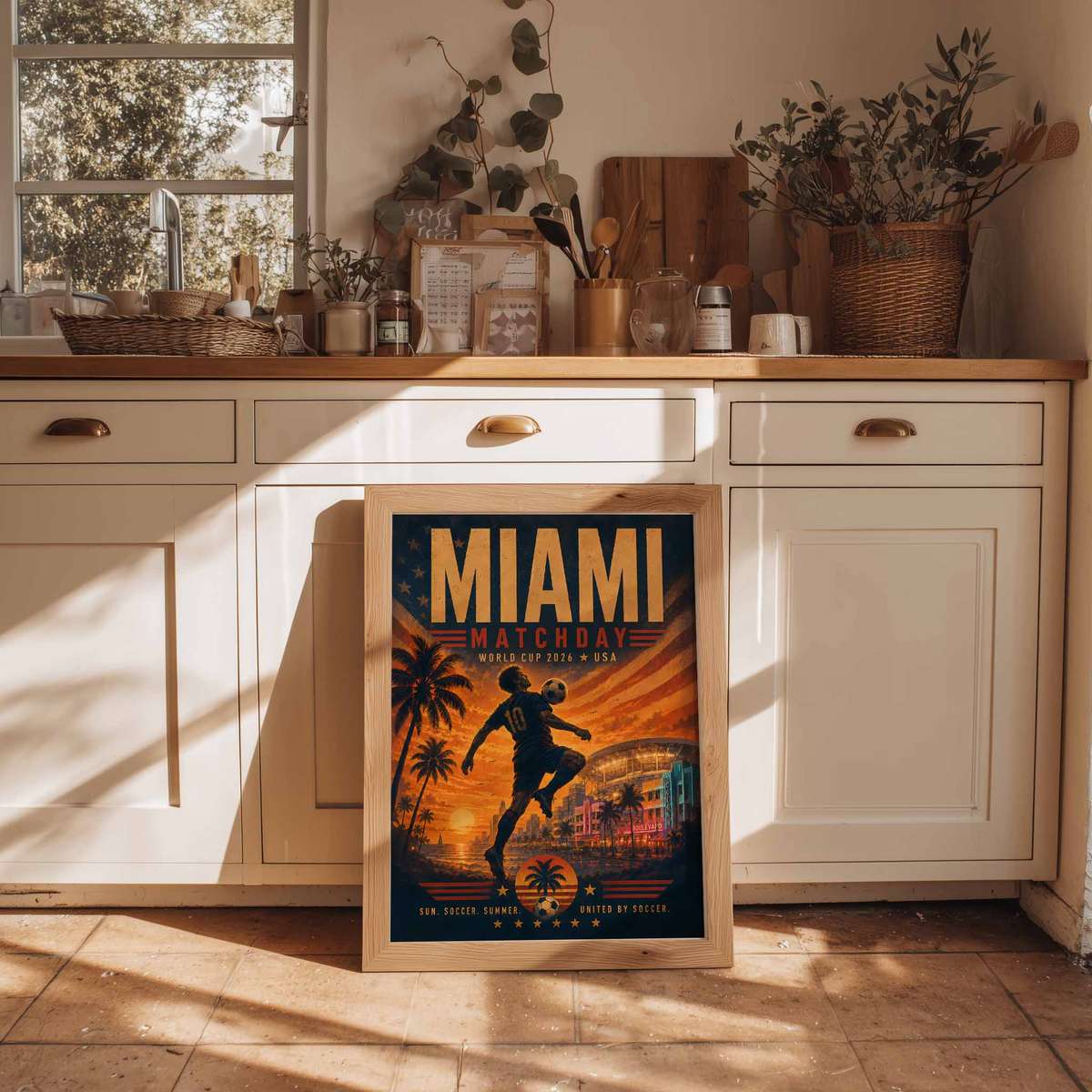
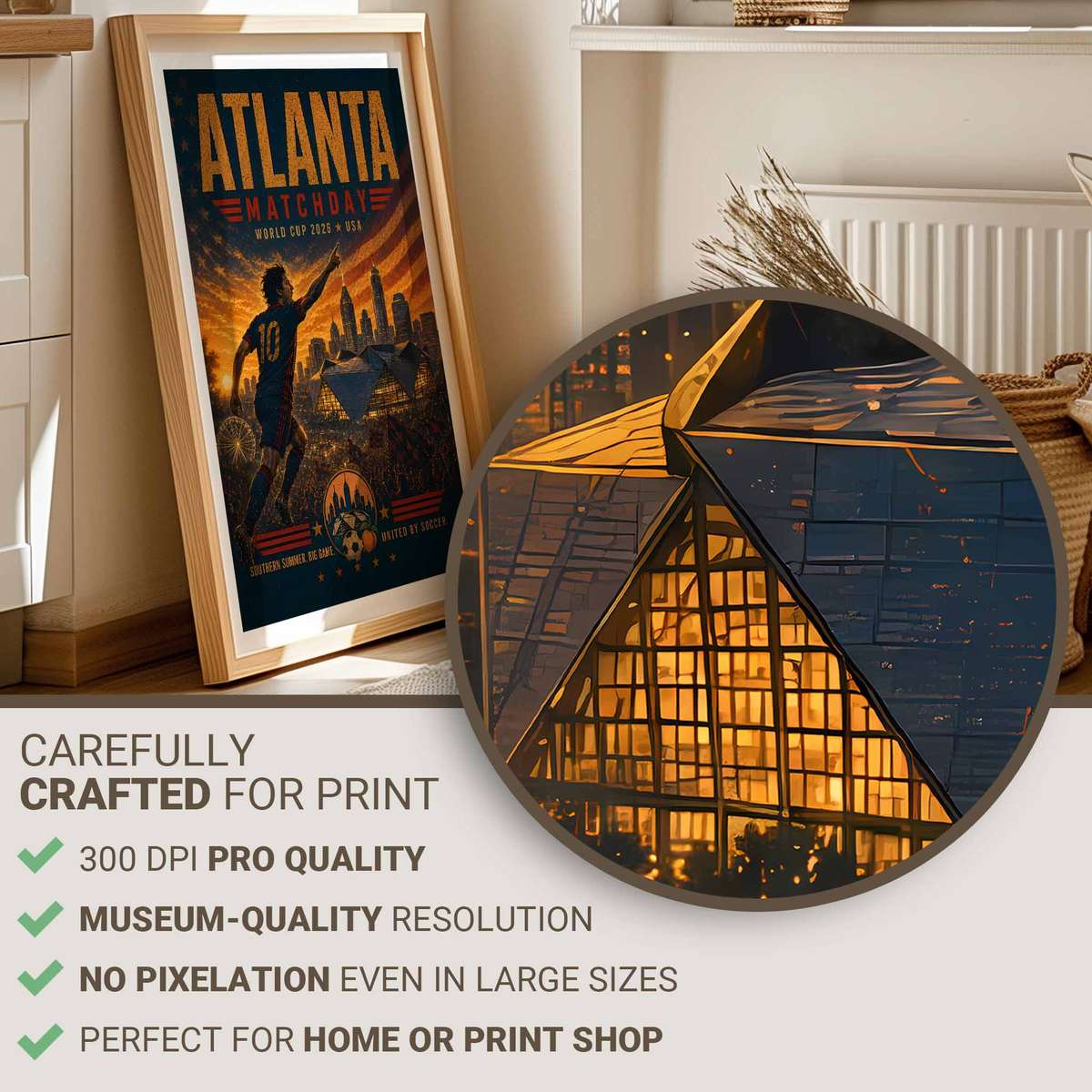
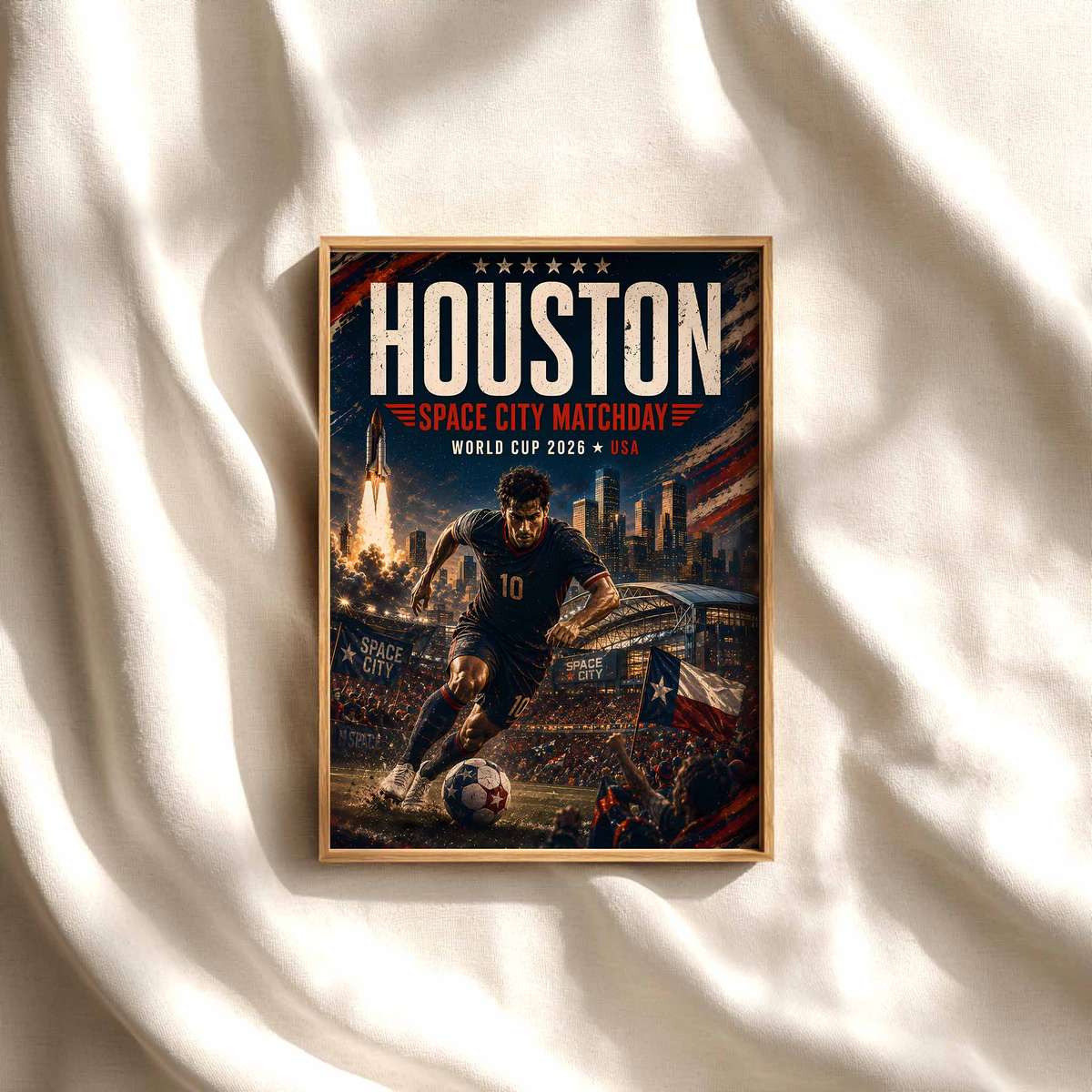
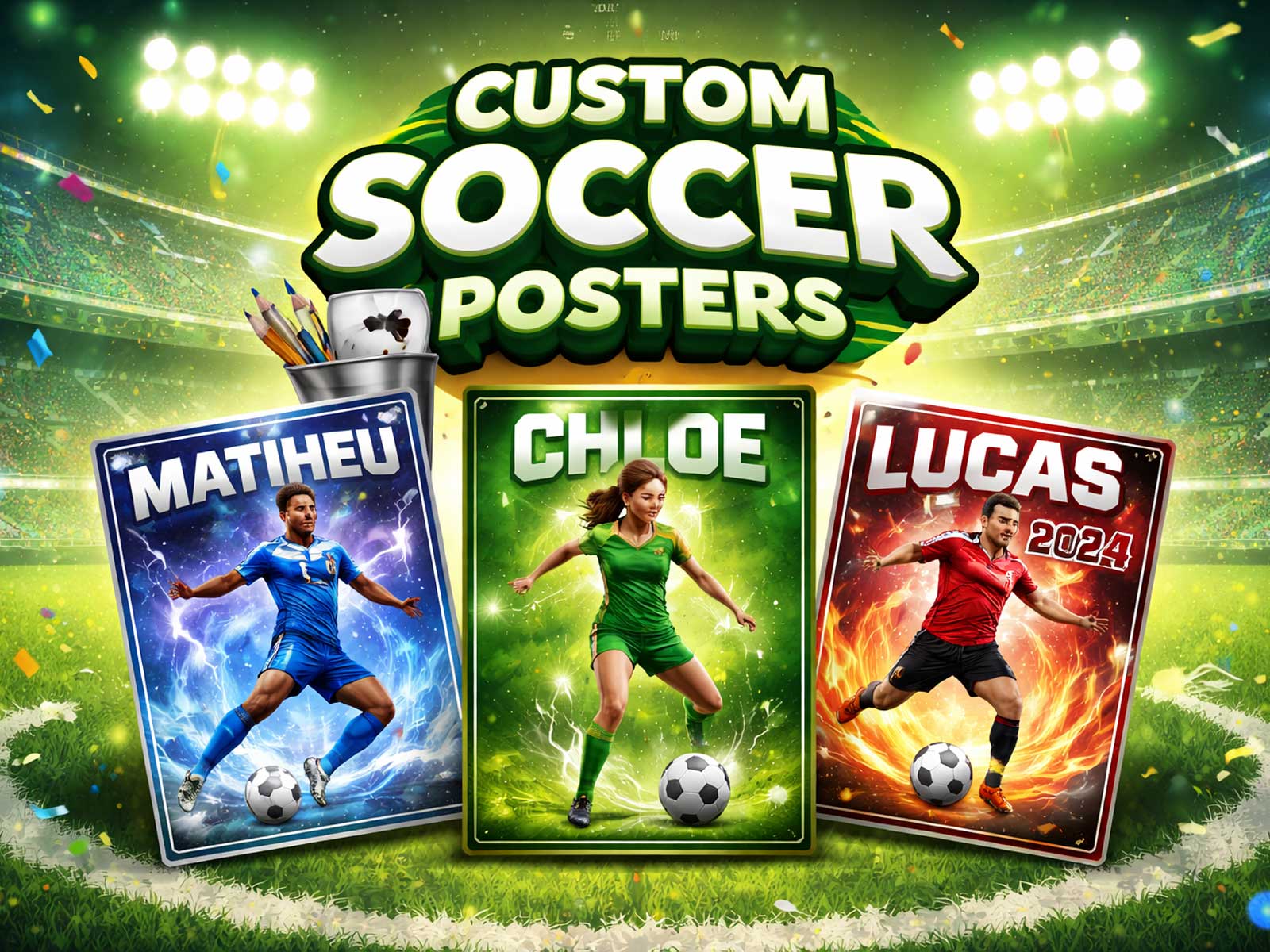
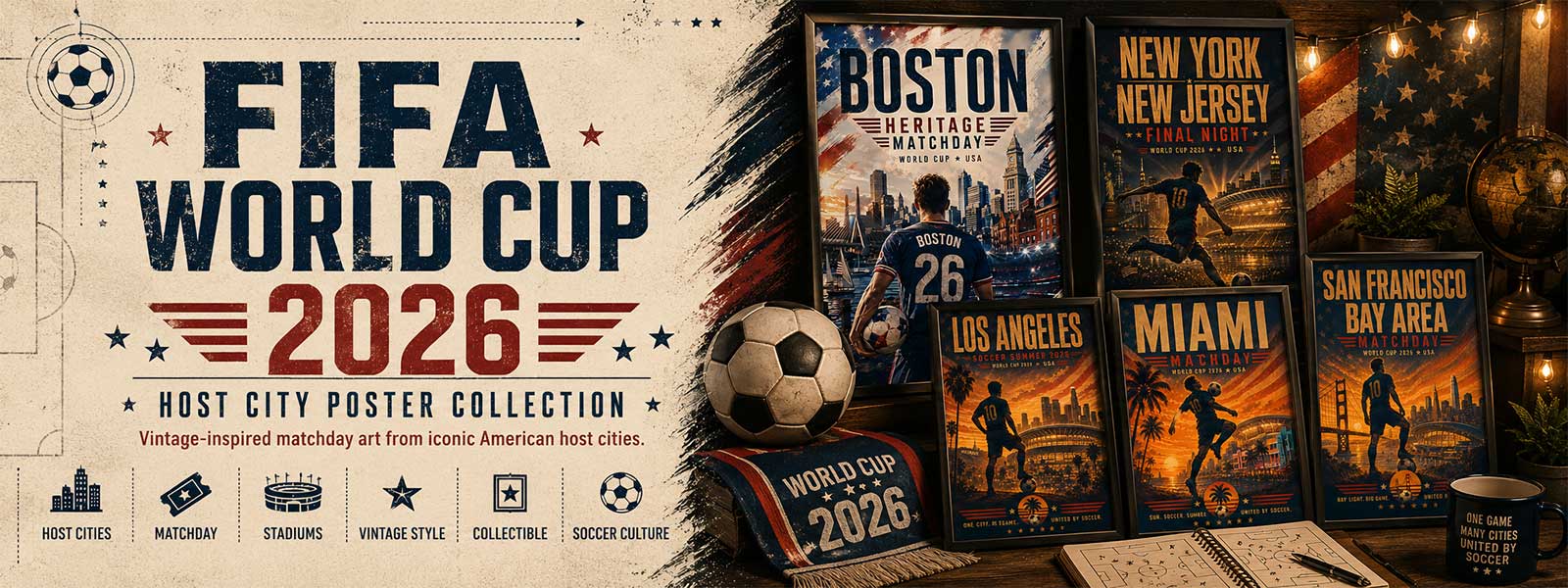
There’s a particular electricity that lives in a stadium on a World Cup night: floods of light, the hum of the crowd, and a skyline that remembers the city long after the final whistle. A custom World Cup 2026 poster focused on the Miami final can translate that one-off intensity into an everyday object that carries memory, identity and emotional weight. More than a decorative print, this kind of poster is a picture of a moment—anchored by place, player and team—made to feel personal on the wall.
What separates a keepsake-style poster from a generic soccer print is the narrative it holds. Instead of a stock image, imagine the Miami skyline at dusk bending toward the stadium lights, a player silhouette or a specific name and number placed in the composition, and color choices that echo the team’s kit. Those details convert a crowd roar into a private story: the season when a player grew into a starter, the semi-final that brought the whole family together, or the coach’s last home game. Naming the season, the player role, or the match—subtle cues that reflect real effort and continuity—makes the poster readable as a milestone rather than mere decor.
In practical terms, these posters find natural homes where memory and daily life meet. A teenager’s bedroom becomes a place of ongoing encouragement when a poster recalls the season they worked the hardest. A family room or game room displays collective pride, reminding parents and siblings of the late practices, early tournaments and small rituals that led to a big match. Even a team locker area or coach’s office benefits: a single framed piece that references a known game acts as a quiet emblem of teamwork and growth.
Emotionally, a Miami World Cup 2026 poster can be both celebratory and forward-looking. It acknowledges achievement—the badge on the chest, the number on the back—while also serving as a keepsake that a player can carry through other seasons. Because it highlights identity (name, number, position) and context (the city skyline, the final’s light), the poster doesn’t freeze the player in time; it marks a stage in an ongoing story. Years later it reads like a chapter marker: a concrete reminder of effort, late-night practice, and the people who showed up.
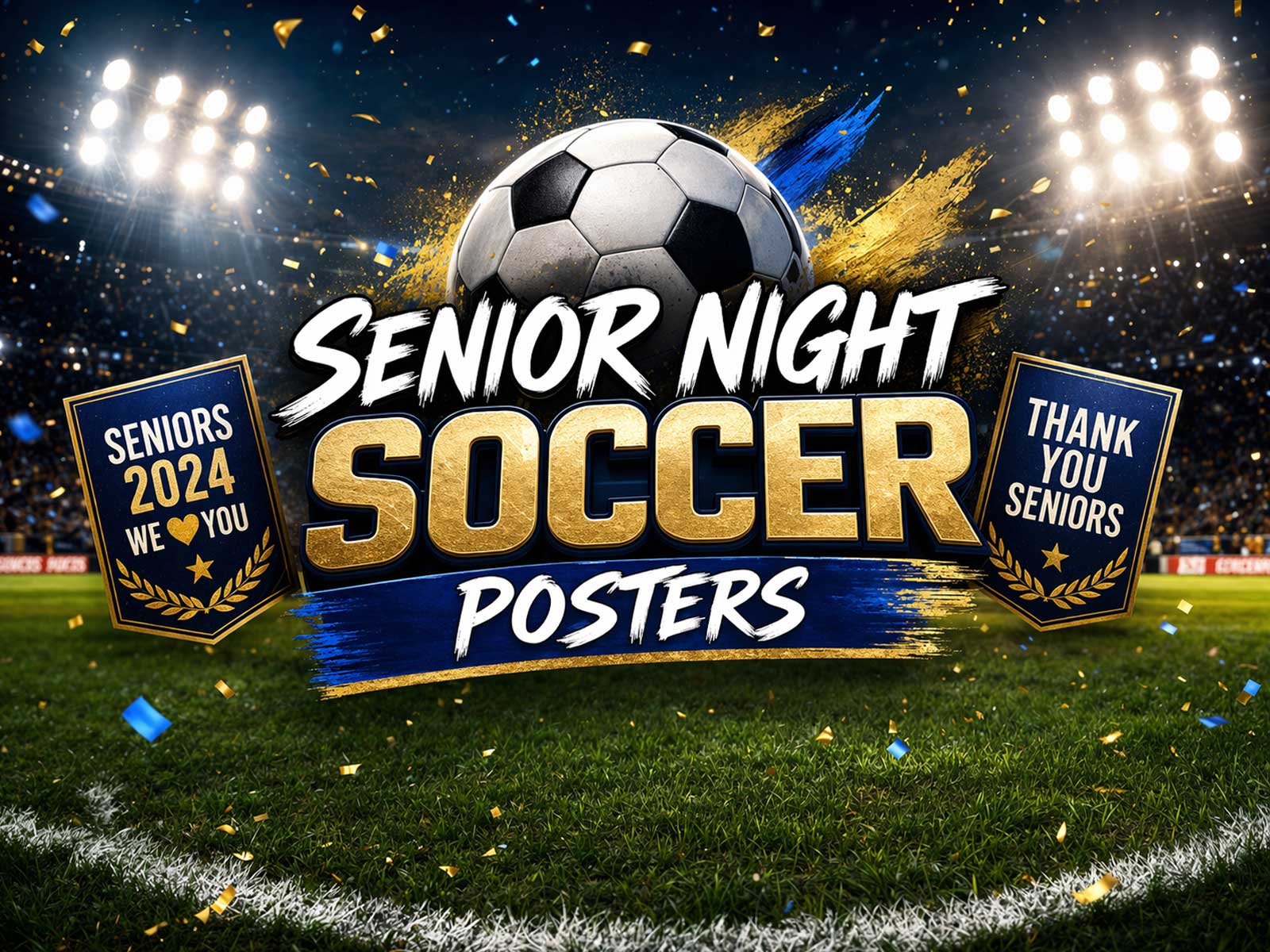
Thoughtful gifting is another place where this poster shines. A parent might present it after senior night to signal recognition of a multi-year commitment. Teammates can sign around the frame as a communal keepsake for a departing captain. Coaches sometimes use a framed match poster as a subtle thank-you to staff who shepherded a season through highs and lows. In each case the gift feels deliberate because it ties a physical image to a known memory: the player’s number, the sunset over Miami, the date or match title.
Visually, soccer imagery works well as wall art because its lines and motion are clean and iconic—goal arcs, sprinting silhouettes, and bold numbers read clearly from across a room. When combined with a city skyline and the warm, cinematic light of a final, a poster becomes an arresting focal point rather than background noise. Simplicity in layout lets those personal elements breathe: the viewer’s eye finds the name, then the number, then the cityscape that frames the achievement.
Ultimately, a Miami World Cup 2026 poster is valuable because it turns public spectacle into private meaning. It’s not only about celebrating a match; it is about honoring a player’s place in a team, a family’s role in a season, or a coach’s guiding influence. Hung where daily life unfolds, the poster keeps that moment alive—not as a static trophy, but as a visual reminder of growth, belonging and the next match to come.