Football Drills U10: Passing Combinations, Scanning and Movement Off the Ball
At U10 the key coaching job is to link simple technical drills to clear game behaviours: clean pass weight, a purposeful first touch, scanning before the ball arrives and timely supporting runs. The best football drills U10 players can do combine these elements with small, repeatable patterns that resemble match problems.
Quick answer
Triangle passing, Y-passing (give-and-go), rondos (3v2/4v2) and gate/passing-through-gates progressions are the most useful U10 formats to train passing combinations, scanning and movement off the ball when coached with clear technical points.
What this article explains
- Which drills are evidence-backed for U10 and what each specifically trains.
- Concrete coaching points on pass weight, receiving shape and timing of runs.
- How to progress from pair work to small-sided possession while keeping age-appropriate demands.
Quick access
What passing drills really train
Verified coaching resources identify a short list of U10-friendly formats that reliably develop combination play, scanning and off-the-ball movement. Triangle passing (three-player combinations) rehearses creating angles and supporting runs. Y-passing and give-and-go (one-two) variations train the timing of passes and the immediate supporting run after release. Rondos and small-sided possession games such as 3v2 or 4v2 put players under pressure to combine quickly and scan to find passing lanes. Gate or passing-through-gates activities encourage accuracy and purposeful movement to receive in better positions.
Each drill family targets both technical mechanics (pass quality, first touch) and behavioural habits (look before receiving, move to create passing angles). The coaching value comes when the coach links the exercise detail to those match-like behaviours, not when the format is used in isolation.
Pass weight, line and timing
For U10 players pass weight and direction are fundamental. A pass that is too hard forces a heavy first touch; one that is too soft invites interception or a lost rhythm. In triangle and Y-passing drills emphasise:
- Pass line: aim to play into the teammate's stride or into space ahead of their first touch so the receiver can continue the combination.
- Pass weight: encourage a measured weight that allows the receiver to control in one or two touches depending on the progression (one-touch for rondos, two-touch for developing first touch control).
- Timing: coach the passer to release the ball as the supporting run begins—this synchronisation is the core of effective give-and-gos.
In practice, use short repetitions with immediate feedback: show a quick demonstration of a correct-weight pass then let players try multiple times so they feel the required pace and line.
Receiving shape and preparation
Verified coaching guidance for U10 stresses scanning and body orientation before the ball arrives. Receiving shape means opening the body so the next action—turning, passing, or driving—is available. Key coaching points:
- Scan: train players to look over the shoulder or glance around before the pass so they know where support is and whether a defender is near.
- First touch direction: practise taking the first touch into space that supports the next pass or run; for example, a touch forward into a channel to continue a triangle or a cushion touch back for a one-two.
- Foot surface and balance: use the inside of the foot for controlled passes and the sole/cushion for tight control in small-sided patterns. Teach a low centre of gravity and a balanced receiving stance even in repetition drills.
Support angles and movement after passing
Triangles explicitly coach support angles: players must move to create a 45–90 degree receiving option rather than lining up directly behind the ball. In Y-passing/give-and-go work, the supporting player's run should create immediate passing lanes—either a forward run beyond the defender or a diagonal check to receive on the half-turn.
Use coaching cues such as "show an angle", "check away then return", or "move to open space" to reinforce desirable behaviours. The mechanism that these drills train is simple: repeated movement to create clear passing lanes reduces the need for long or risky passes and increases possession stability in match contexts.
Simple combination play for young players
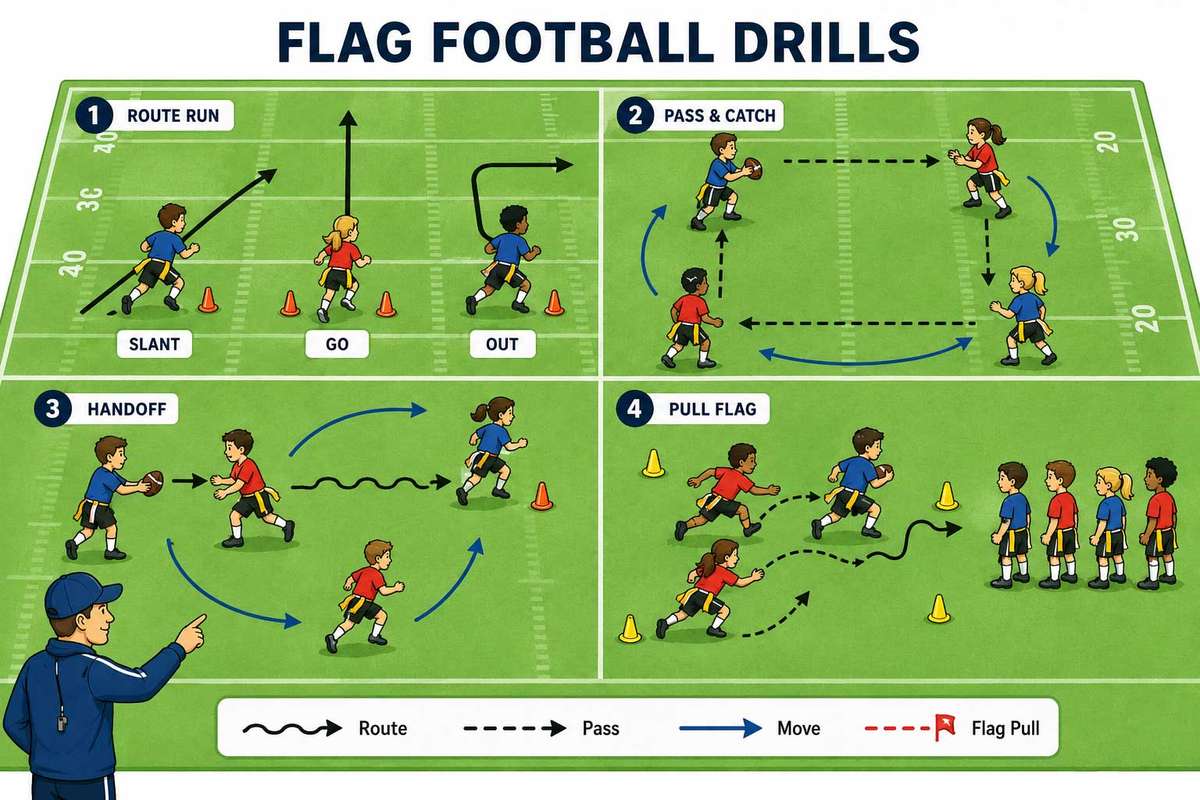
Progressions matter. Start with pair passing and technical warm-ups (pass-and-receive, 2-touch). Move to triangle passing with the third player available for creating an angle. Add Y-passing and give-and-go patterns that require a timed run and a return pass. Finally, introduce rondos (3v2, 4v2) and gate-based circuits that require quick decisions under mild pressure.
This graduated approach keeps technical demands appropriate to age while increasing decision complexity. The verified resources recommend keeping patterns short and repeatable so players learn the rhythm: see-pass-move-receive-repeat.
Rhythm, repetition and decision quality
Rondos are useful because they force rapid decision-making at a tempo closer to match speed, reinforcing one-touch or two-touch logic depending on the constraint. Repetition in short bursts trains feel for pass weight and movement timing. The coaching mechanism is: predictable constraints (small area, fixed player numbers) create repeated decision situations so players learn which option is most reliable under that pressure.
To protect decision quality, vary the rhythm—alternate faster rondos with slower combination drills where coaches can give technical input. This helps players transfer technical improvements into quicker decisions.
Common mistakes in youth passing exercises
Several repeatable errors reduce learning value if not corrected:
- Players stand flat-footed and receive with a closed body, preventing a good first touch or scan.
- Passes are played without a purpose (no weight or direction tied to the next action).
- Supporting runs are late or predictable (straight-line behind the passer) so defenders can intercept or block passing lanes.
Coaching fixes are practical: stop the drill briefly to show the right body shape, limit touches to force movement, or reward correct supporting angles with points in small-sided games.
How coaches can make passing work more real
To increase transfer to matches, keep exercises sport-specific: use small areas, introduce a passive or active defender, and score points for successful combinations (e.g., 3 passes including a wall pass through a gate). Progress by adding pressure or reducing touches rather than changing the whole drill. Observational coaching points: watch whether players scan before receiving, whether first touch is directed into a helpful space, and whether runs create visible angles.
Session placement: begin with technical pair work as a warm-up, move to triangle/Y-patterns for the main technical block, then finish with rondos or small-sided possession so players apply the learned mechanics under pressure.
Match transfer and closing interpretation
Triangle passing, Y-passing, rondos and gate drills are documented as effective U10 formats because they each rehearse a specific match problem: creating angles, timing runs, quick combination, and receiving under pressure. The coaching mechanism is consistent across these formats—repetition of tightly defined decision situations improves the technical habits (pass weight, first touch, body shape) and behavioural responses (scanning, support runs) that underpin possession and combination play.
Keep coaching clear, use progressions, and prioritise observable behaviours over abstract motivation. When players repeatedly practise the same small decision problems with concrete feedback, match-ready combination play follows.
Author: William L.