Soccer Drill for 12 Year Olds: Building 1v1 Timing, Shielding and Attacking…
At U12 the gap between basic ball mastery and confident, match-ready 1v1 play closes fast. A well-designed soccer drill for 12 year olds focuses on tight touch control, clear timing cues, and realistic defender interaction so players learn when to accelerate, when to protect the ball, and how to make better attacking choices.
Quick answer
A focused U12 1v1 drill uses small-sided, competitive formats (gates, battle boxes, 4-goal games or short-shield challenges) to practise change of pace, direction, body positioning and shielding so players develop timing and attacking decision-making under pressure.
What this article explains
- Which technical elements U12 1v1 drills target and why they matter.
- Concrete coaching cues for touches, feints, shielding and timing.
- Practical session logic and small-sided formats that transfer to matches.
What dribbling and 1v1 drills really train
For U12 players, 1v1 drills are not just about beating an opponent; they are a structured way to combine technique, timing and decision-making. Coaching resources for this age recommend 1v1 and small-sided formats (1v1, 2v1, 2v2, 3v3, etc.) because these activities deliver repeated, game-like choices: when to attack the space, when to shield, and when to release the ball. The repetition of short, competitive duels builds muscle memory for close touches and situational judgement while keeping the practice realistic and engaging.
Touch control, speed change and direction change
Key technical outcomes in U12 1v1 work are disciplined, close touches and clear changes of pace and direction. Coaches emphasise using both feet, keeping touches compact under pressure, and combining a quick acceleration with a subtle directional change. Practicing short touches followed by an explosive touch to create separation mimics real match demands and trains balance and coordination under duress.
Feints, deception and timing
Feints and simple deception at U12 should be economical: a shoulder drop, vertical look, or a body lean combined with a change of pace is often more effective than complex skill moves. The critical variable is timing — players must learn to delay the acceleration until the defender commits, or conversely, to accelerate earlier when they identify a gap. Repeated 1v1 contests in a competitive drill help players sense defender weight and timing so their feints land with purpose instead of looking rehearsed.
Shielding and protecting the ball
Shielding is a technical and positional skill taught in many U12 practice plans. Good shielding places the body between the ball and defender, uses low centre of gravity and short, controlled touches to keep possession. Practical drill formats such as small-box battles or challenges where the attacker must hold the ball for a set time force players to adopt the body positioning and footwork that make shielding reliable. Coaching cues include keeping the ball on the far foot, lowering the hips, and scanning while protecting the ball.
Common mistakes in youth 1v1 work
At U12 the typical errors are predictable and correctable: taking long, heavy touches that invite tackles; rushing the move without reading the defender; over-reliance on one favourite skill; and failing to protect the ball once past the defender. Drills and coaching points should target these faults: demand short touches in tight spaces, reward timing and composure, encourage the use of both feet, and run shielding tasks so players learn to keep the ball under pressure.
How coaches can create useful duel practice
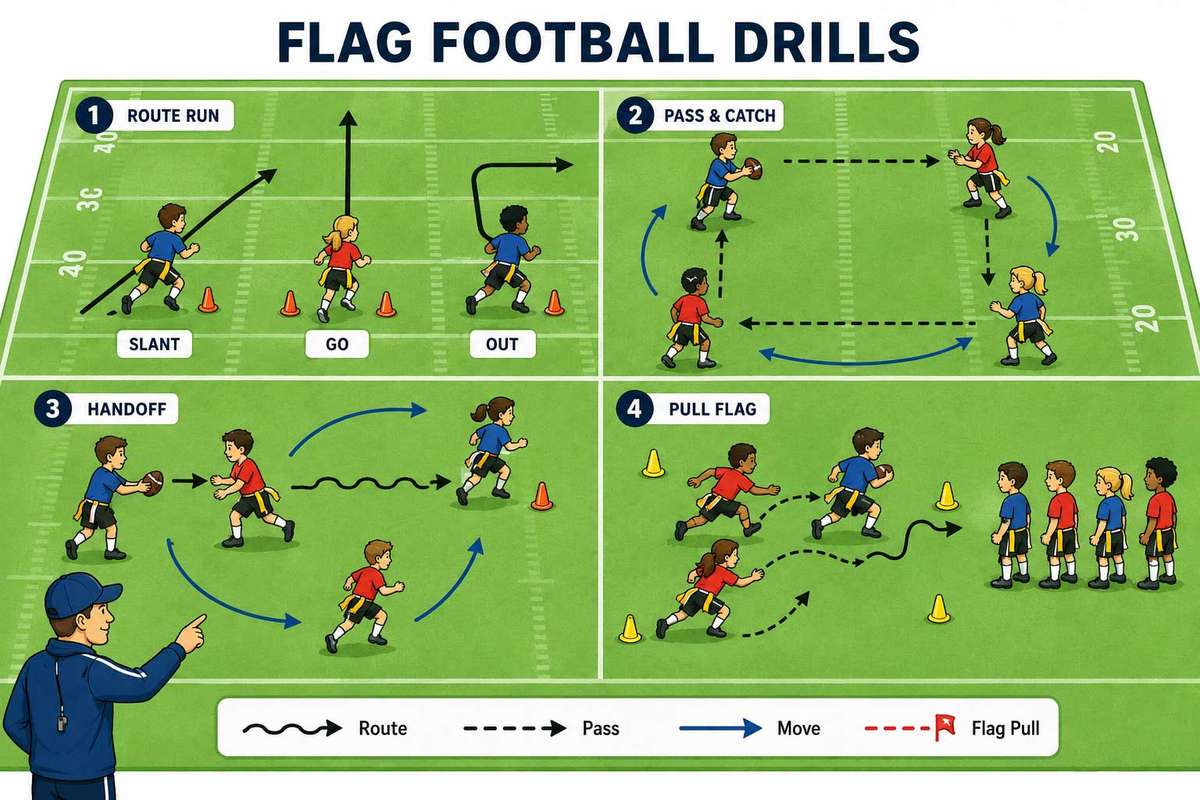
Curriculum guidance for U12 stresses game-like, competitive small-sided activities. Effective formats include gate/cone 1v1s, battle boxes (small square where attacker must exit or hold for X seconds), and 4-goal 1v1 games. Structure sessions so players get many short, intense duels with specific goals: beat the defender, hold the ball 5 seconds, or dribble through a gate. Keep rest between reps short and rotate defenders and attackers so learning is distributed.
Coaching points should be concise and consistent: "tight touches," "eyes up," "use your body," "change of pace," and "shield when trapped." Use scoring or small rewards to maintain competitive intensity; research-backed curricula recommend competitive repetition to build timing and decision-making in U12 players.
Match transfer and real game moments
Small-sided 1v1 formats transfer well to matches because they mirror the micro-decisions players face: is there space to drive into, should I protect and wait for support, or is a quick pass safer? Regularly practising 1v1s in slightly varying contexts—different entry angles, added time-with-ball requirements, or multiple target gates—helps players generalise skills into real-game choices. The U12 curriculum explicitly recommends these formats to improve technical mastery and decision-making under pressure.
Closing interpretation
For 12 year olds the main value of a soccer drill for 12 year olds focused on 1v1 work is practical: it compresses technical touches, timing practice and competitive pressure into short rehearsals that encourage attacking bravery while teaching when to protect or release the ball. Use clear coaching cues, compact touches, and small competitive formats to make progress measurable and transferable.
Author: Alex R.