How to Turn Generic Football Drills for U10s into Simple Passing-and-Receiving…
At U10, quantity of meaningful touches and decision practice matters more than complicated drills. Turning generic football drills for U10s into simple passing-and-receiving patterns is about clear purpose, progressive pressure, and coaching the small technical details that young players can use in matches.
Quick answer
Use small-sided games and possession grids, build constrained progressions (no pressure → passive defender → active defender), and coach first touch, body shape and pass weight so patterns practiced in training show up in matches.
What you will learn here
- How to give a drill a clear game-related purpose (pass to feet vs pass to space).
- Progressions that add realistic pressure and decision-making.
- Concrete coaching points on first touch, pass weight, support angles and scanning.
Navigate this guide
What passing drills really train
Generic drills become useful when you define what you want players to do in a match. For U10s the evidence-backed priorities are more touches, faster decisions and repeated exposure to common match situations. Small-sided games (2v2, 3v3, 4v4) and possession grids increase touches and decision opportunities and therefore transfer better to match play than isolated technical metres of passing.
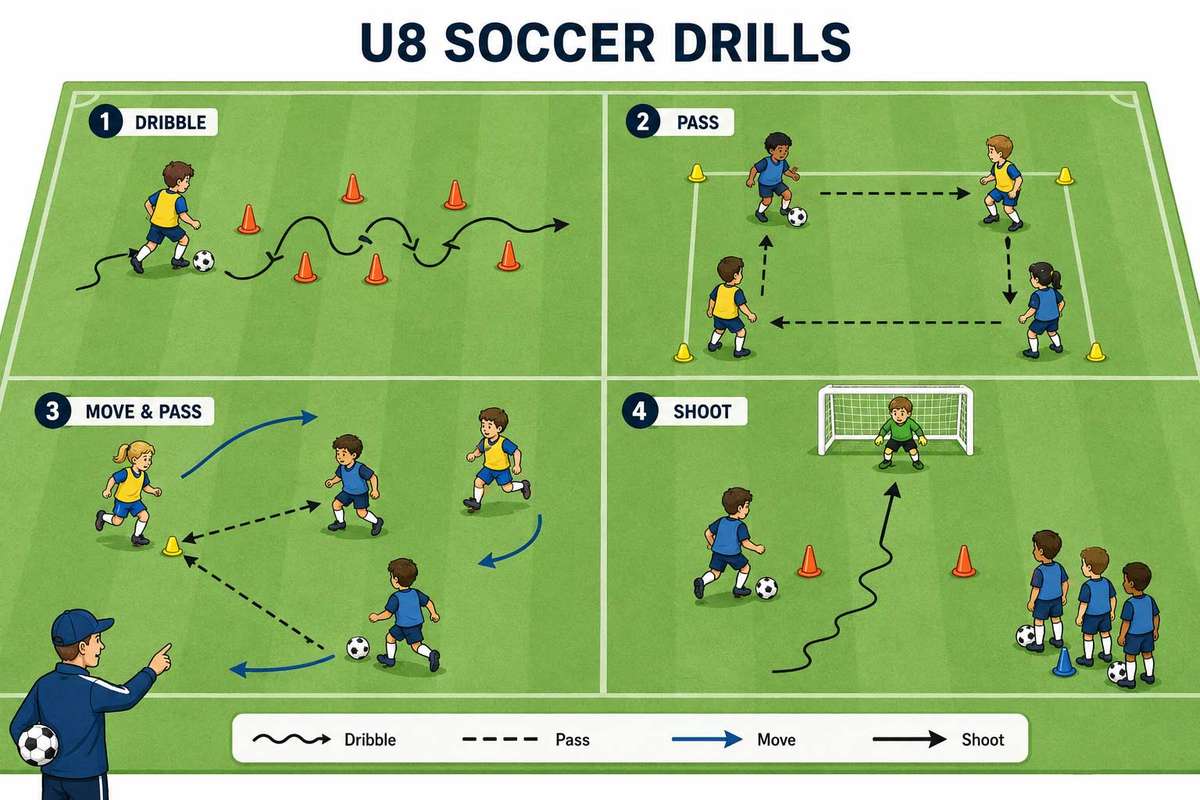
Design drills around a short list of game actions: passing to feet, passing to space, receive-and-turn, and quick wall passes. Label each drill’s purpose clearly so players and coaches understand the exact decision being trained.
Pass weight, line, and timing
Pass weight and direction determine whether a pass can be used in a game. Teach players to vary weight: firm and direct to feet when the receiver is stationary, softer and into space when the receiver will run on. Emphasise line—passes that open the field (diagonal or into space ahead of a teammate’s run) are more useful than lateral passes that trap possession.
Timing ties it together: use drills that require the passer to wait for a support run or accelerate the pass to exploit a gap. Add constraints such as a required number of passes before scoring or a one-touch limit on the final pass to force timing decisions that mirror matches.
Receiving shape and preparation
First touch is the gateway skill. Teach players to open their body to the field where possible, receiving across the body so the next action (pass, turn, dribble) is immediately available. Coach the idea of receiving into space—use examples where the first touch moves the ball away from pressure and toward the intended passing lane.
Include drills that force a purposeful first touch: receiving to a cone or target space, or requiring the receiving touch to set up a pass within two seconds. Encourage use of both feet and reward receiving that creates the next play, not just a controlled touch.
Support angles and movement after passing
Passing is player-to-player interaction: teach simple support angles (45–90 degree) and small movements off the ball to create those angles. In grids and small-sided games, prompt players to move to a pocket of space immediately after passing—short diagonals or steps to create a better receiving line for the next pass.
Practice the movement as a habit by using limited-touch constraints and requiring a supporting player to become available within two seconds, which keeps rhythm high and emphasises the link between the pass and the next action.
Progressions: from no pressure to game realism
Coaching progressions are essential for transfer. Start with technical repetition without pressure so players internalise pass weight and receiving shape. Add passive defenders who mark but do not challenge the ball, then active defenders who attempt to intercept or press. These steps bridge technique and decision-making and are widely recommended in U10 resources.
Apply the same progression to small-sided games and combination patterns (wall passes, give-and-go). The goal is to keep the task recognisably similar while increasing uncertainty: pass weight, line and first touch remain the same skills but players must execute them under growing pressure.
Rhythm, repetition, and decision quality
U10 players need high-repetition tasks that still require decisions. Use short, sharp exercises with clear constraints (e.g., two-touch max, directional targets) to create a rhythm that mimics match tempo. Repetition improves technical reliability; constraints focus that repetition on the right decisions.
Encourage scanning before receiving by adding a rule: players must look over their shoulder or touch the ball only after calling for it. This small habit creates awareness and increases the chance the practiced patterns appear in matches.
Common mistakes in youth passing exercises
Typical errors to watch for: too-heavy passes that pass beyond teammates, static receiving with closed body shape, congregating on the ball instead of creating support angles, and training without progressive pressure. Fix these with immediate, simple feedback: demonstrate a correct first touch, reset the drill to a previous progression, or add a mild constraint such as a turnover for a misplaced pass.
Also avoid drills that are technically perfect but context-free. If players never practice receiving into space or passing under pressure, their training will not transfer well to games.
How coaches can make passing work more real
To secure match transfer, make training decisions match-like: use small-sided games, impose clear directional goals, vary pass weights and angles, and include targets or mini-goals to reward purposeful passing sequences. Progressions should always move toward defended, variable situations so players learn not just technique but when to use it.
Finally, keep feedback specific: praise a first touch that opens the field, not just a completed pass. Tie each drill back to a match example so players understand the why behind the repetition.
Closing interpretation
Turning football drills for U10s into patterns that transfer is less about inventing new exercises and more about giving old drills a clear purpose, layering pressure progressively, and coaching pass weight, first touch and support movement every repetition. Use small-sided games and constrained grids to create the touches and decisions young players need; coach body shape and timing so those touches become useful in matches.
Author: Cynthia D.