Reframing Flag Football Drills: Youth Soccer Speed, Agility and Ball‑Control…
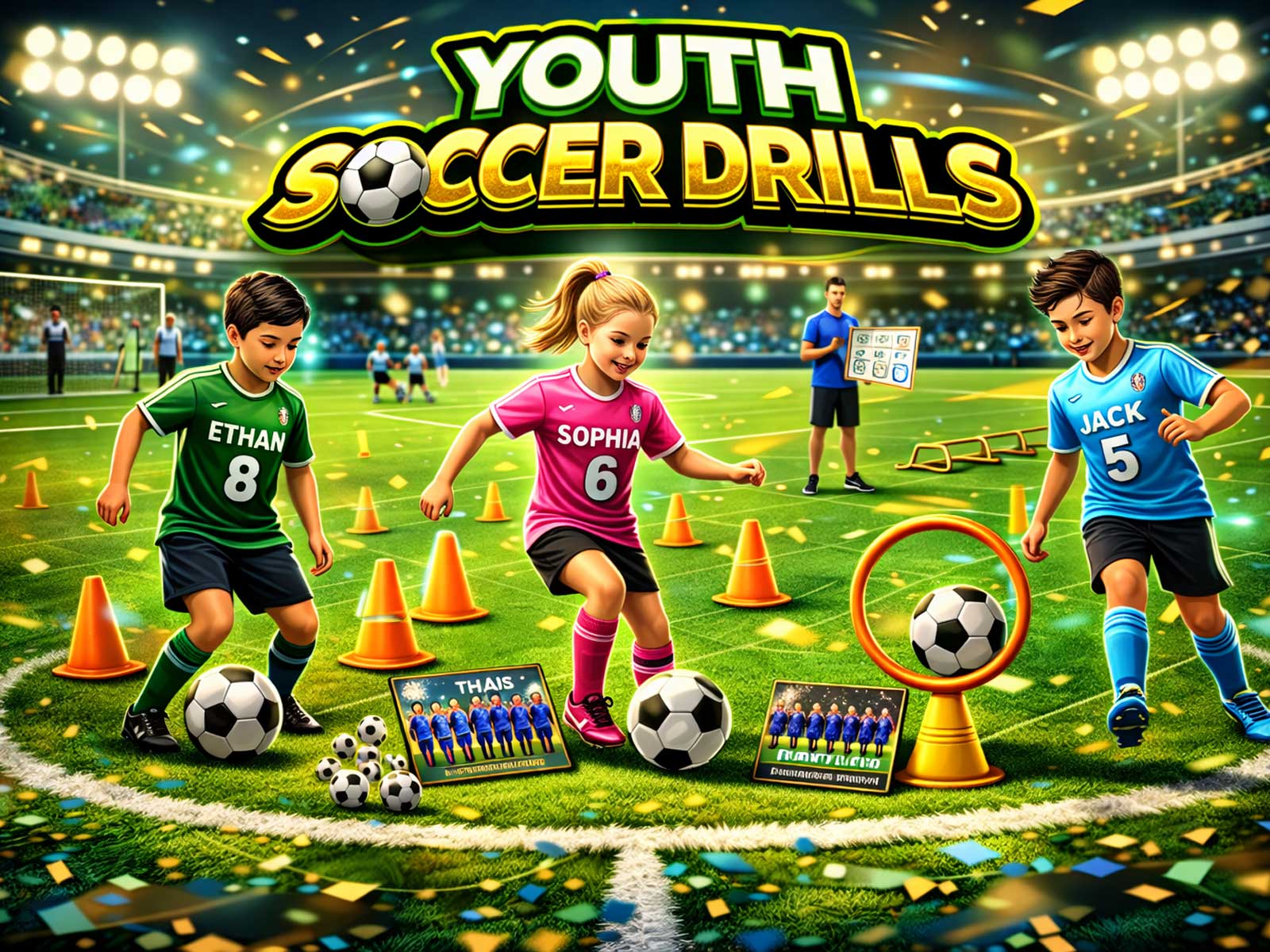
Many flag football practice plans are built around rapid footwork, short sprints, ladder patterns and reaction work. For youth soccer coaches these same drill templates can be reframed to emphasise movement quality, balance and ball control so that quickness translates to match actions.
Quick answer
Flag football drills such as ladder work, T‑drills, lateral shuffles and mirror/partner reaction drills are already designed to teach agility, coordination, balance and speed. Swap simple ball actions into those patterns and focus on movement quality to make them directly useful for youth soccer.
What this guide covers
- What these drills actually train in soccer terms.
- How to prioritise balance, footwork and control when adding a ball.
- Age‑appropriate coaching notes and common practice errors to avoid.
What speed, agility, and coordination drills really train
Resources for flag football list ladder drills, cone patterns, T‑drills, lateral work and mirror/partner reaction drills as core methods to improve quickness, coordination and reaction time. In soccer terms these exercises target the same ABCs of movement—agility, balance, coordination and speed—so their raw training value is in improving footwork rhythm, weight transfer, and rapid changes of direction rather than teaching sport‑specific tactics.
Balance, footwork, and movement control
Ladder and cone sequences force players to organise feet under time pressure. The coaching emphasis should be on controlled, economical steps, a low centre of gravity during lateral moves, and soft landings when accelerating out of a cut. These are the same movement qualities that help a player hold the ball under pressure and set up accurate passing or dribbling after a change of direction.
Acceleration, deceleration and direction change
Flag football practice plans commonly include short sprints and change‑of‑direction patterns like the T‑drill and box drills. Those exercises teach the acceleration and deceleration mechanics that matter in soccer: how to push from the back leg, lean the body appropriately into a cut, and control momentum so the next action (first touch, pass, or shield) is available. Coaching cue: practise the stop and first step deliberately—fast is useful only if the body is under control.
Coordination before ball work and with ball work
Authoritative youth materials and soccer coaching resources both promote ladder, zig‑zag cone drills and partner reaction work. Use that overlap: run a ladder pattern without the ball to establish foot rhythm, then immediately repeat the same pattern while dribbling, using inside/outside touches timed to the ladder spacing. This keeps the coordination stimulus while forcing the player to integrate ball control with the previously learned foot sequence.
Reactive movement and simple decision layers
Mirror and partner reaction drills common in flag football are valuable because they add perception and reaction demands. In soccer, add a simple decision layer—coach points left/right, or a teammate calls a colour—to require a reactive change of direction while protecting or moving the ball. That small cognitive load makes the drill closer to match conditions without changing the underlying movement objective.
Age‑appropriate movement demands
Clinic and programme descriptions for younger players (U6–U10) frequently position flag football speed and agility work as transferable movement skills. For these ages keep sessions short, focus on simple patterns, and prioritise movement quality over speed. Older youth can handle more complex sequences and a higher volume of reactive reps, but the same principle applies: build reliable mechanics first, then add intensity or ball difficulty.
Common mistakes in youth agility practice
Two predictable errors appear in both flag football and soccer contexts: (1) turning ladder or cone sequences into mindless busyness without coaching the why, and (2) expecting fast execution to equal good mechanics. Avoid empty ladder drills by linking each pattern to a soccer action—first touch, change of direction to create space, or quick defensive recovery. Always sample a few controlled reps before asking for speed.
How coaches can keep movement work soccer‑relevant
Practical session logic comes from adaptation. Use the common flag football templates—ladder, T‑drill, box, lateral shuffle, mirror reaction—and swap or layer a ball action: dribble through the cone zone instead of sprint, perform a pass on exit from a cut, or shield and turn after a lateral shuffle. Brief instruction, quality demonstrations and immediate corrective feedback keep the drills focused on transferable movement outcomes.
Match transfer and closing interpretation
Materials from both flag football and youth soccer emphasise the same movement fundamentals. When coaches intentionally reframe ladder, cone and reaction drills as engines for better footwork, balance and controlled acceleration—and when they add small, relevant ball tasks—those drills cease to be generic conditioning and become concrete building blocks for match actions. The useful measure is observable player behaviour: cleaner first touches, steadier balance when cutting, and more consistent recovery steps after a challenge.
Author: Eric M.