Free Kick Soccer Explained: Direct vs Indirect and Why Set-Piece Quality Matters
A free kick in soccer is a restart awarded after a foul or other offence under the Laws of the Game. Understanding free kicks—how they work, when play can be restarted directly on goal, and why set-piece practice matters—helps parents, players, and fans read the game and appreciate the small moments that change matches.
Quick summary: Free kicks restart play after fouls. There are two types—direct and indirect. Direct free kicks can be shot straight on goal; indirect free kicks must touch another player first. The Laws set placement, opponent distance, and penalty exceptions. Well-practiced set pieces are valuable because they are rehearsable scoring opportunities.
Quick access: Definition • How it works • Set pieces & coaching
CLEAR DEFINITION
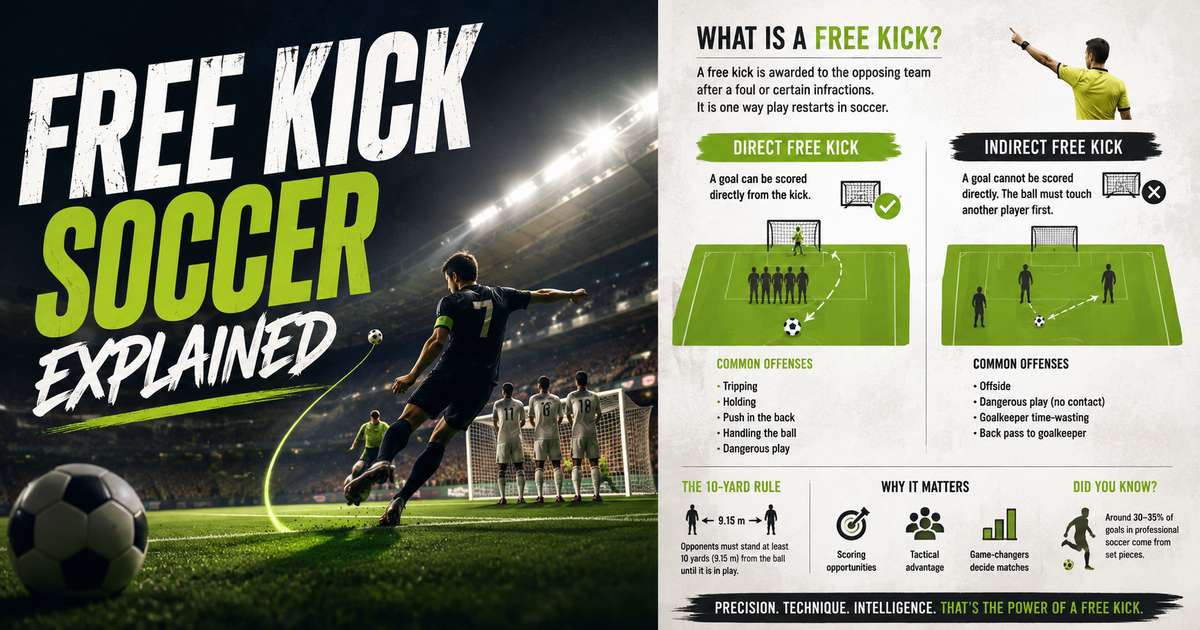
A free kick is a restart of play awarded after a foul or other offence under Law 13 of the Laws of the Game. The referee awards the kick at the place of the offence in most cases, with special cases such as offences inside the offending team’s penalty area leading to a penalty kick instead of a direct free kick. Free kicks fall into two categories: direct and indirect.
HOW IT WORKS: DIRECT VS INDIRECT
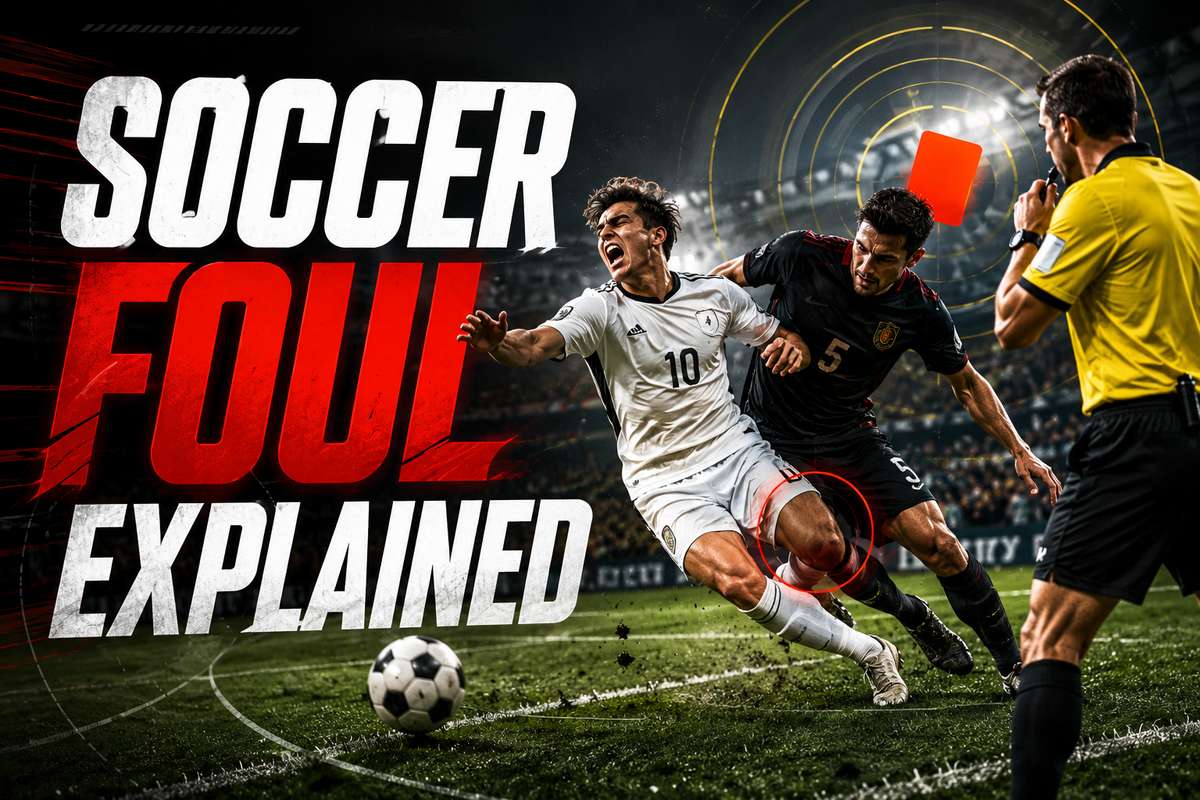
Direct free kicks are given for specified fouls such as kicking, tripping, charging, striking, holding, or deliberate handball. From a direct free kick, the kicker may score directly against the opponent’s goal.
Indirect free kicks are awarded for other offences, for example playing in a dangerous manner, impeding an opponent without contact, or certain goalkeeper infractions. An indirect free kick requires the ball to touch another player before a goal can be awarded; the referee indicates an indirect free kick by raising an arm until the kick has been taken and the ball has touched another player.
When a direct free kick offence happens inside the defending team’s penalty area, the restart is a penalty kick rather than a free kick. The Laws also set basic procedural requirements: the ball must be stationary, placed at the correct location, and opponents must be at least 10 yards (9.15 m) away unless they are on the goal line between the posts.
RULES AND REFEREEING
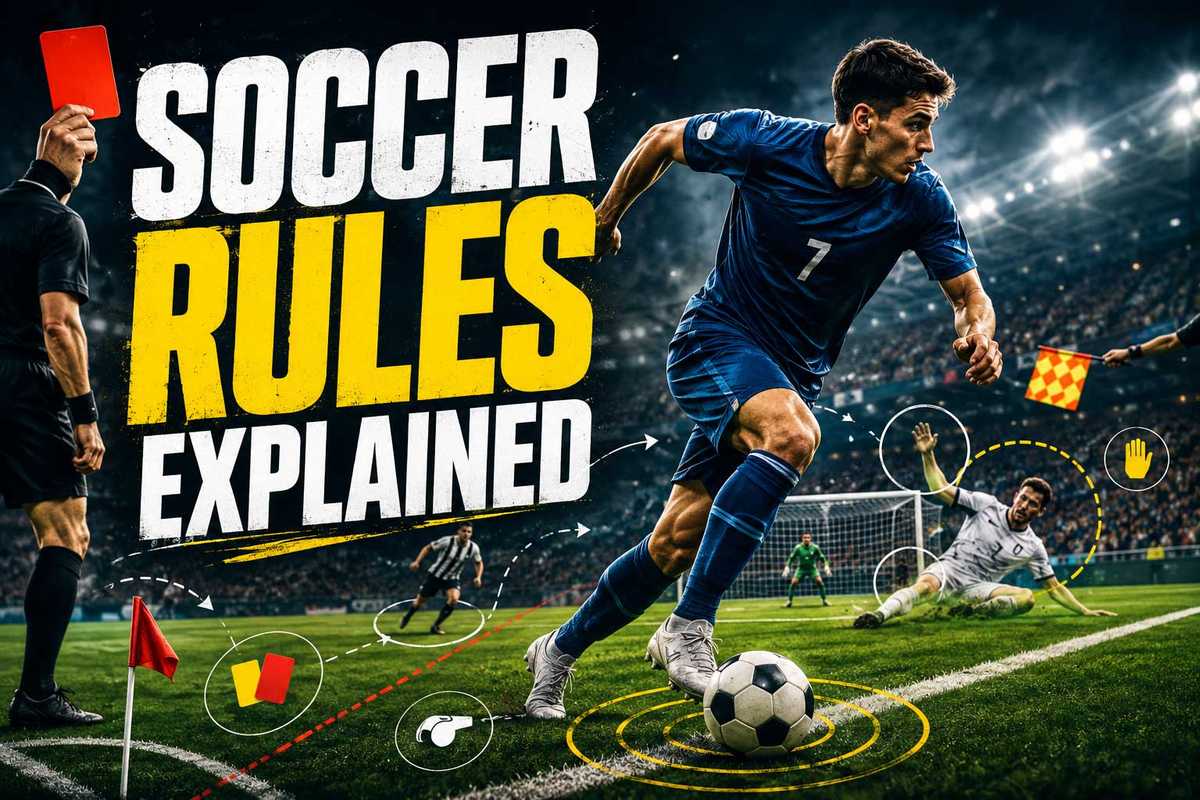
The Laws of the Game describe how referees manage free kicks. The referee enforces the distance opponents must keep, confirms the ball is stationary, and signals whether a free kick is indirect. A kick can be taken quickly unless the referee has delayed the restart to manage discipline or allow advantage. These procedures keep restarts fair and predictable for both teams.
TACTICS AND TEAM SHAPE AROUND FREE KICKS
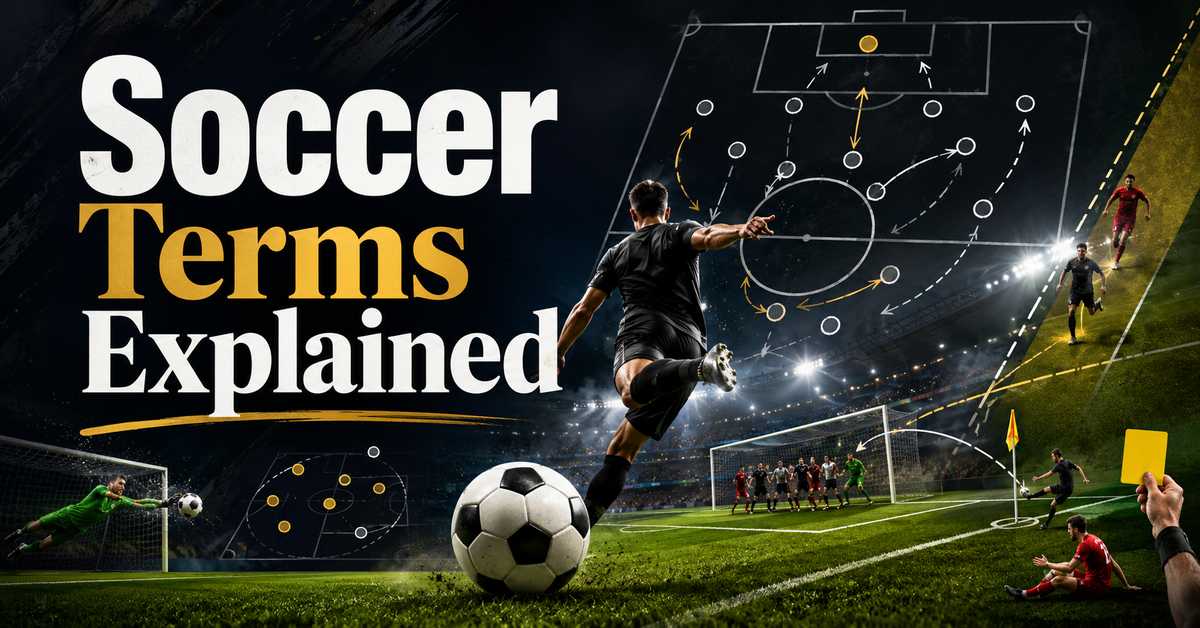
Free kicks are static moments that teams can shape deliberately. Attacking teams decide whether to shoot directly, play a short pass to create an angle, cross into the box, or run rehearsed blocking and decoy movements to free a teammate. Defending teams set up walls to block direct shots, organize zonal or man-marking in the penalty area, and guard the goalkeeper’s immediate space.
How a coach positions players for a free kick depends on the location: close to goal favors walls and quick delivery; wide or deep positions favor crosses and movement to create overloads and mismatches. Because the restart is fixed in space and time, spacing, blocking runs, and timing are central tactical elements.
SET PIECES: WHY QUALITY MATTERS
Set pieces, including free kicks, are strategically important because they are rehearsable and repeatable. Coaching resources and analysis show teams that work on delivery, movement, and routines gain measurable advantages. A practiced free-kick routine—covering delivery type, wall manipulation, blocking runs, and finishing patterns—turns a momentary stoppage into a reliable scoring threat.
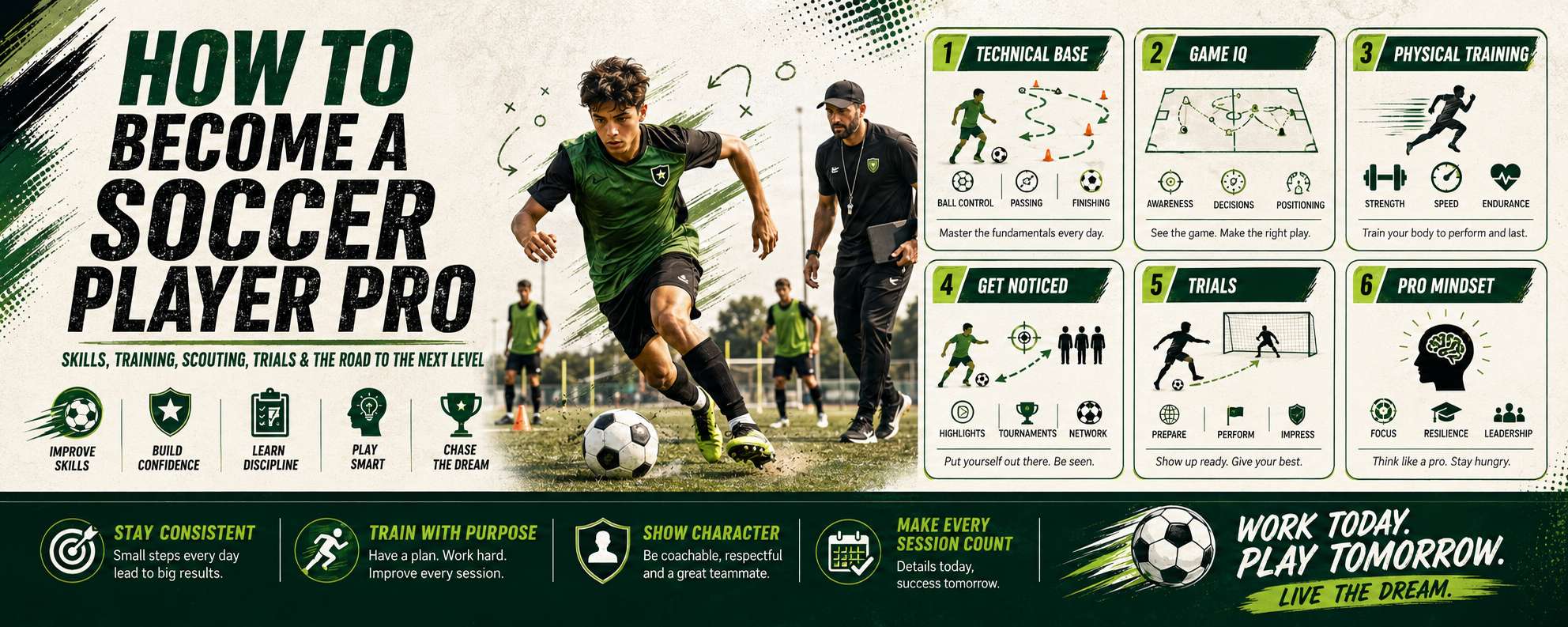
Coaches commonly drill variations: direct shooters practice trajectory and placement; crossers practice pace and spin; attackers rehearse runs and screens to create space. Defenders also rehearse clearances, marking assignments, and wall timing. That repetition is why teams emphasize set-piece sessions in training.
TRAINING AND YOUTH DEVELOPMENT
In many youth formats, coaches simplify free-kick routines and teach the core concepts: know whether the restart is direct or indirect, respect the 10-yard distance, and practice basic delivery and finishing. Young goalkeepers learn positioning for direct shots and organization for defending crosses. Age-group rules and field sizes vary, so coaches adapt drills to match formats while reinforcing the Laws’ essentials.
TEAM CULTURE, RECOGNITION, AND SOCCER ART
Free-kick moments often become memorable highlights—bending shot winners, clever free-kick assists, or well-executed routines. Those moments tie into team culture and season memory: players and families celebrate standout set-piece goals on senior night, in awards, and on custom soccer posters. A poster that captures a player’s signature free-kick pose, jersey number, or a decisive set-piece moment makes for meaningful team wall art or a coach gift that honors skill and rehearsal.
COMMON MISUNDERSTANDINGS
Beginners sometimes confuse direct and indirect free kicks; the simplest test is whether a goal can be scored directly. Another frequent mistake is assuming all free kicks near the box are taken from the exact spot of the foul—there are exceptions and penalty rules for fouls inside the penalty area. Finally, not every free kick should be shot: tactical choices and rehearsed plays often offer higher expected returns than an immediate attempt on goal.
READER VIEWING GUIDE
On the sideline or watching on TV, look for the referee’s arm: raised means indirect. Watch the wall and goalkeeper alignment for clues about the intended delivery. Notice pre-kick movement—runs, decoys, and short passes—those are rehearsed signals. Seeing the same patterns in multiple matches suggests a team has a strong set-piece plan.
CLOSING INTERPRETATION
Free kicks are more than rule restarts: they are structured opportunities where rules, technique, tactics, and repetition meet. Knowing the difference between direct and indirect free kicks explains the referee’s signals and scoring possibilities. Appreciating set-piece quality shows why coaches devote training time to these moments and why families and teams remember and celebrate great free-kick plays in posters, awards, and season highlights.
Author: Eric M.