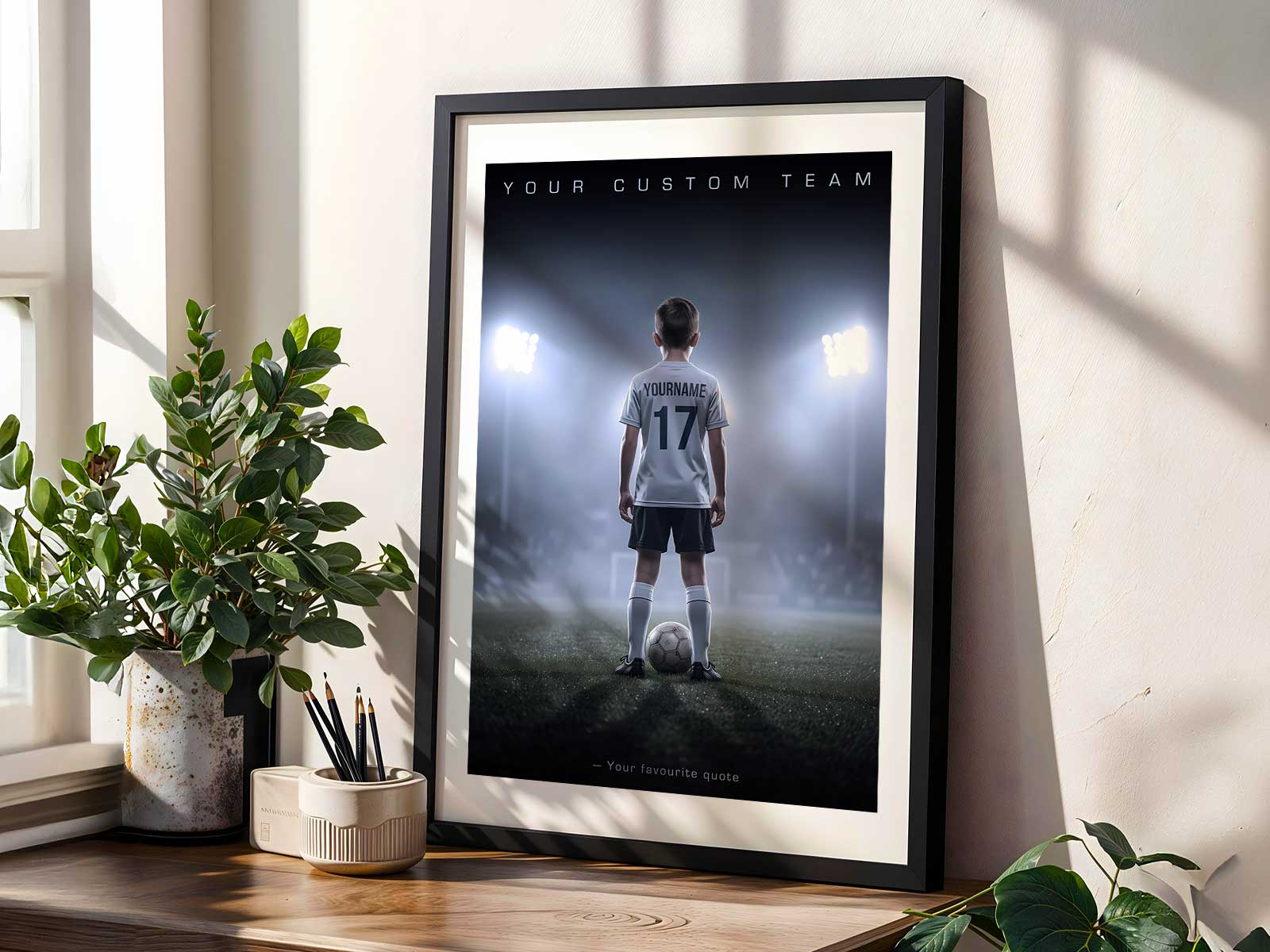
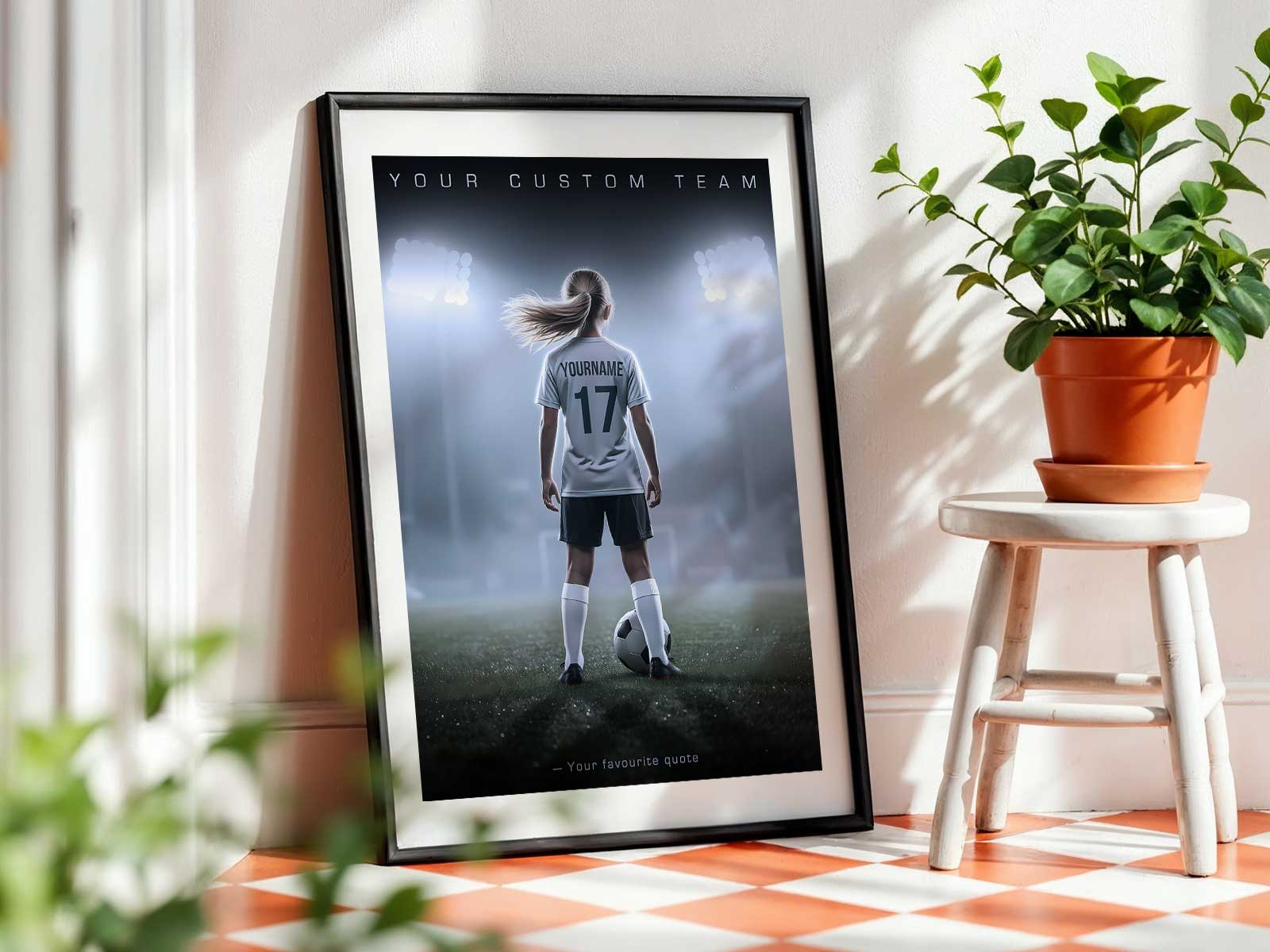
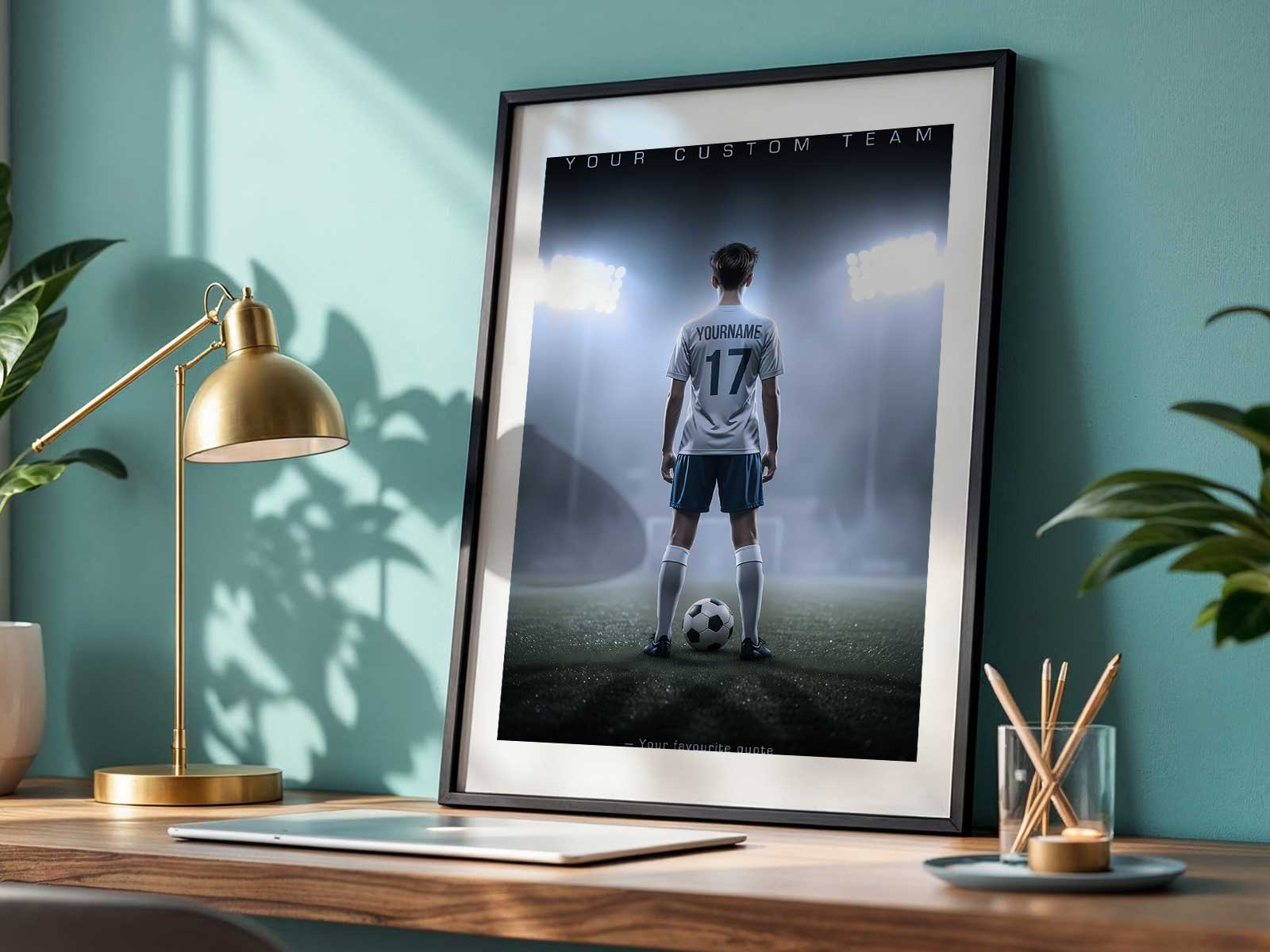
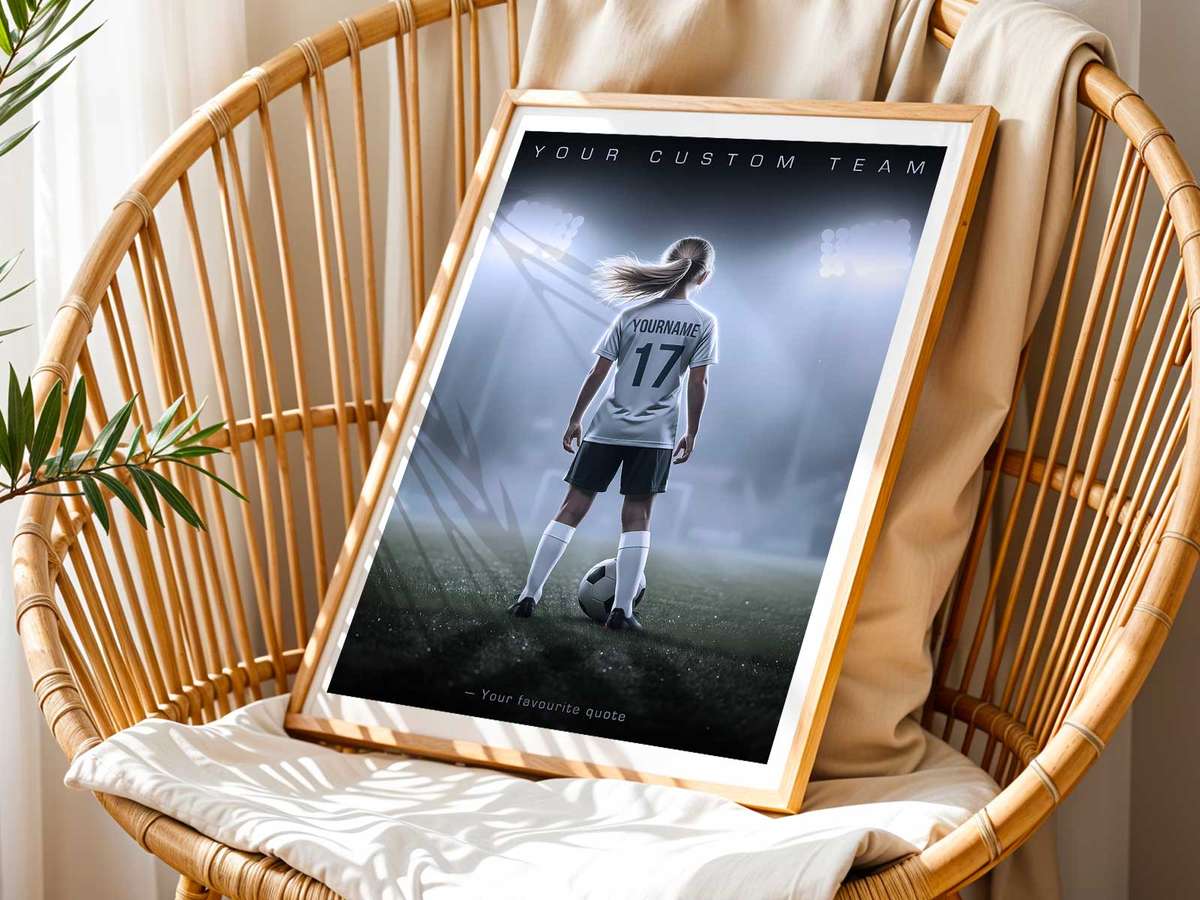
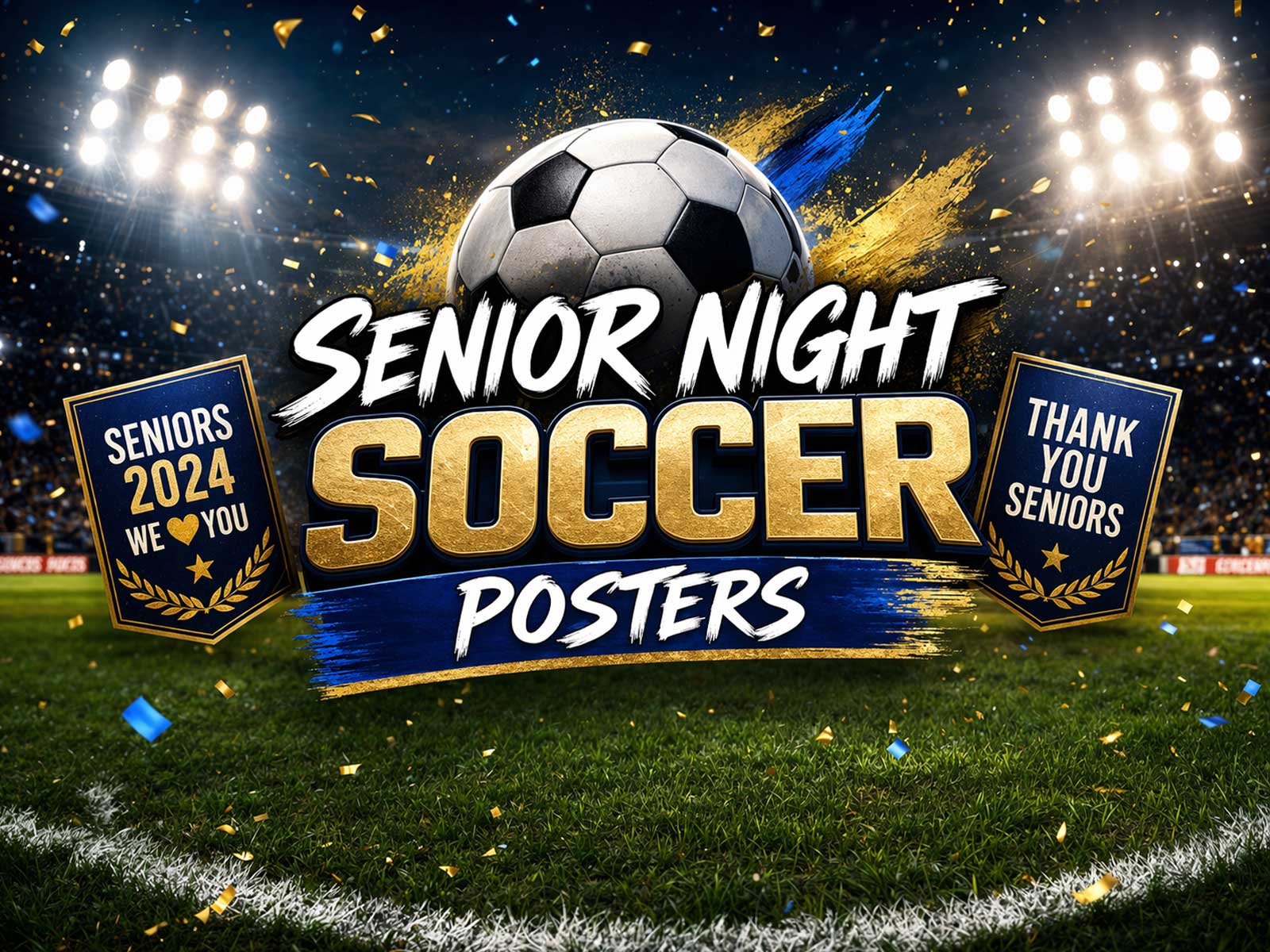
Senior Day is one of those matches that feels like two events at once: a regular game and a ritual that stops time. Posters created for Senior Day must answer that split responsibility. They need to function as visible, dignified tributes during the ceremony—helping teammates, coaches, and the crowd recognize a player’s contribution—and then transition into a personal keepsake families will hold onto long after the final whistle.
Why Senior Day Feels Different
Unlike a normal match, Senior Day compresses a player’s years of effort into a few minutes of public recognition. That intensity shapes how a poster should look and what it should communicate: clarity from a distance, emotional resonance up close, and strong ties to team identity. Families attending want readable names and numbers; teammates want an image that captures the player’s stance or role on the field; coaches want something that respects the program’s visual language.
Personal Details That Make a Poster a True Tribute
A poster that functions as tribute and keepsake focuses on specific elements that anchor memory. Consider these essentials:
- Player name and number—immediately legible from the stands.
- Team colors and school name—connects the player to a season and program.
- A meaningful photo—action or portrait that reflects the player’s personality.
- Season identifier—class year or seasons played to mark the moment in time.
When these details are balanced—large type for the name and number, a clear photo, and restrained use of logos or color—the poster reads as a public statement and later as a personal artifact.
Display Ideas for the Ceremony
How you show posters at Senior Day affects their emotional impact. Place them where they’ll be seen by both the player and the crowd: lining the walkway to midfield, mounted behind the presentation table, or held by teammates during a pause in play. Keep designs consistent if the team produces multiple posters—consistent typography and layout help the series read like a collective tribute rather than a set of disparate signs.
From Tribute to Keepsake: What Changes (and What Stays)
After the ceremony the poster’s role shifts from public recognition to private memory. Posters that transition well share a few qualities: a clean, durable design (so it photographs and frames easily), minimal clutter (so names and images remain central), and a visual nod to the season (colors or a small year marker). These choices make the piece ready for framing in a family room, hanging in a bedroom, or storing in a memory box.
[IMAGE_INSERT_ARTICLE_01]
Balancing Pride and Restraint in Design
There’s a fine line between celebratory and overwhelming. A good Senior Day poster avoids excessive graphics or long paragraphs of text. Let the player’s name, number, and image carry the emotional weight. Use team colors to signal identity without overpowering the portrait. Simple typographic hierarchy—name largest, number secondary, season or position small—keeps the message focused and timeless.
Who Gives the Poster—and Why It Matters
Posters can come from families, teams, or schools; each perspective changes the tone. A family-sourced poster often emphasizes personal touches—nickname, family message, or candid photo—making it more intimate. Team- or school-produced posters emphasize unity and program pride, creating a shared artifact for the class. Thoughtful coordination between these approaches avoids duplication and ensures the player receives both a public honor and a private memento.
Closing Thought
Designing a Senior Day soccer poster is an exercise in dual-purpose thinking: it must make an immediate emotional statement in a crowded stadium and also survive as a meaningful object in a home. By prioritizing legibility, personal detail, and clean visual choices, organizers and families can create posters that honor the player at the ceremony and continue to tell their story for years to come.