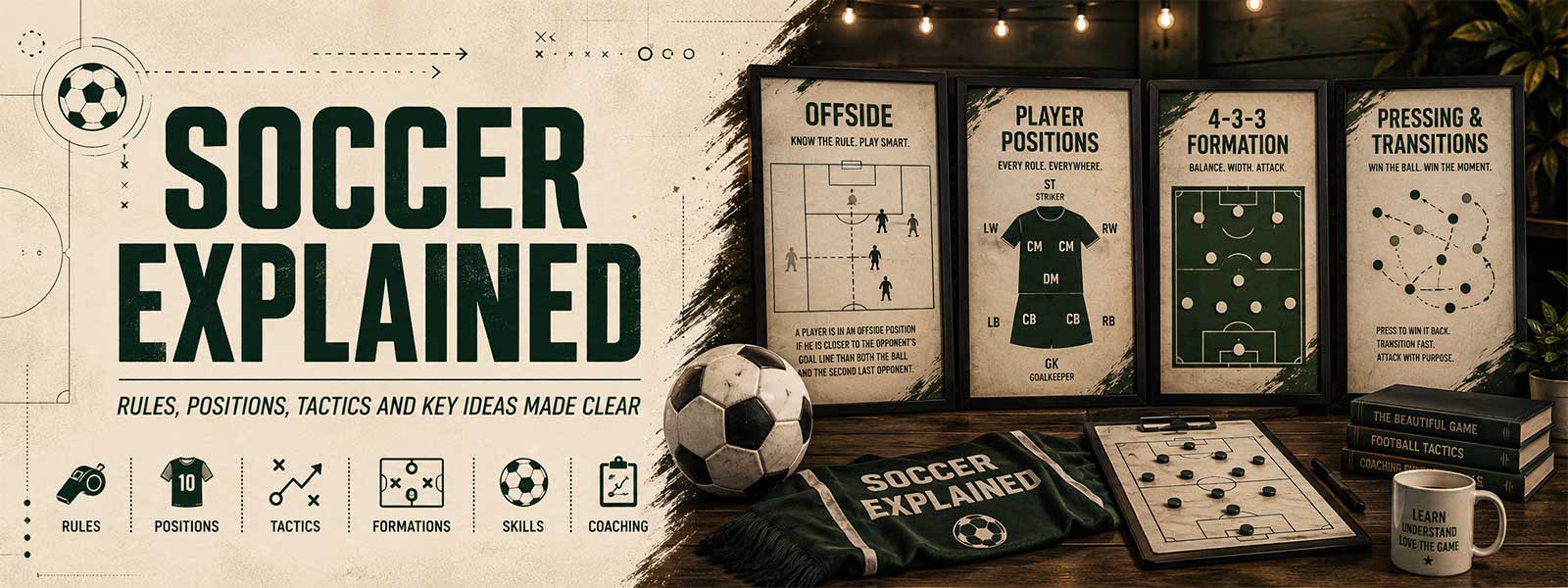
What Is Offside in Soccer? A Clear Law 11 Explanation
Offside is one of soccer’s most discussed rules because it sits at the intersection of position, timing, and referee judgment. Under Law 11 of the IFAB Laws of the Game, offside isn’t just about where a player stands — it’s about where they are the instant a teammate plays the ball and whether they become involved in active play. This article explains the rule simply, dives into how timing and the defensive line matter, and answers the common confusions beginners face while connecting the idea to coaching, youth practice, and team recognition.
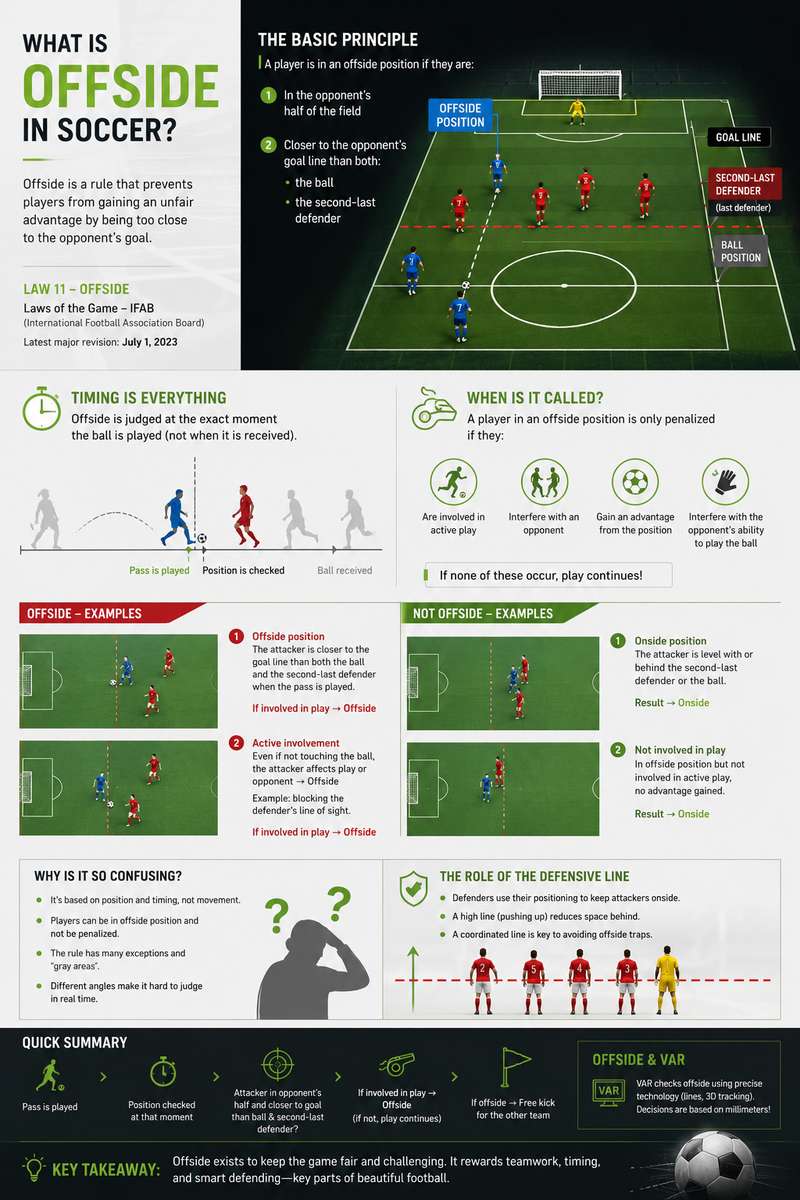
Quick summary: A player is in an offside position if any part of head, body or feet is nearer to the opponents' goal line than both the ball and the second-last opponent. Being in that position is not an offence unless the player is involved in active play at the moment a teammate plays or touches the ball.
Quick access: Definition• How it works• Rules & refereeing
CLEAR DEFINITION
Under Law 11, offside in soccer is a position-based concept. A player is in an offside position if any part of their head, body or feet is closer to the opponents’ goal line than both the ball and the second-last opponent. The goalkeeper is usually one of those two opponents, so the defensive line often sets the offside line. Importantly, a player in their own half cannot be in an offside position, and certain restarts like goal kicks, corners, and throw-ins cannot produce an offside offence.
HOW IT WORKS: POSITION AND TIMING
Two elements determine an offside offence: position and timing. Position asks where a player’s relevant body parts are relative to the ball and the second-last opponent. Timing asks what happens at the exact instant a teammate plays or touches the ball. The key instant for judgment is when the ball is played, not when it is received. If a player is in an offside position at that instant and then becomes involved in play, an offence can be called.
RULES AND REFEREEING
Being in an offside position alone is not an offence. An offence occurs only if the player in that position becomes involved in active play: interfering with play (playing or touching the ball), interfering with an opponent (preventing an opponent from playing the ball or blocking their line of sight), or gaining an advantage from that position. When an offside offence is called the sanction is an indirect free kick to the defending team from the place where the offence occurred — specifically the position of the offending player when the ball was played.
DEFENSIVE LINE AND TECHNOLOGY
The defensive line — typically the last outfield defender and one other teammate — defines the offside reference. Coaches use that line to manage space and time runs. In modern competitions, video assistant referees (VAR) and semi-automated offside systems help with very tight decisions by drawing virtual offside lines at the relevant body part of the second-last defender. These technologies support on-field officials and aim to reduce human error on marginal calls.
COMMON MISUNDERSTANDINGS
Beginners often mix up several ideas: thinking offside equals being behind the ball, believing that merely being in an offside position is automatically penalized, or not appreciating that only certain body parts count for the offside line. Another frequent confusion is timing — fans and players sometimes judge the moment of the pass incorrectly, focusing on when a player receives the ball rather than when the teammate played it.
COACHING, TRAINING, AND YOUTH SOCCER
Coaches teach offside in stages: first the position rule, then timing, then what counts as active involvement. In many youth formats, rules and interpretations can vary, so coaches should check local competition guidance. Common drills include timed through-ball exercises and practice with a visible defensive line so attackers learn to time their runs to the pass, and defenders learn to hold or step for a trap.
TEAM CULTURE, RECOGNITION, AND VISUAL LANGUAGE
Understanding offside becomes part of team identity: disciplined defending, smart timed runs, and coach-led pressing patterns all reflect how a team treats the offside rule. For senior night posters, player recognition, or custom soccer wall art, visuals that show a well-timed run, a defensive line silhouette, or a freeze-frame of a key moment can celebrate tactical intelligence as much as goals. These images help families and players remember learning moments and season highlights tied to smart play around the offside law.
READER VIEWING GUIDE & PRACTICAL TIPS
When watching a match, look at the moment the passer makes the contact and find the second-last opponent to judge the offside line. Notice whether the attacker is interfering with play or an opponent after the pass. Pay attention to set-piece restarts: no offside is called from goal kicks, corners, or throw-ins. If technology is used, expect tight calls to be reviewed with virtual lines showing the relevant body parts.
CLOSING INTERPRETATION
Offside combines precise geometry, split-second timing, and human judgment. Knowing the Law 11 basics—what counts for position, why the pass moment matters, how active involvement creates the offence, and how the defensive line and modern technology influence decisions—turns an often confusing rule into a usable skill for players and a clearer viewing filter for fans and families. That clarity also opens creative ways to celebrate learning moments in team culture and custom soccer art, where a single well-timed run can become a lasting image.
Author: Alex R.