Soccer Terms Explained: A Beginner-Friendly Glossary for Fans, Players, and…
Soccer has a compact set of terms that show up every matchday: position names, tactical shapes, referee calls and set-piece situations. This glossary explains essential soccer terms for beginners, expands tactical meaning for fans and coaches, and connects those ideas to team culture, youth coaching, and visual keepsakes like senior night posters or player wall art.
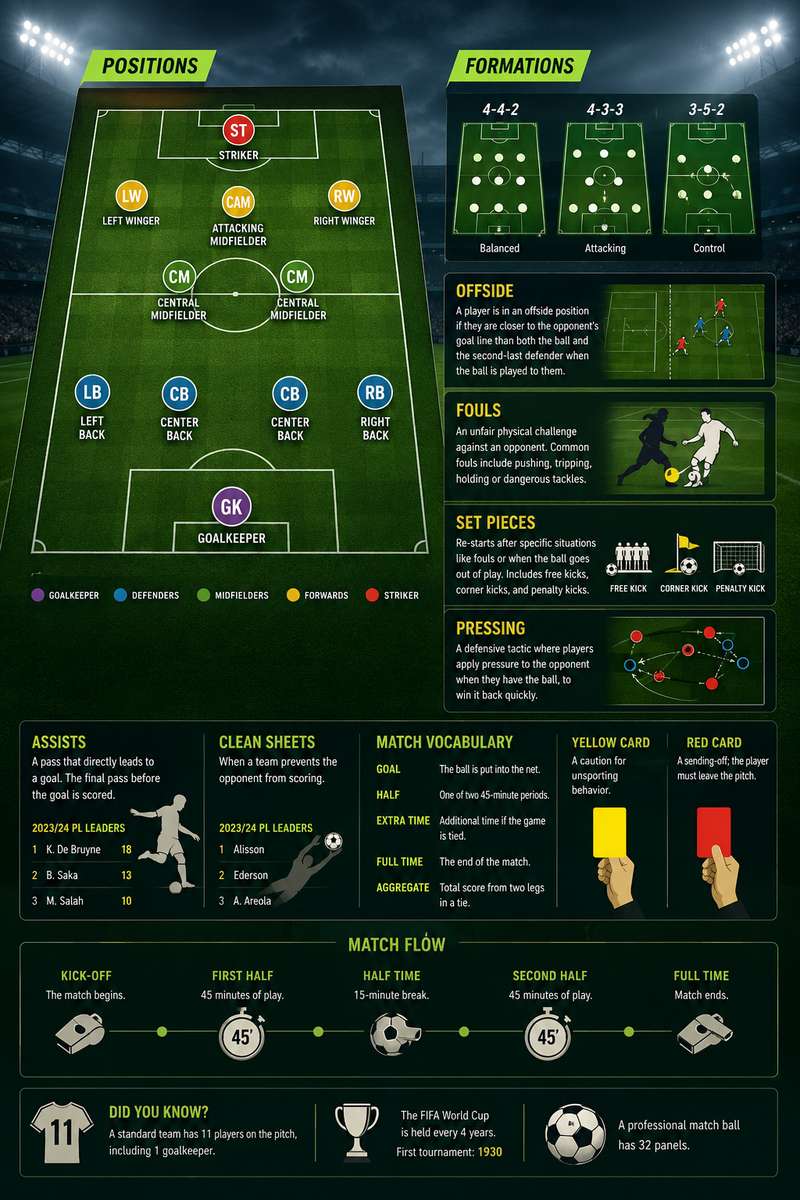
Quick summary: Learn the core positions (goalkeeper, defenders, midfielders, forwards), common formations (e.g., 4-4-2, 4-3-3, 3-5-2), Laws-based items (offside, fouls, cards), set pieces (free kicks, corners, penalties), and useful match vocabulary like assist and clean sheet.
Quick access: Positions • Offside & Fouls • Set Pieces • Assists & Clean Sheets
Positions: the four groups and what they do
In general terms, soccer players fit into four position groups: goalkeeper, defenders, midfielders and forwards. Coaching resources and league guides explain typical roles and numbering conventions used in modern soccer.
Goalkeeper: the last line of defense who can use hands inside the penalty area and whose role is shot-stopping and organizing the back line.
Defenders: usually split between center backs (central, aerial and covering roles) and fullbacks (wide defenders who also support attacks). Their job is to protect the penalty area, mark attackers and manage defensive lines.
Midfielders: include defensive midfielders (screen the defense), central or box-to-box midfielders (connect defense and attack) and attacking midfielders (create chances). Midfielders control tempo, pass choices and spacing.
Forwards/strikers: primary attackers tasked with finishing chances, making runs behind the defense, and pressing defenders when out of possession.
Formations and team shape
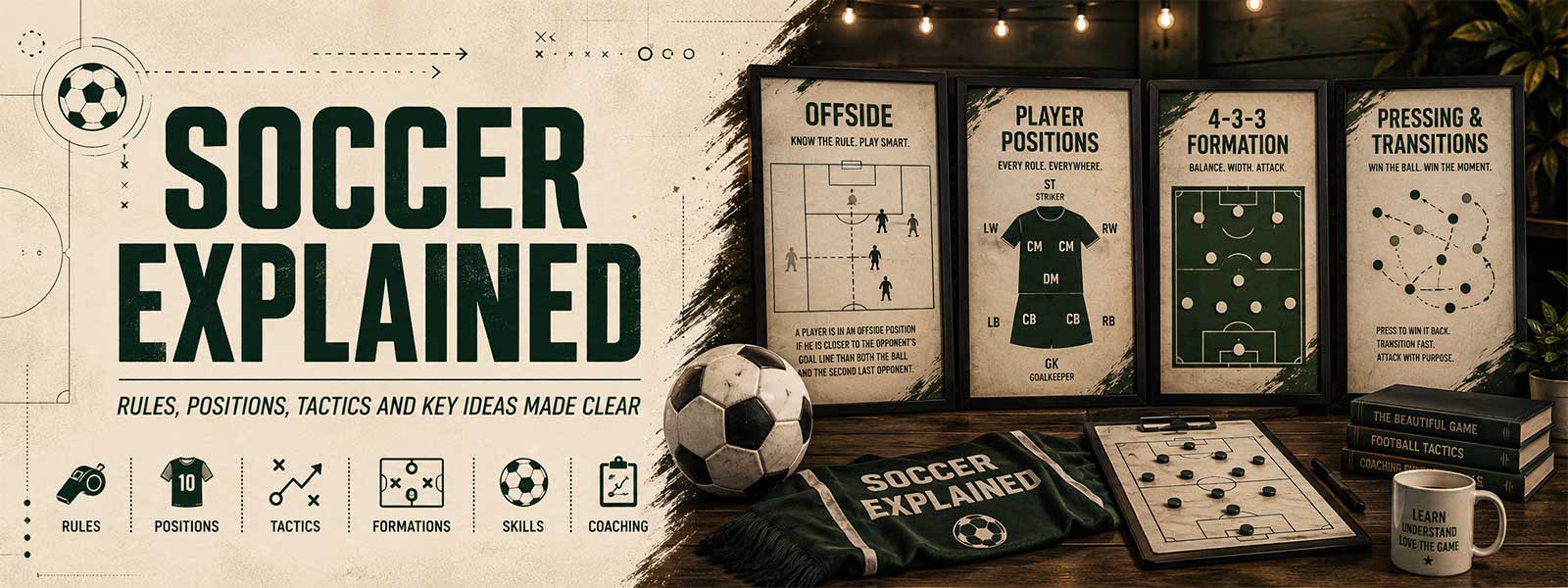
Formations describe a team’s tactical shape by listing defenders–midfielders–forwards. Common examples used by coaches and guides include 4-4-2, 4-3-3 and 3-5-2. A formation communicates how a coach wants to use width, central control and attacking outlets.
Formation affects spacing and responsibilities: a back four provides clear fullback/center-back roles, a midfield three can offer overloads in central areas, and a back three shifts wing coverage toward wing-backs. Understanding formation helps viewers read pressing triggers, passing lanes and where runs will come from.
Offside and fouls: the Laws that control play
Offside is defined in Law 11 of the Laws of the Game. The law explains offside position, what counts as active involvement, and how the second-last opponent and the upper boundary of the arm are used when determining offside. Offside decisions hinge on a player’s position at the moment a teammate plays the ball and whether that player is interfering with play or an opponent.
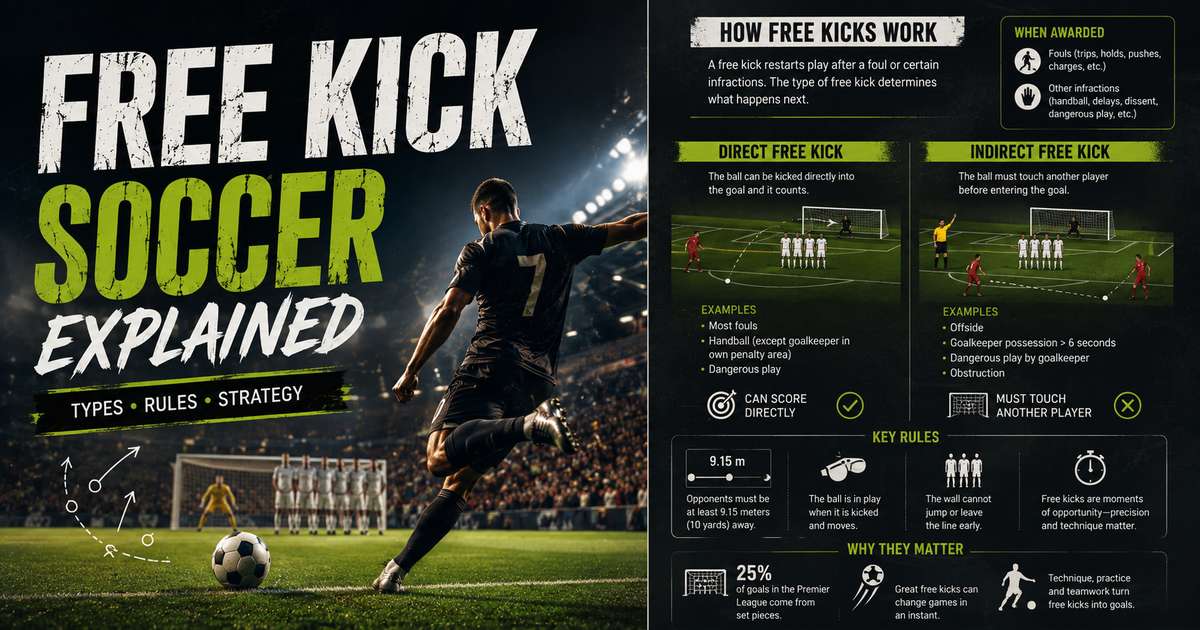
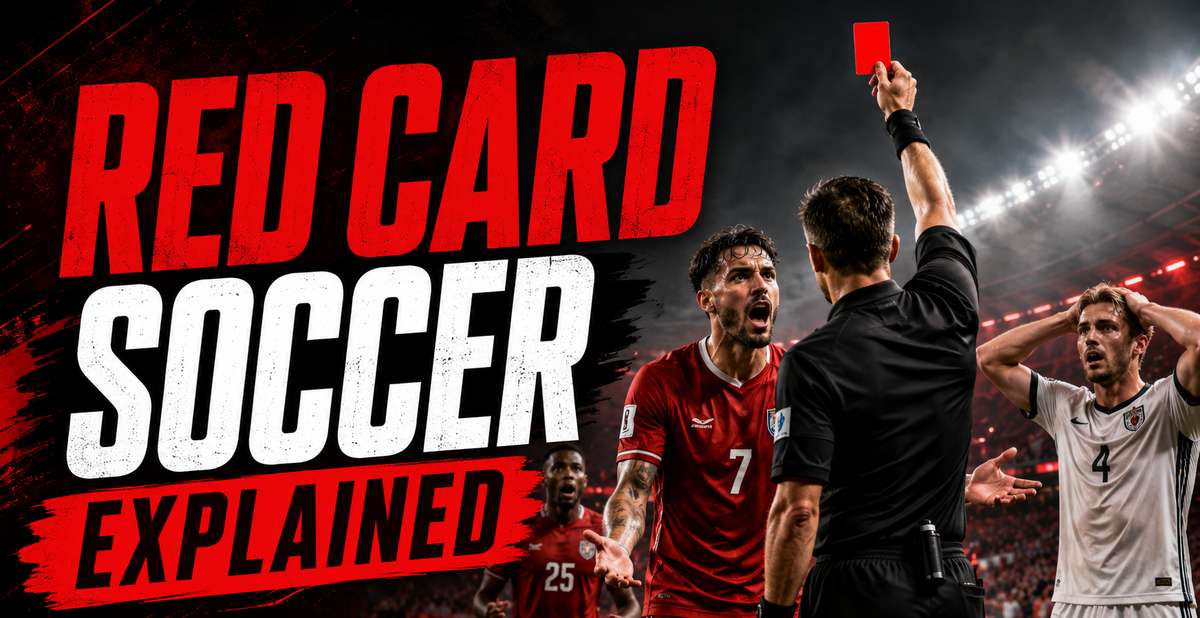
Fouls and misconduct are covered by Law 12. That law defines what constitutes a foul, and covers cautions (yellow cards), send-offs (red cards), and restart procedures. Fouls can result in free kicks, penalties, or disciplinary action depending on where and how the offense occurred. These Laws are the authoritative reference for referees and coaches.
Set pieces: dead-ball restarts and their importance
Set pieces are dead-ball restart situations such as free kicks, corner kicks, penalty kicks, throw-ins and kick-offs. Teams often run rehearsed plays from corners and free kicks to create high-probability scoring chances. Coaching materials and glossaries treat these as key moments where structured routines, marking assignments and delivery quality decide outcomes.
For youth teams, set-piece practice teaches timing, communication and positioning; for adults, well-drilled routines can swing tight matches and become part of a team’s identity—details that translate well into commemorative posters showing match-winning moments.
Pressing and common tactical terms
Pressing is a coordinated defensive tactic where teams apply pressure to the opponent in possession to force turnovers. Coaching resources describe variations such as a high press, mid-block or low block and styles like gegenpressing. Pressing reduces opponents’ space and options and relies on compactness, triggers for coordinated movement and quick transitions when the ball is won.
Understanding pressing helps fans read why defenders step up as a line (offside line), why midfielders push forward to close passing lanes, and why forwards may drop to create overloads. Tactics determine how a formation looks in transition between defense and attack.
Assists, clean sheets and match vocabulary
An assist is a statistical credit for the player who makes the final pass or action that directly leads to a goal. The Laws of the Game do not define assists; statisticians and competitions use varying criteria when awarding assists.
A clean sheet (sometimes called a shutout) occurs when a team prevents the opposition from scoring during an entire match. Statistics providers commonly record clean sheets and often attribute them to goalkeepers who play the full match; clean-sheet totals are used in awards and season summaries.
Other common match vocabulary appears across the Laws and glossaries: kick-off, throw-in, corner kick, goal kick, penalty kick, stoppage/injury time, extra time, penalty shoot-out, yellow card and red card. These terms describe restarts, timing and disciplinary outcomes viewers will see during any match.
Training, team recognition and visual reminders
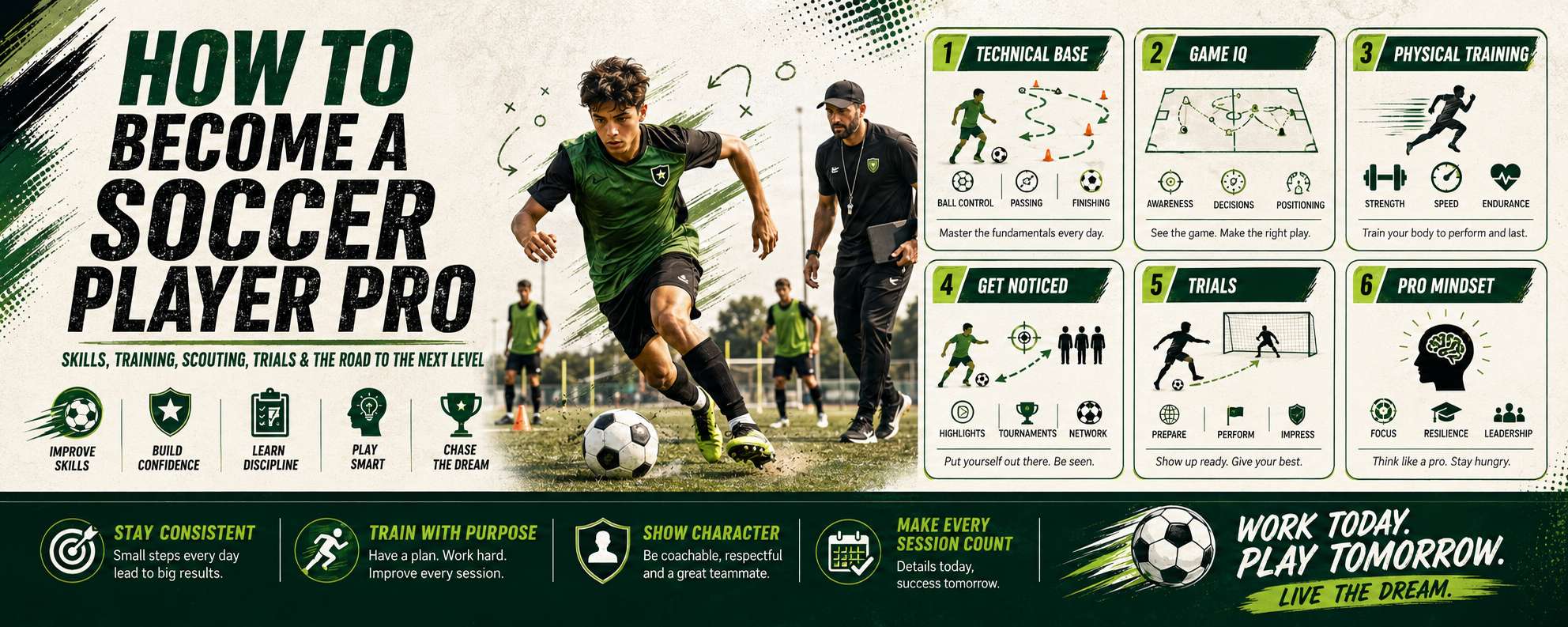
From a training perspective, coaches teach positions, pressing triggers and set-piece routines through drills that emphasize spacing, communication and repetition. In youth formats, coaches also adapt roles to age-appropriate pitch sizes and player numbers.
Team culture and recognition—senior night posters, player milestone banners, coach gifts and framed game prints—use soccer’s visual language: jersey numbers, position icons, formation diagrams, and set-piece snapshots. These items celebrate roles (a striker’s finishing, a goalkeeper’s clean sheets) and make tactical or statistical achievements easy for families to understand and remember.
Common misunderstandings and what to watch for
Beginners often confuse offside position with an offside offence—position alone is not enough; active involvement matters. Similarly, not every final pass is credited as an assist by every statistician, because criteria differ across providers.
Viewing tip: watch the defensive line to spot offside traps, follow the goalkeeper and central defenders to judge clean-sheet chances, and note midfield compactness to see how pressing is being organized. These visual cues connect rules and tactics to what you actually see on the field.
Closing interpretation
Understanding basic soccer terms bridges the gap between watching and truly following a match. Knowing positions, formations, Laws-based items like offside and fouls, and tactical ideas such as pressing helps fans, parents and players read the game. Those same concepts shape training priorities and team culture—and they make meaningful motifs for custom posters, senior night gifts, and season mementos that celebrate a player’s position, a memorable assist, or a hard-earned clean sheet.
Author: Cynthia D.