Soccer Rules Explained: A Clear Beginner’s Guide to the Laws and How the Game…
Soccer can feel fast and confusing until you know the basic laws that shape the game. This guide explains the rules you’ll see most often—who plays, what the field looks like, how goals and fouls work, the offside law, common restarts, match timing, and why play usually flows without constant stops. Readable for parents and beginners, and useful to coaches, fans, and anyone planning team posters or recognition items that celebrate match moments.
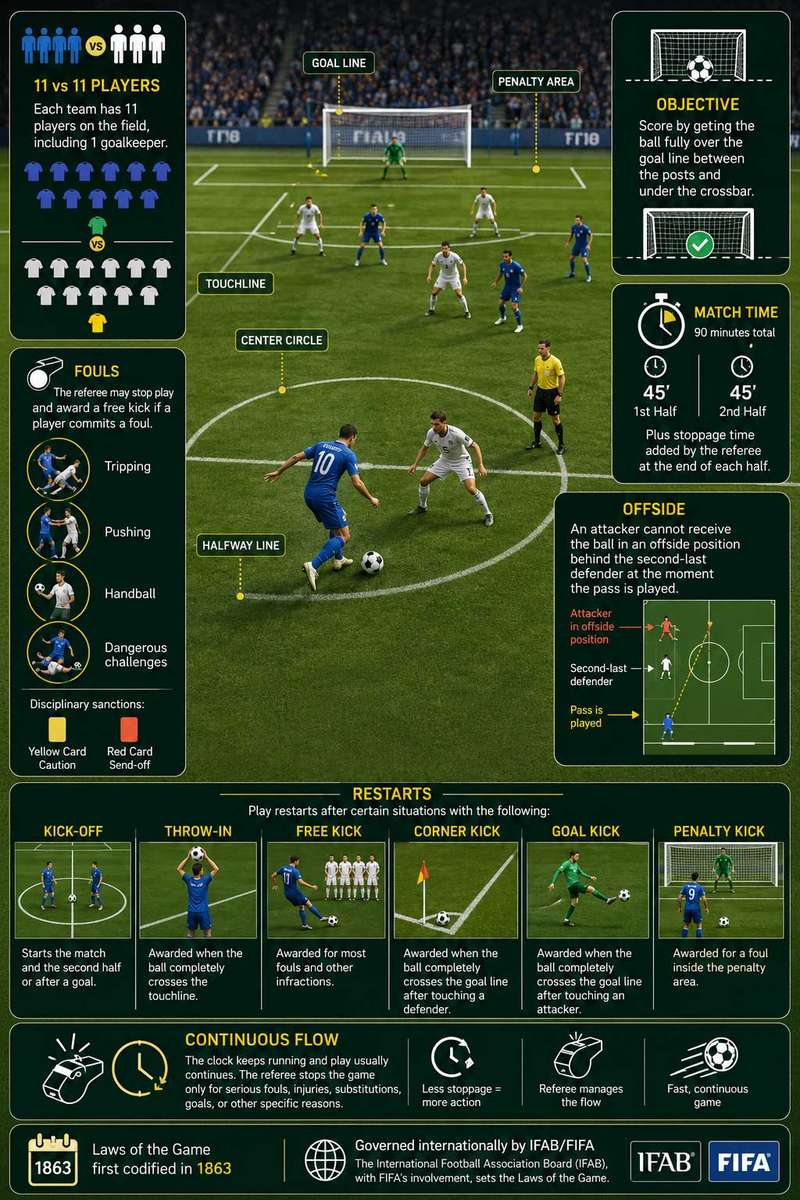
Quick summary: The International Football Association Board (IFAB) makes the Laws of the Game. A match normally has two teams of 11, specific pitch markings, clear restarts, and rules that encourage continuous play.
Quick access: Players & team size • Offside • Restarts
CLEAR DEFINITION
The Laws of the Game are the official rules of association football and are maintained and published by The International Football Association Board (IFAB). These laws set out who may play, how the field is marked, what counts as a goal, which acts are fouls or misconduct, how offside works, how play restarts, and how long matches last.
PLAYERS AND TEAM SIZE
In standard adult soccer a match is normally played by two teams of 11 players each, including a goalkeeper. IFAB specifies that a match may not start or continue if either team has fewer than seven players. This rule is important for substitutions and emergencies and shapes squad planning in games and youth competitions.
FIELD MARKINGS AND GOALS
The field must be rectangular with specific lines and areas: touchlines (sidelines), goal lines, a halfway line and centre circle, penalty areas, goal areas, a penalty mark, and corner arcs. A goal is scored when the whole of the ball passes over the goal line, between the goalposts and under the crossbar, provided no offence has been committed by the scoring team.
FOULS AND MISCONDUCT
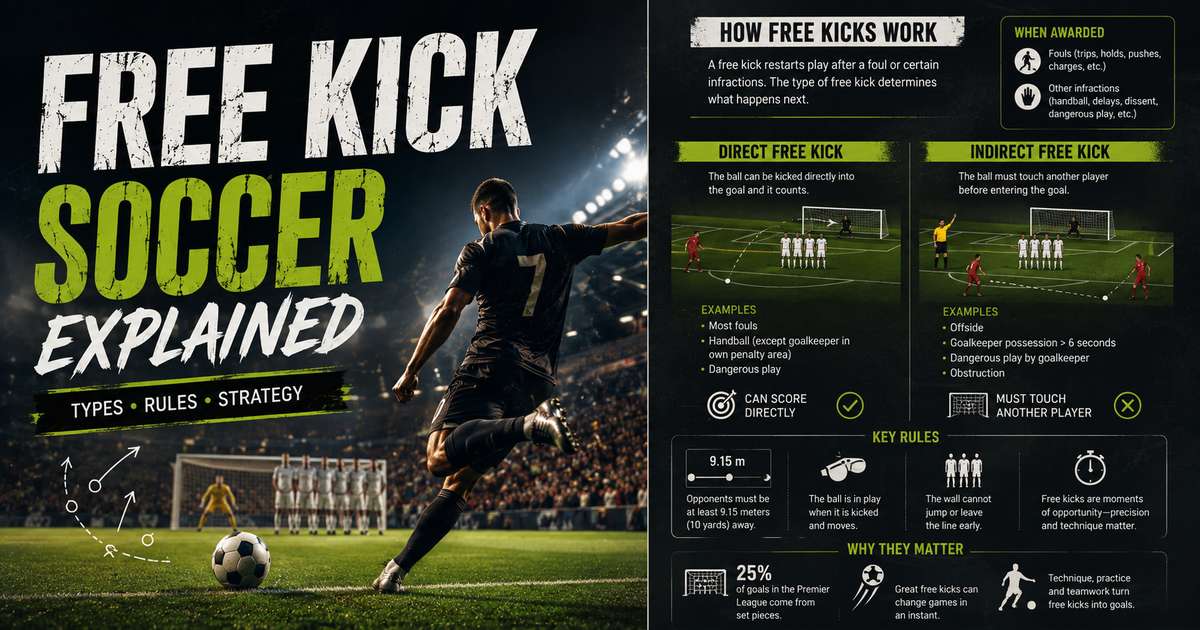
Law 12 defines fouls and misconduct. Certain actions—kicking, tripping, charging, striking, holding, or deliberately handling the ball—are direct free kick offences and may result in a direct free kick or a penalty kick if inside the penalty area. Misconduct can be punished with yellow or red cards. Understanding these basics helps players avoid dangerous challenges and helps parents and coaches explain disciplinary consequences.
OFFSIDE LAW
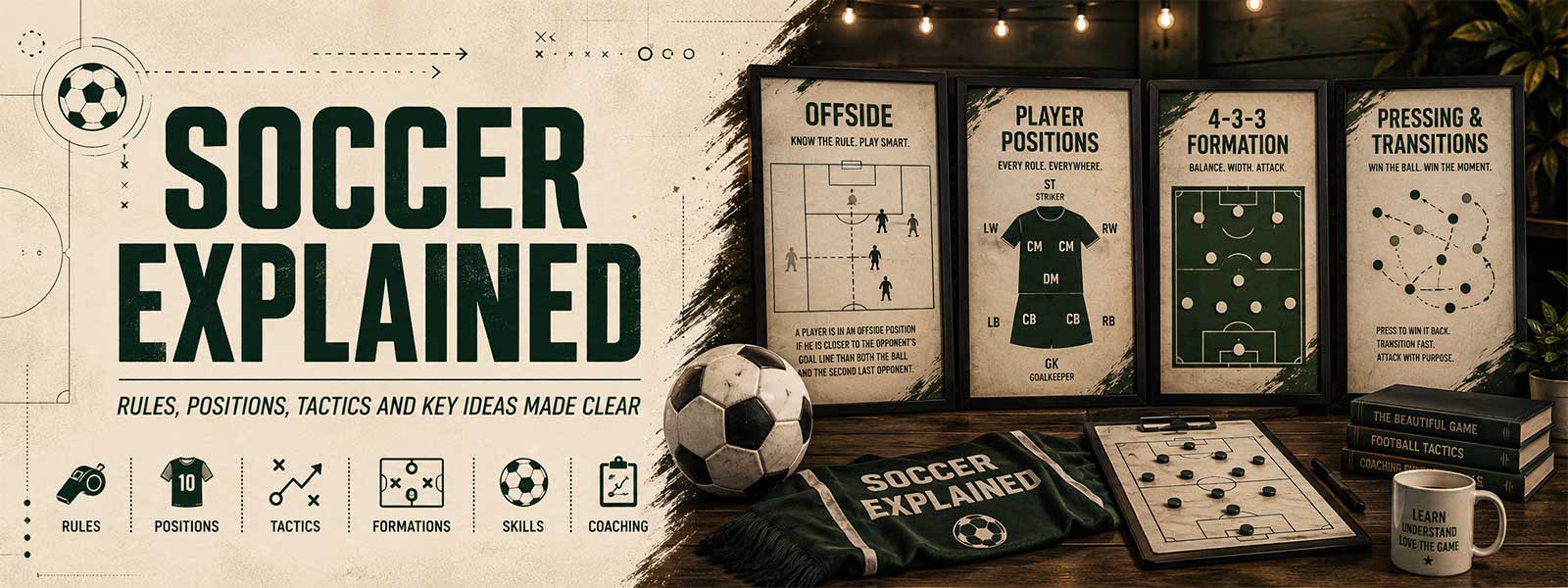
The offside law (Law 11) is about position and involvement. A player is in an offside position if they are in the opponents' half and nearer to the opponents' goal line than both the ball and the second-last opponent. Being in that position is not an offence by itself—an offside offence occurs only when the player becomes involved in active play, for example by interfering with play, interfering with an opponent, or gaining an advantage from that position.
RESTARTS: HOW PLAY RESUMES
Restarts include kick-off, throw-in, goal-kick, corner-kick, free kicks (direct and indirect), penalty kicks, and the dropped ball. Each restart has its own procedure and purpose. For beginners, it helps to know: throw-ins return the ball when it crosses a touchline; corner-kicks follow when the ball crosses the goal line last touched by a defender; penalty kicks follow certain fouls inside the penalty area. A dropped ball is used when play is stopped and no other restart applies.
MATCH DURATION AND ADVANTAGE
In standard adult soccer, a match normally has two equal halves of 45 minutes. The referee adds allowance for time lost in each half—often called stoppage or injury time—for substitutions, injuries, disciplinary sanctions, time-wasting, VAR delays, goal celebrations, and other causes. Referees may also play advantage: if stopping play for a foul would disadvantage the offended team, the referee can allow play to continue and only stop play if the advantage does not materialize quickly.
WHY THE GAME FLOWS CONTINUOUSLY
The Laws are designed so the ball stays in play until it wholly crosses the goal line or touchline or the referee stops play. Many restarts can be taken quickly and the advantage rule lets referees keep play moving when the offended team benefits. These features—clear boundaries for when play stops, efficient restart procedures, and allowance for advantage—create the continuous, flowing nature that defines soccer.
PRACTICAL TIPS FOR FANS, PARENTS, AND COACHES
Watch the offside line (the second-last defender) to follow attacking runs. Notice the referee’s signals for advantage or for a card to understand play and discipline. For youth teams, remember formats vary—smaller-sided games or different half lengths are common—so always check your competition’s rules in addition to IFAB’s general laws.
TEAM CULTURE, POSTERS, AND PLAYER RECOGNITION
Rules shape memorable moments—penalty saves, last-minute goals, clean sheets—that teams celebrate on senior night posters, custom soccer posters, or awards. A poster that highlights a goalkeeper’s clean sheet or a striker’s decisive goal links visual identity (jersey number, team colors, match photo) to the moment governed by the Laws. Coaches and families often use those images to teach rules: a penalty shot illustrates restart protocol; an offside call can become a coaching moment about timing runs.
COMMON MISUNDERSTANDINGS
Beginners often think being in an offside position is automatically penalized—remember it matters only when the player is involved in play. Another common confusion: not every handling of the ball is a deliberate handball offence; intent and the nature of the contact matter under Law 12. Finally, stoppage time is added by the referee to make up for delays, so a 90-minute whistle can come later than expected.
CLOSING INTERPRETATION
Knowing the basics—who plays, what the pitch markings mean, how goals are scored, which actions are fouls, how offside works, how play restarts, and why the referee manages time and advantage—turns confusion into insight. That understanding helps players make better decisions, helps parents follow matches, and gives coaches and teams clearer moments to celebrate with posters, awards, and team traditions that reflect both the rules and the memories they create.
Author: Eric M.