Direct vs Indirect Free Kick: How each restart works and why the referee…
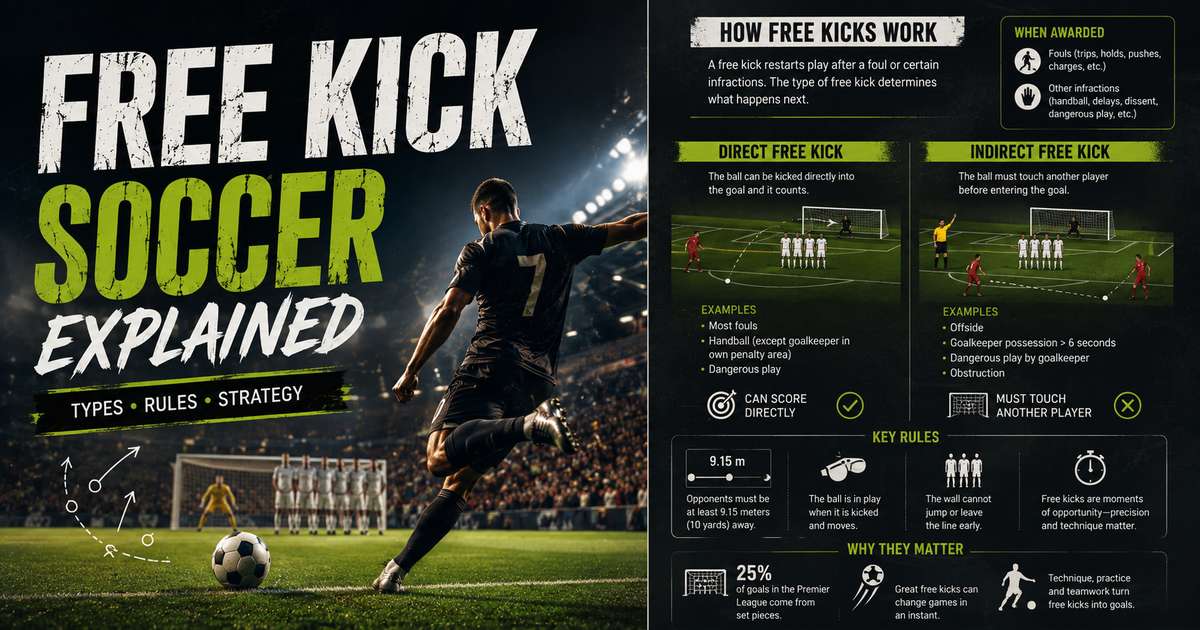
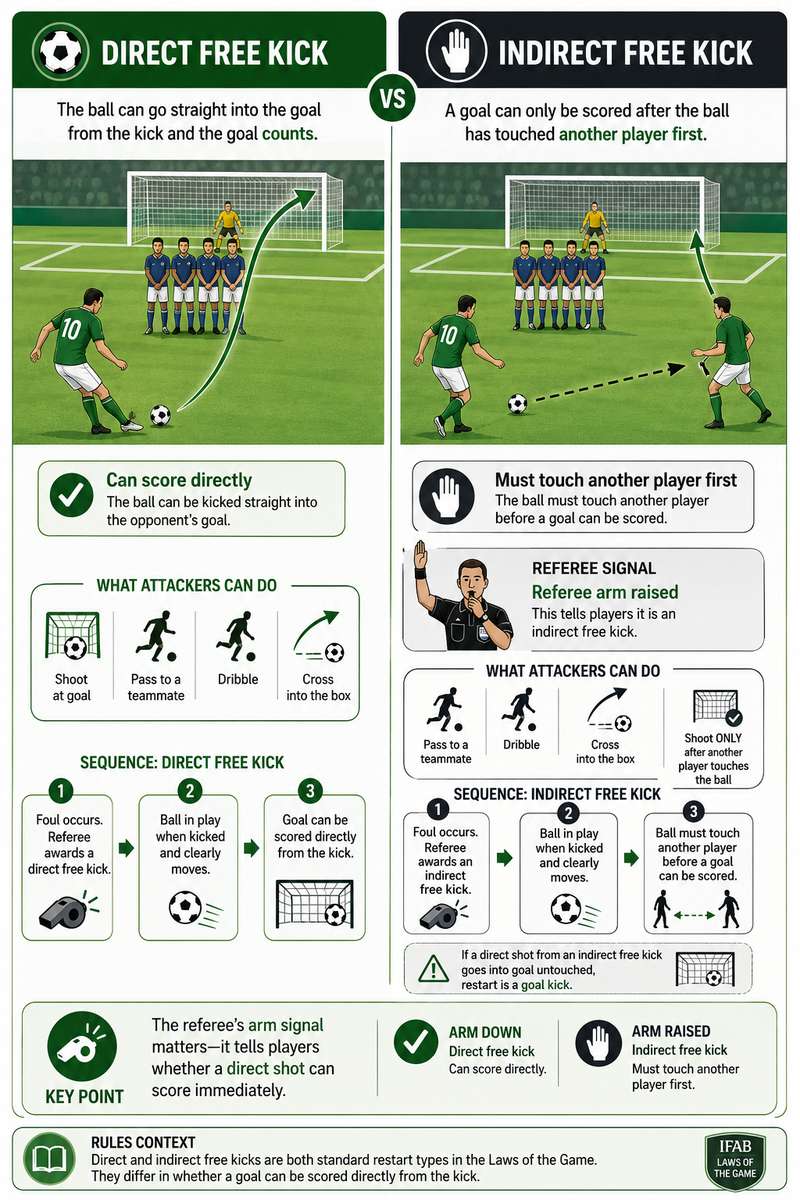
Free kicks restart play after an offence. The key split is simple: a direct free kick can produce a goal directly; an indirect free kick cannot. Knowing which restart you’re watching (or taking) changes what attackers try, how defenders set up, and why the referee’s arm signal matters.
Quick summary: Direct free kicks are awarded for fouls listed in Law 12 and may be shot straight into goal. Indirect free kicks are for specific non-contact or technical offences and require the ball to touch another player before a goal can stand. The referee signals an indirect kick by raising an arm vertically and keeps it raised until the kick is taken and play continues.
Quick access:
CLEAR DEFINITION
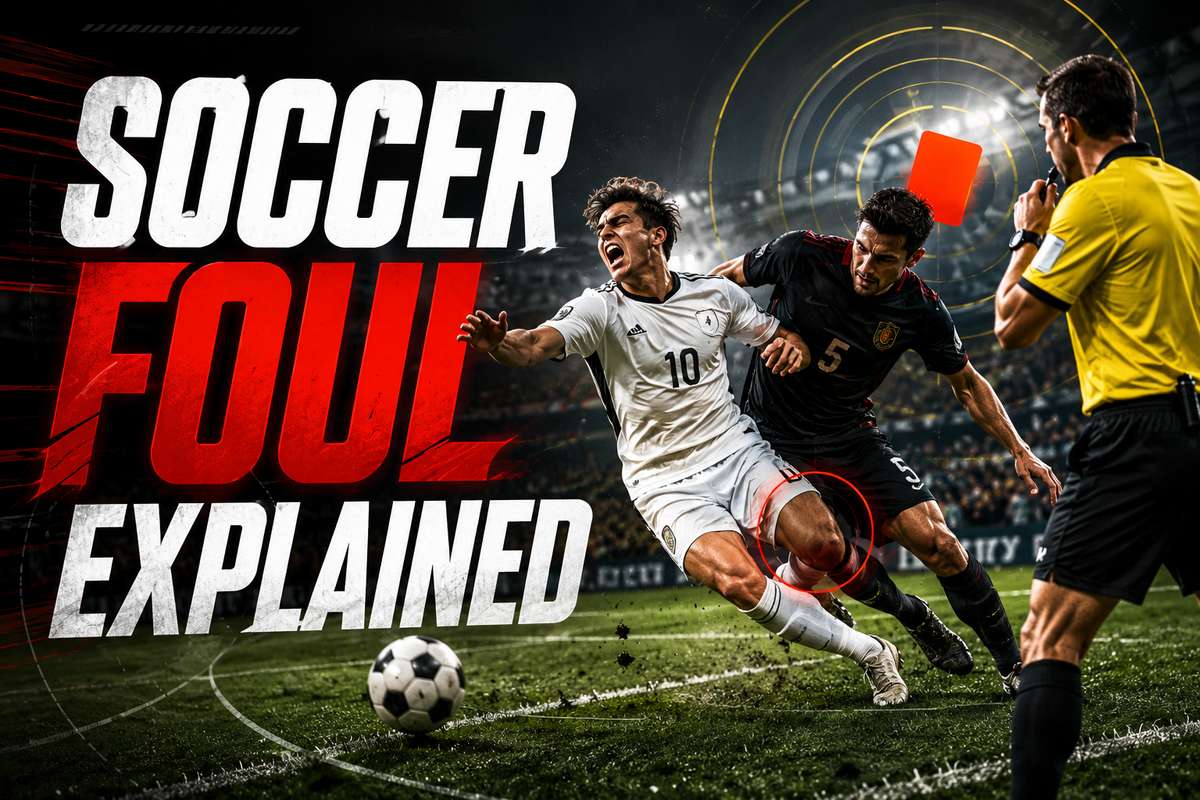
A direct free kick is awarded for physical fouls and other offences listed in Law 12; a goal may be scored directly from that kick into the opponent’s goal. An indirect free kick is awarded for specified non-contact or technical offences—examples include playing in a dangerous manner, impeding progress without contact, certain goalkeeper technical offences, or a second touch after a restart. A goal cannot be scored directly from an indirect free kick; the ball must touch another player before a goal can be awarded.
HOW IT WORKS
Both free kicks are normally taken from the place the offence occurred. For direct-free-kick offences inside the defending team’s penalty area the Laws convert the restart to a penalty kick. Opposition players must stand the required distance away (commonly 10 yards or 9.15 m where practicable) until the kick is taken. Attackers choose different tactics depending on the restart type: a direct free kick often invites a direct shot, bent or driven; an indirect free kick invites quick passing, a set-piece routine, or a touch that deliberately makes the kick "indirect" into a shot.
RULES AND REFEREEING
The referee must distinguish the two restarts clearly. For an indirect free kick the referee raises an arm vertically above the head and keeps the arm raised until the kick is taken and the ball touches another player or leaves the field of play. If the referee fails to signal an indirect free kick and the ball is kicked directly into the goal, the Laws require the kick to be retaken. If a free kick is taken before the referee gives a required signal (for example, before the indirect free kick signal), play is stopped and the restart is retaken according to the Laws, with misconduct consequences where appropriate.
WHY IT MATTERS IN SOCCER
Knowing whether a kick is direct or indirect changes defensive setup and attacking choices. Direct free kicks are defended to block a shot or wall placement; indirect free kicks invite defenders to mark short passing options and cover the immediate receiver. For referees, the arm signal prevents confusion and preserves match fairness; for players and coaches, watching the signal tells you whether to clear the ball immediately or maintain shape for a set-piece routine.
ATTACKING PLAY
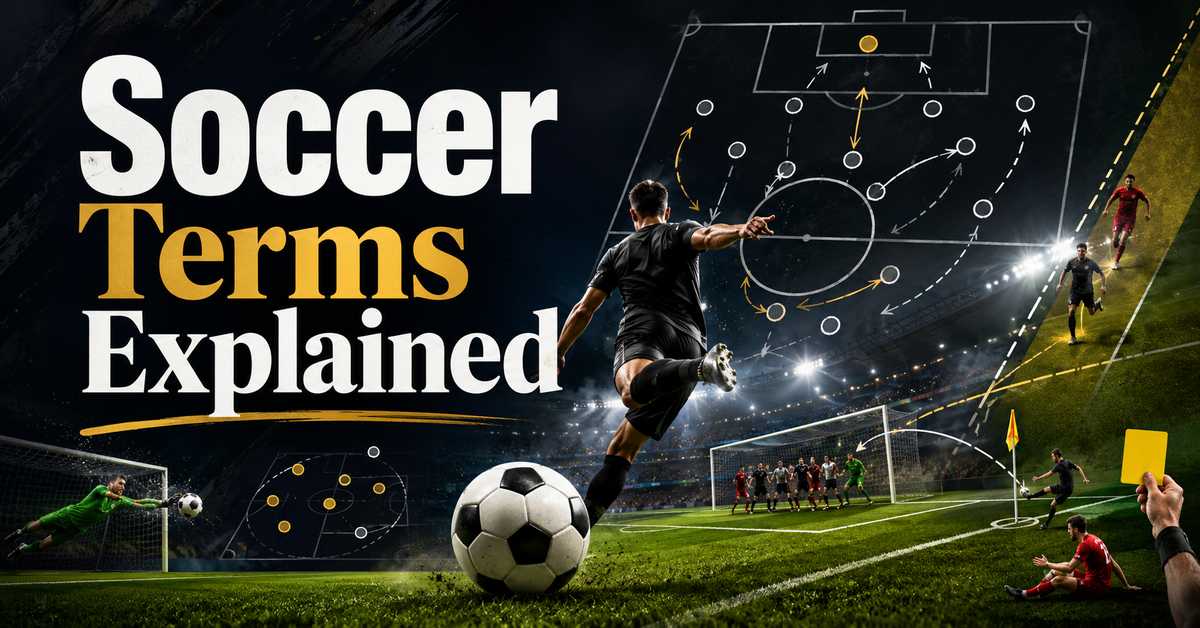
From a direct free kick attackers may attempt a direct shot, a driven pass into the box, or a clever curl around a wall. From an indirect free kick the usual options are short combinations, a planned touch to allow a teammate to shoot, or a disguised run that turns the indirect restart into a filmed finishing opportunity. In both cases rehearsed routines and clean communication raise the chance of a successful outcome.
DEFENDING AND TRANSITIONS
Defenders must judge distance, block shooting lanes on a direct free kick, and prevent simple touches that convert an indirect kick into a shot. After any free kick the defending team must be ready for transitions: conceding a quick turnover from an indirect routine or clearing a direct shot can lead to immediate counters, so recovery runs and compact shape are important.
TRAINING AND YOUTH DEVELOPMENT
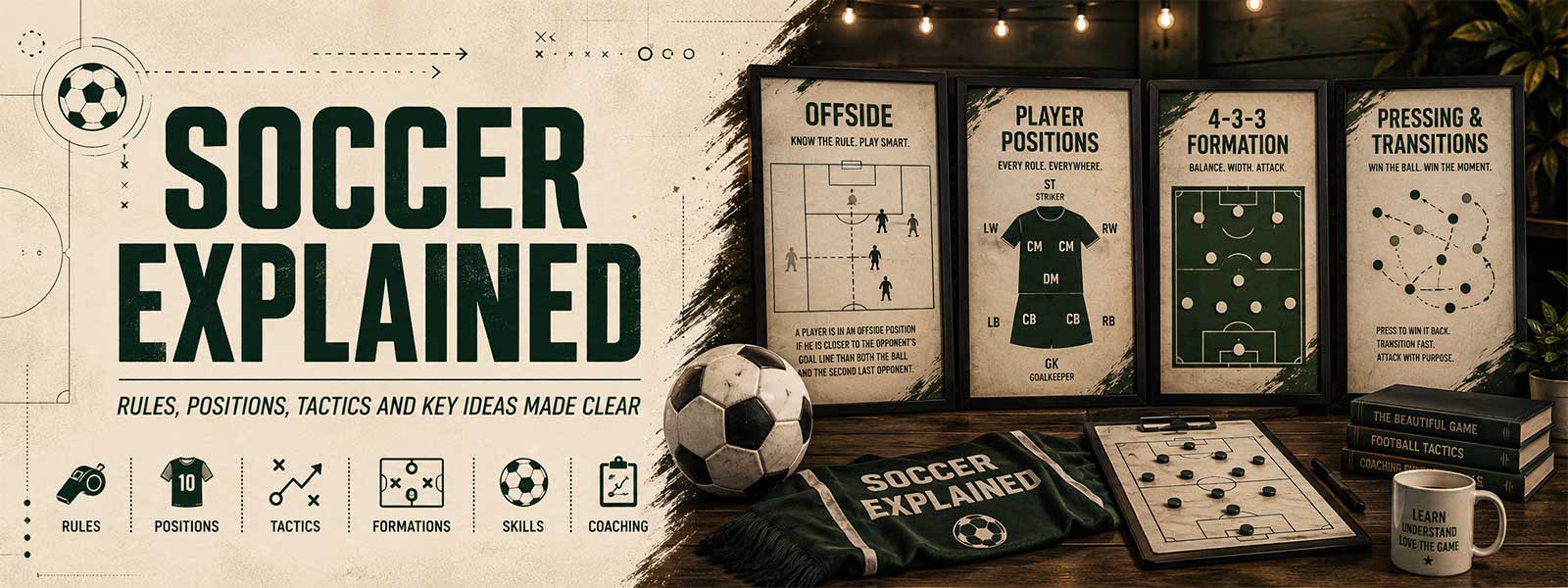
Coaches should teach both kick types explicitly. Practice direct free-kick techniques (placement, wall manipulation, keeper reading) and indirect routines (first-touch setups, two-touch finishing, and timing runs). In many youth formats referees and coaches emphasize clear signals and repetition so players learn to watch the referee’s arm and react correctly to indirect restarts.
SOCCER ART AND TEAM CULTURE
Understanding the difference between direct and indirect free kicks can be reflected in team culture and memorabilia. A senior-night poster or custom soccer poster that celebrates a set-piece specialist or a famous match moment can include imagery of a free-kick wall, the raised arm signal, or a tactical diagram showing a clever indirect routine. These visuals help families and players remember how key restarts shaped matches during a season.
COMMON MISUNDERSTANDINGS
Beginners often assume all free kicks can be shot directly; the crucial exception is the indirect free kick. Another common mistake is not watching the referee’s arm: without the raised arm an indirect kick might be mistaken for a direct one. Finally, taking a kick before the referee signals can force a retake and disrupt a planned routine.
CLOSING INTERPRETATION
Direct vs indirect free kick is a small rule distinction with big practical effects. It changes how attackers plan finishes, how defenders position a wall or mark runners, and how referees manage clarity on the field. For players, coaches, parents, and fans, learning to recognize the referee’s signal and the tactical options that follow makes watching, coaching, and commemorating moments—on posters or at senior night—more meaningful.
Author: Cynthia D.