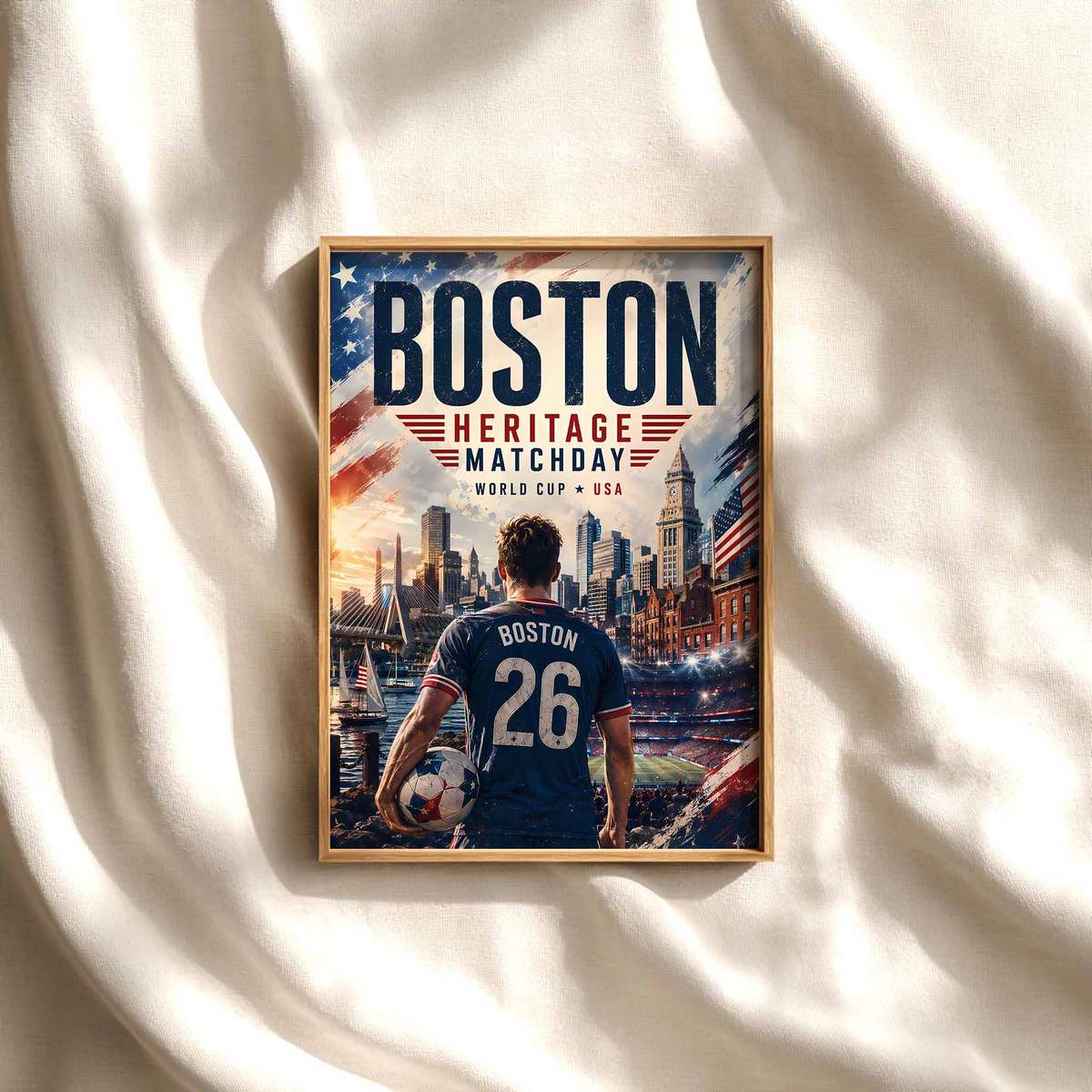
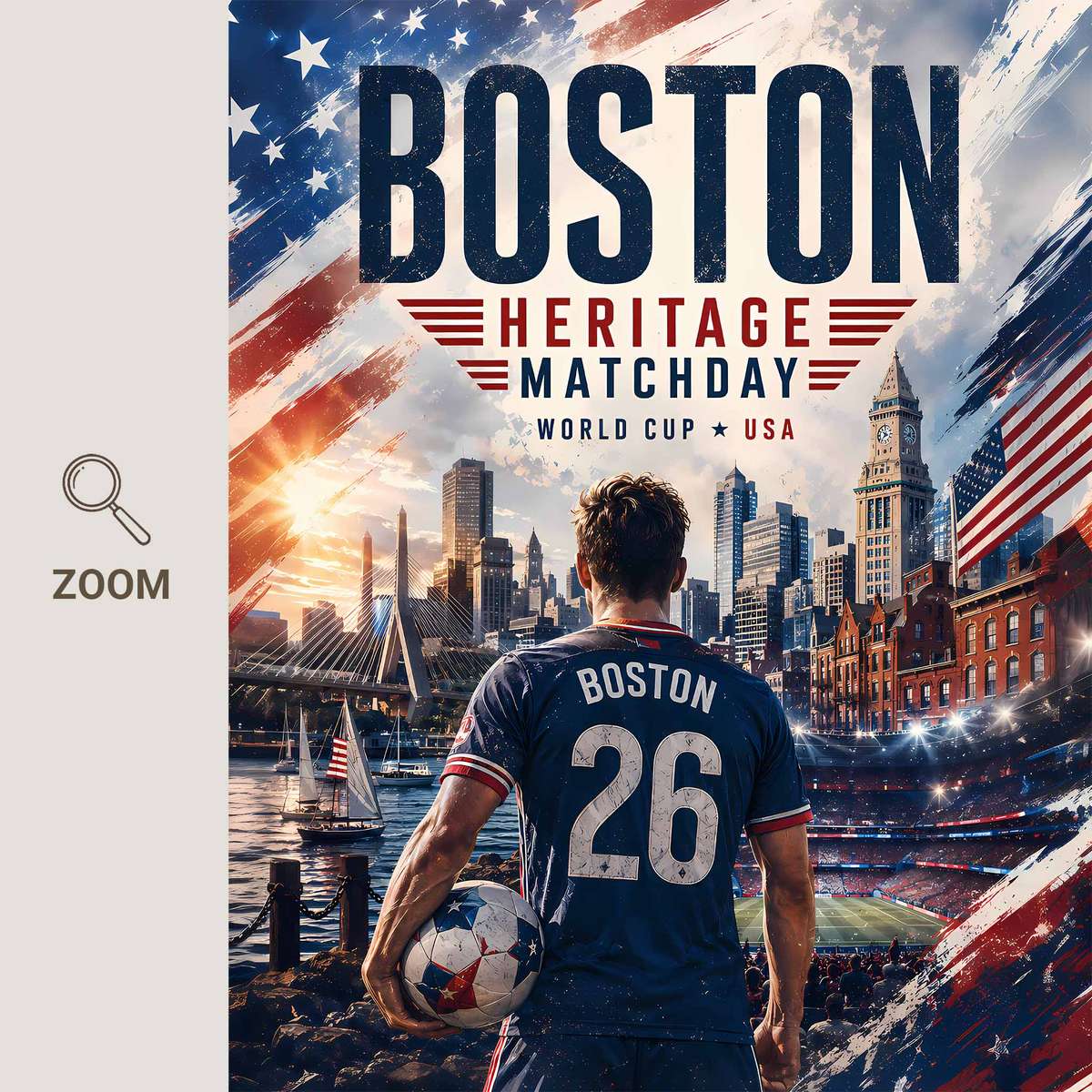
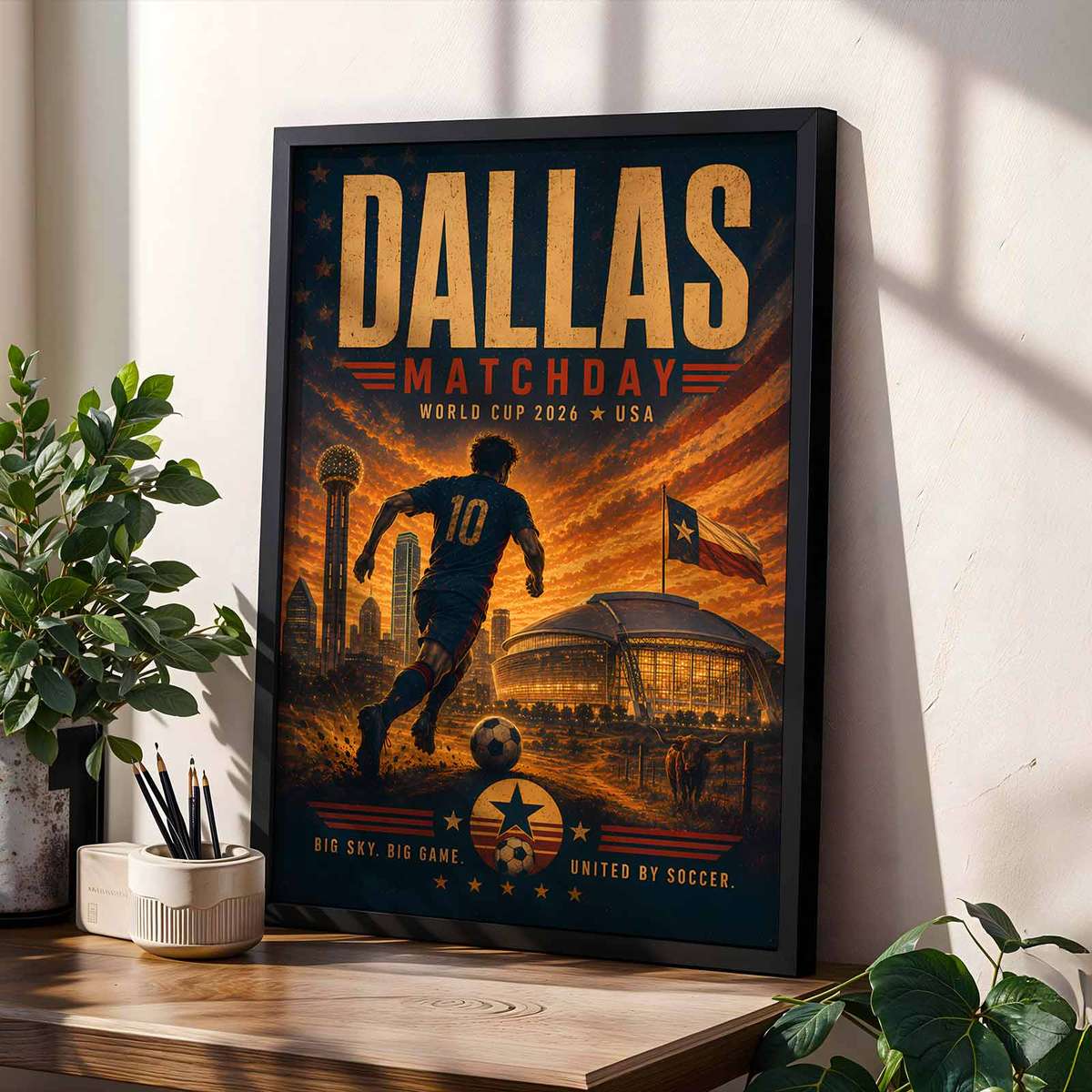
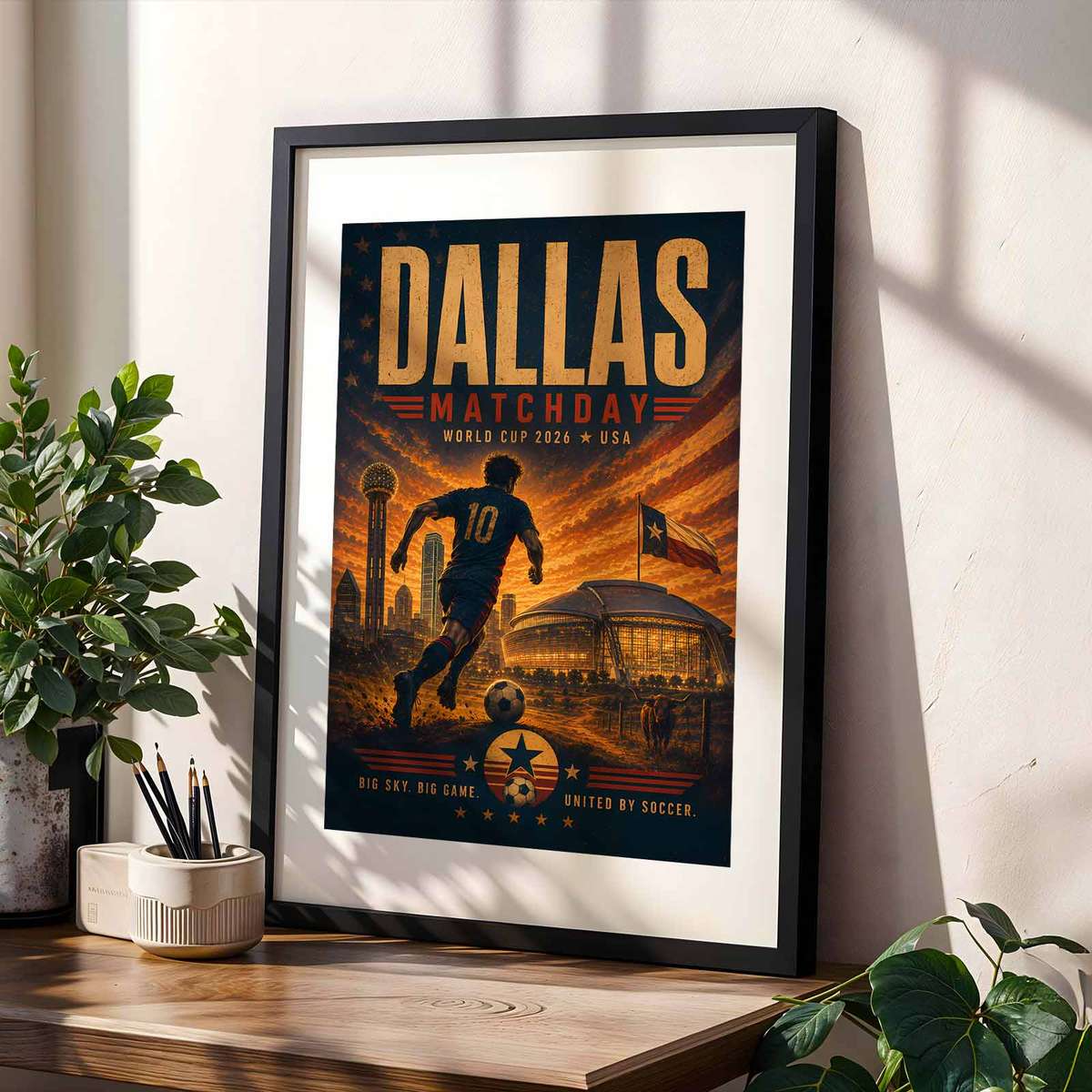
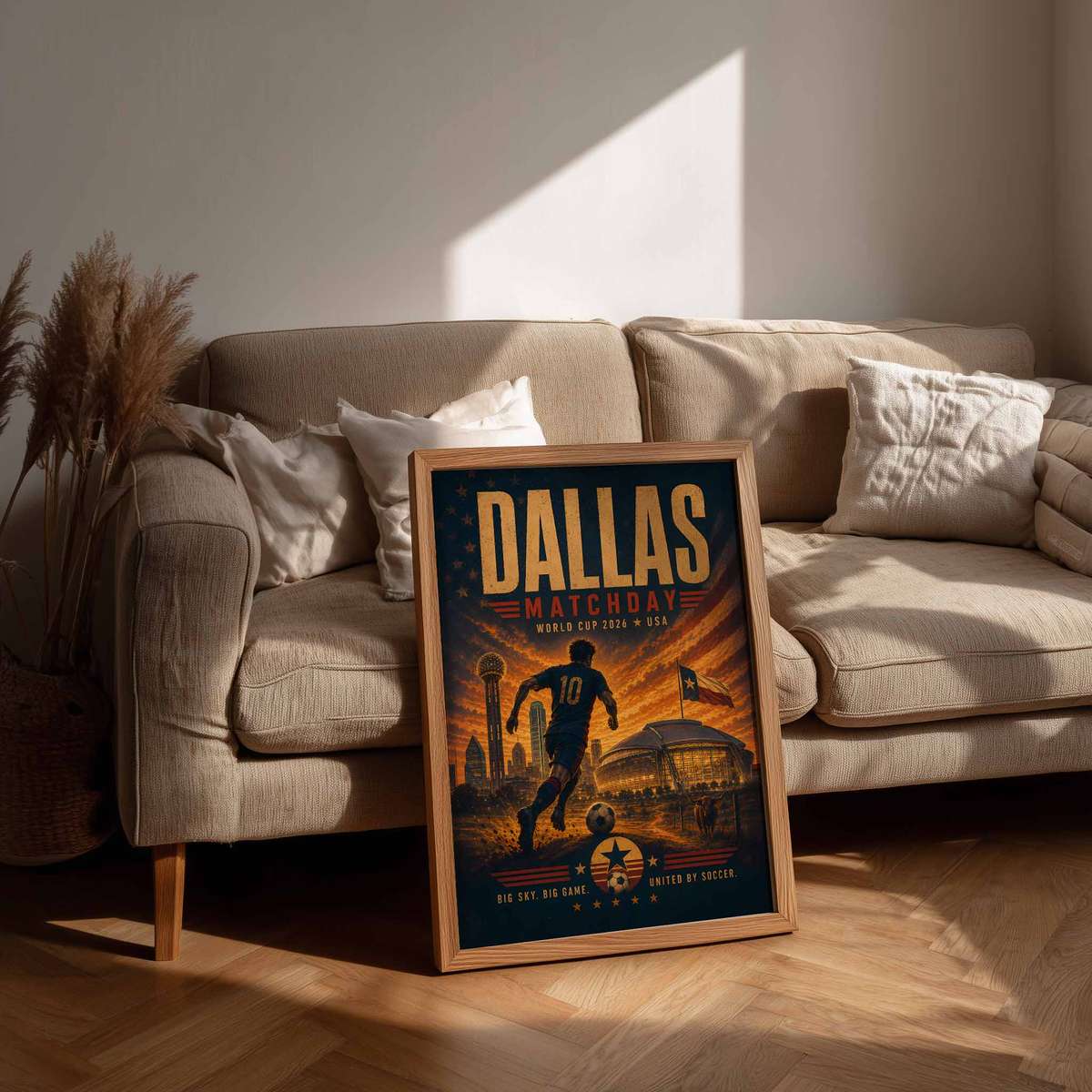
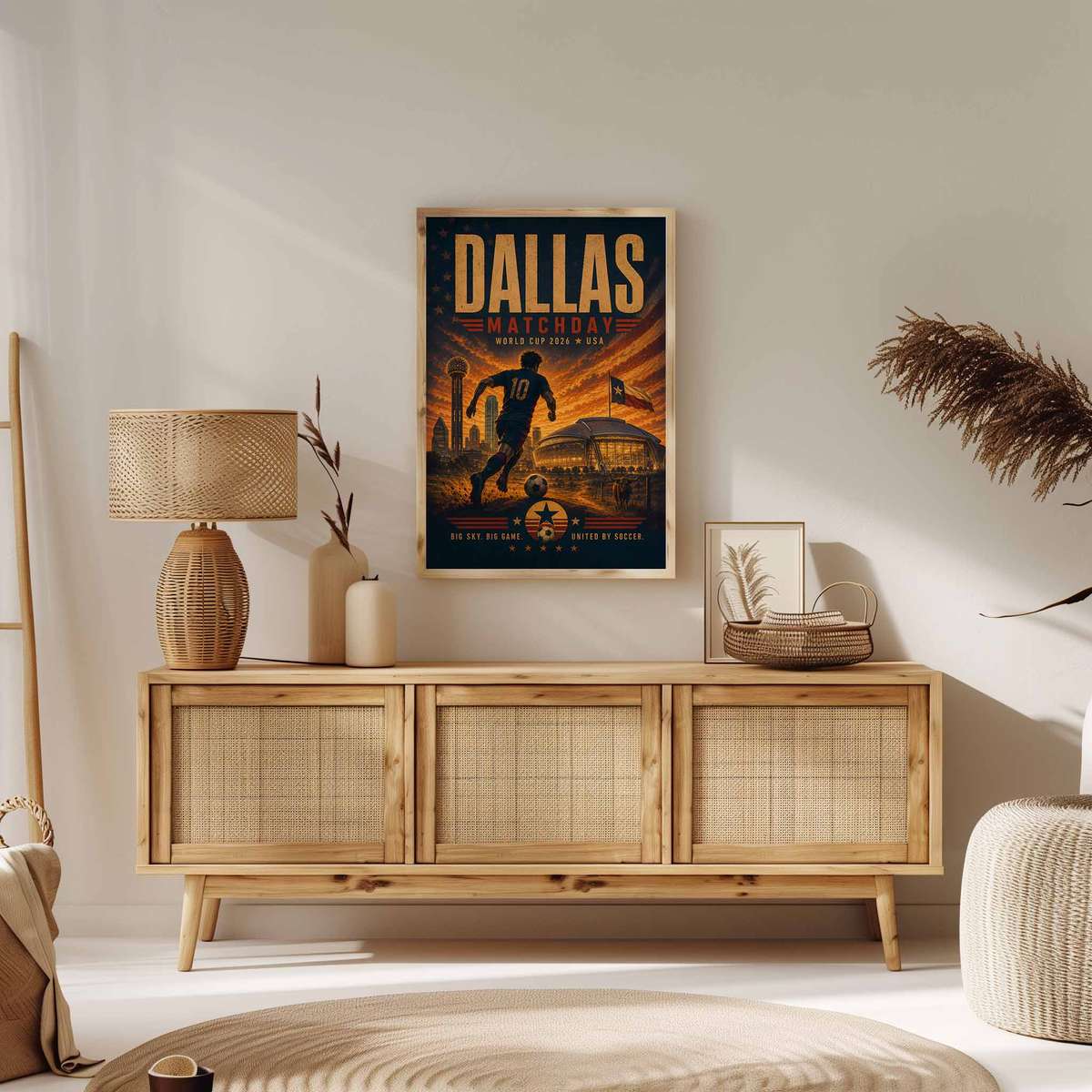
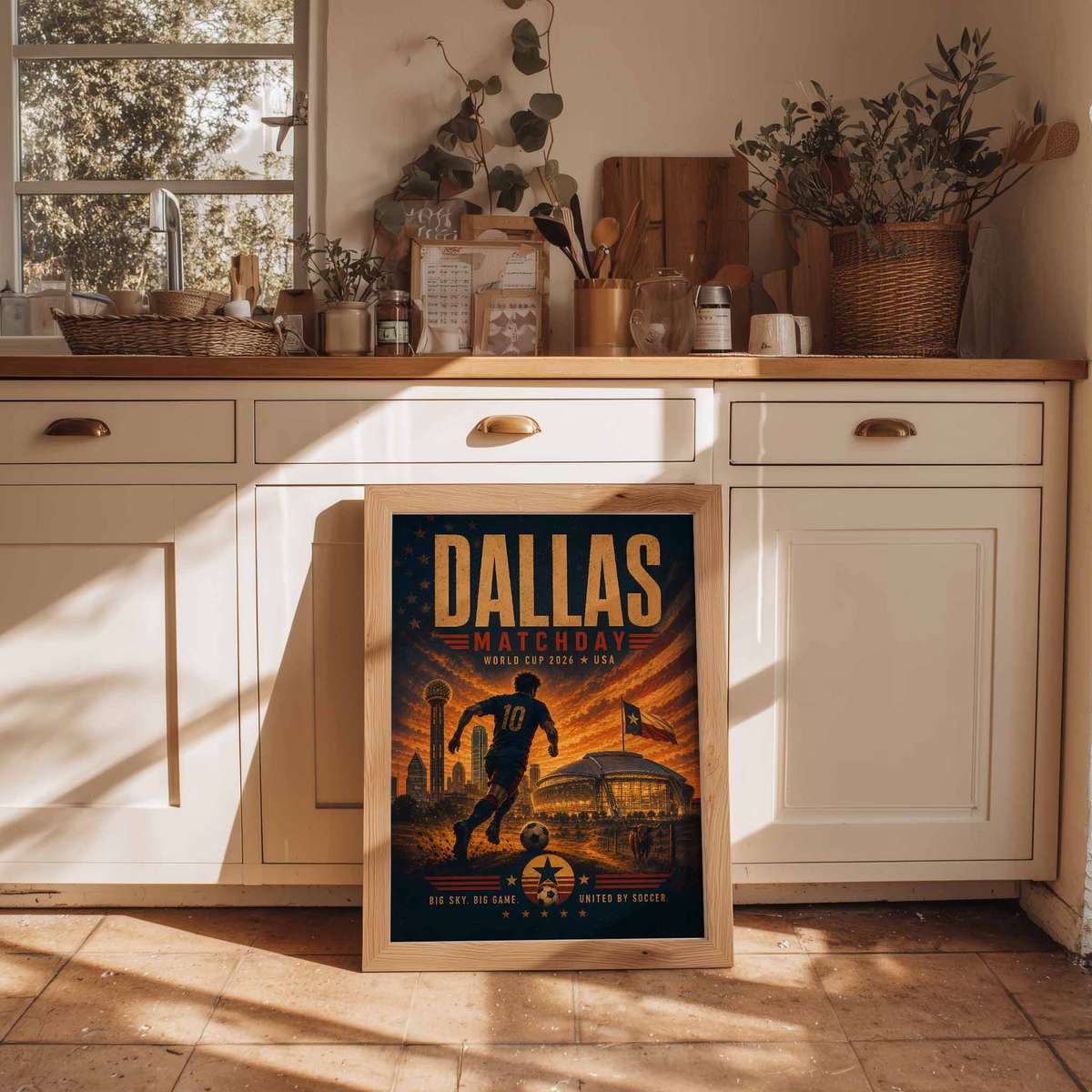
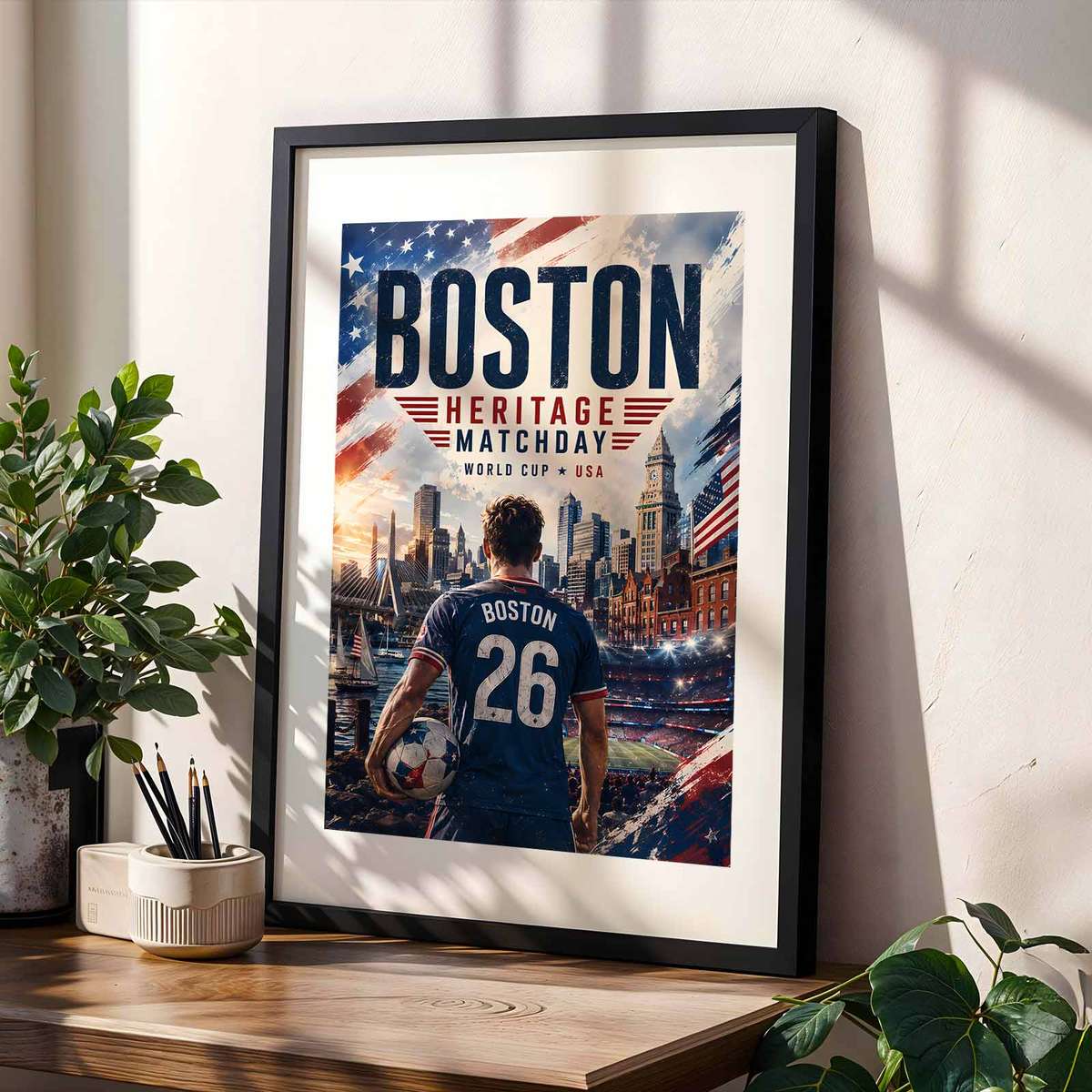
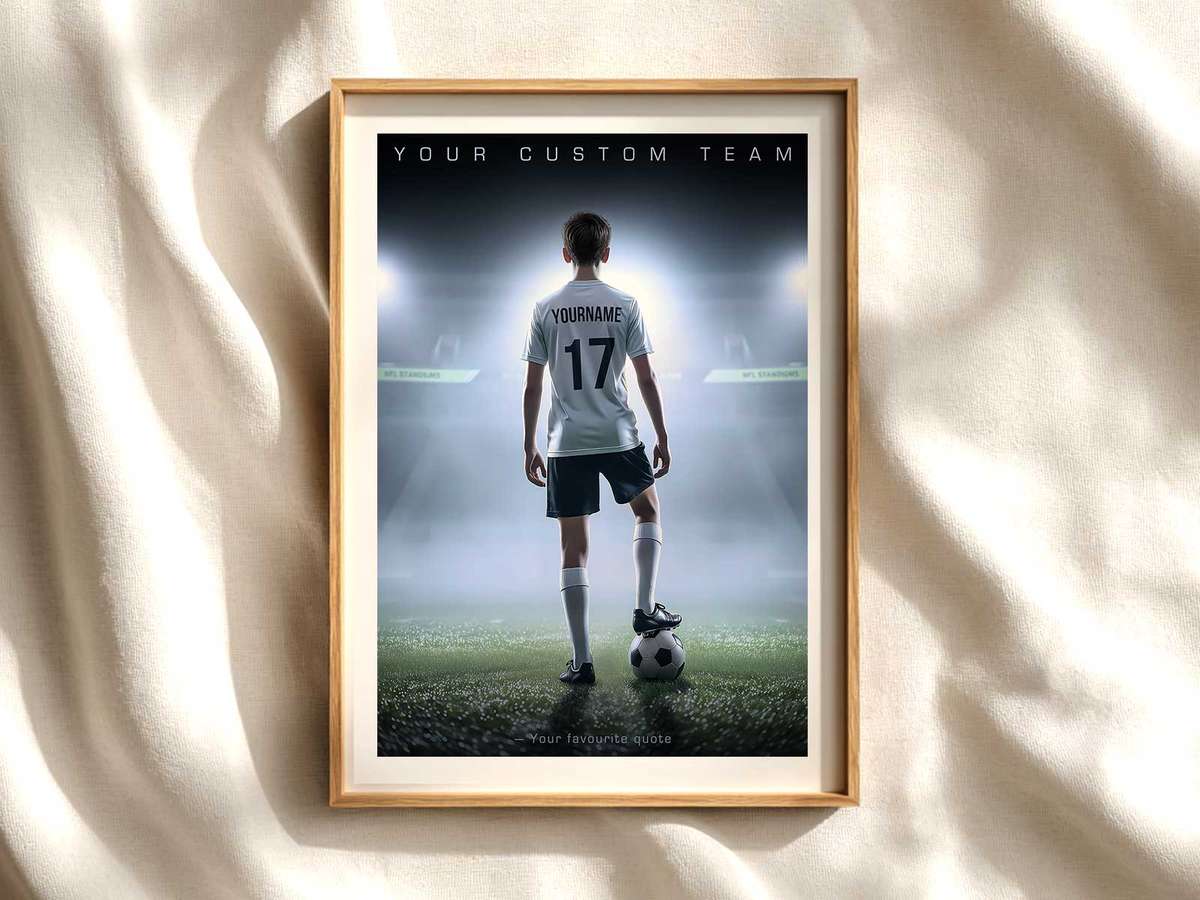
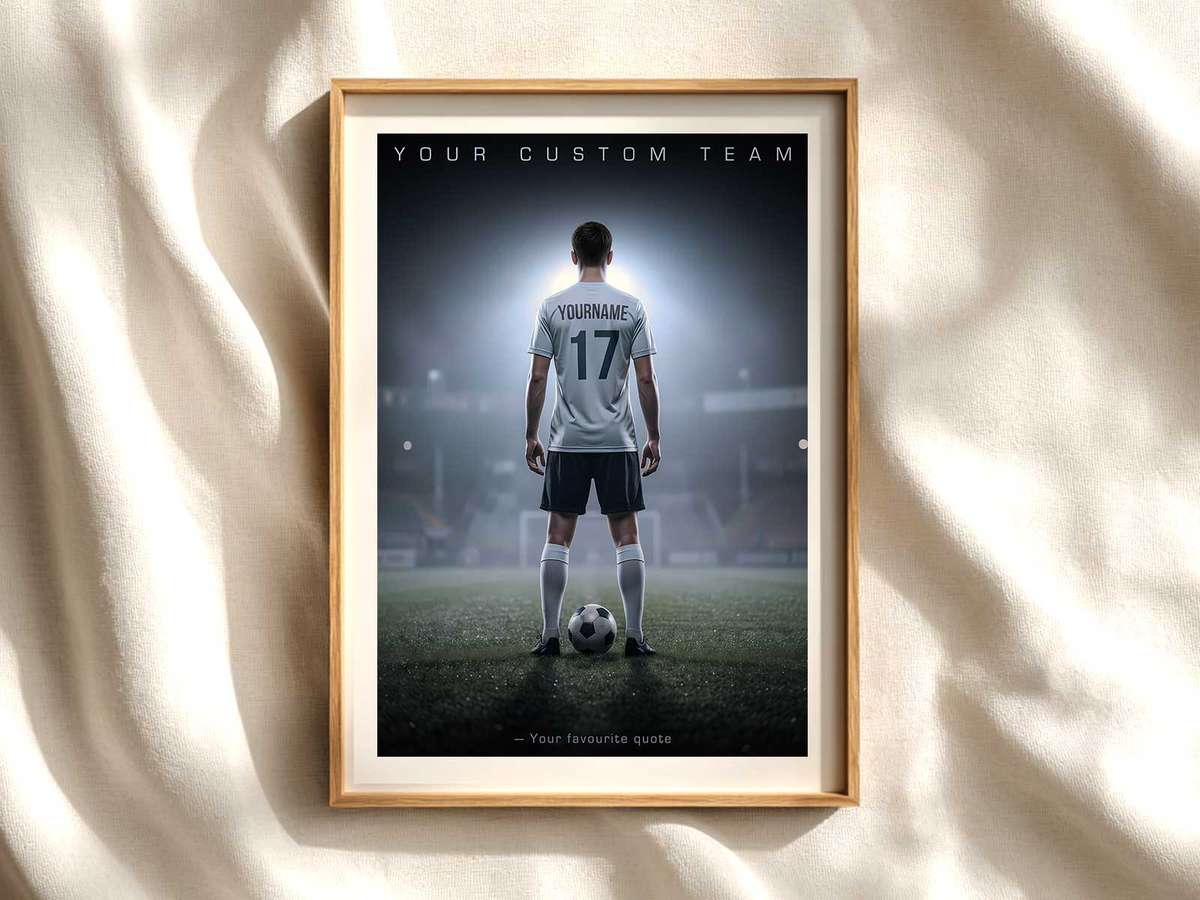
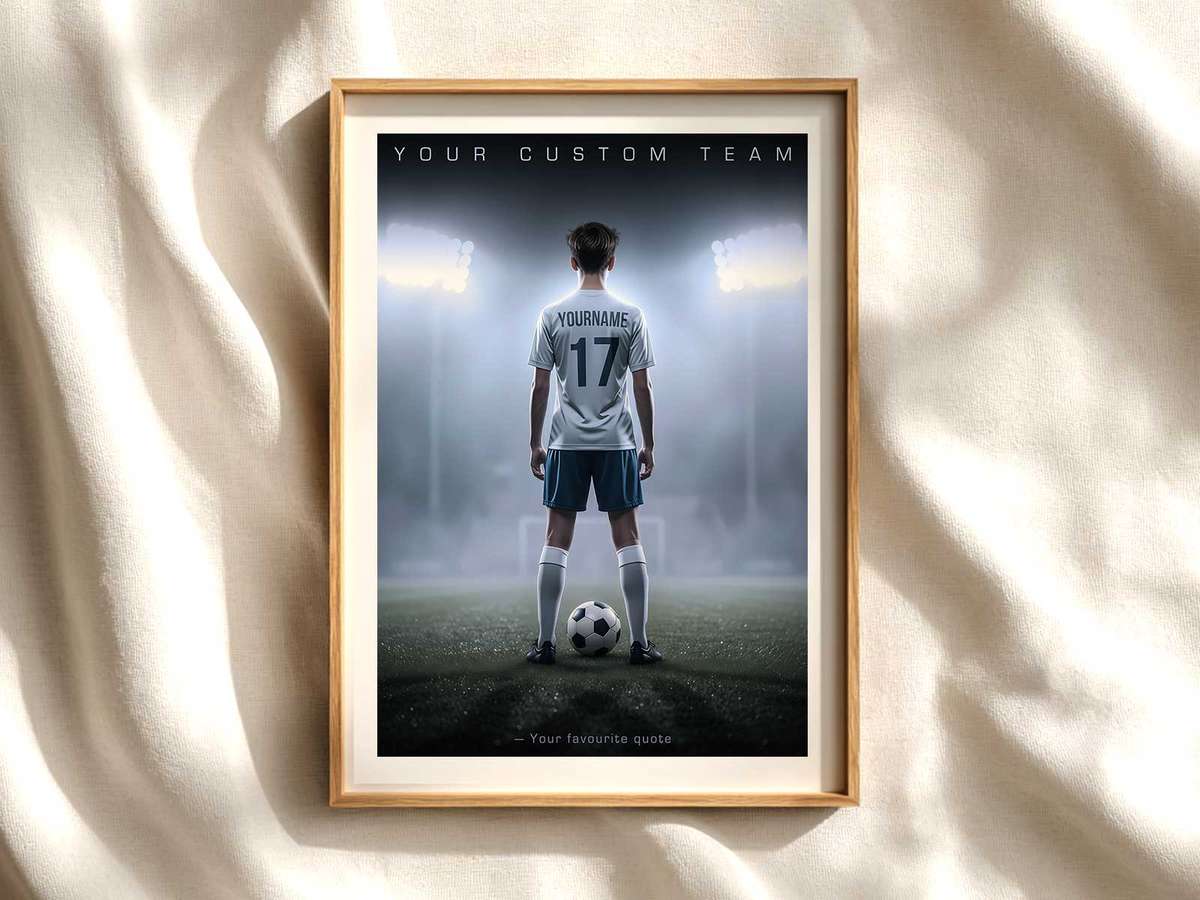
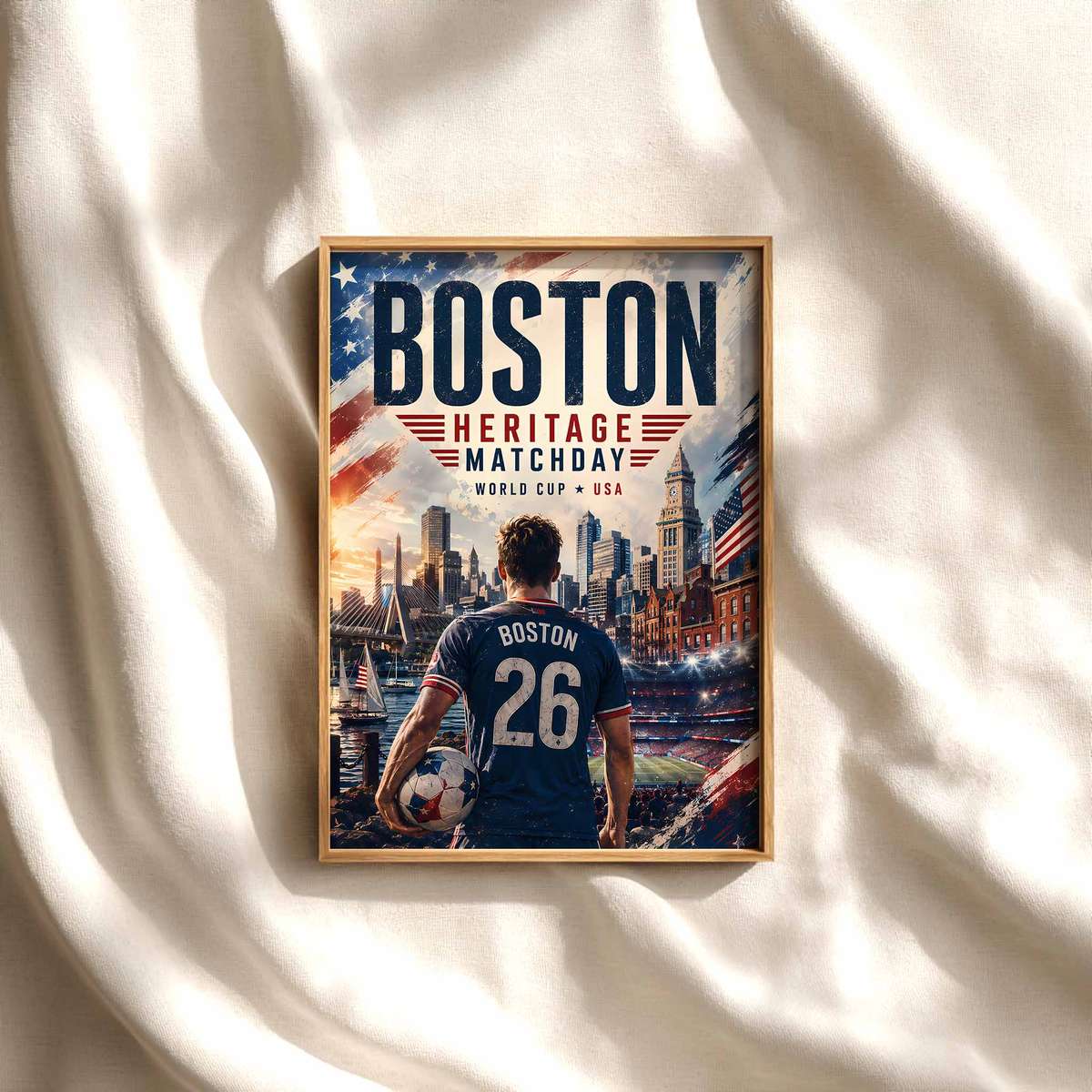
There’s a difference between a sports print and a keepsake: one records a result, the other holds a story. A custom World Cup 2026 poster that centers Dallas — its skyline, the glow of a championship night, and the unmistakable colors of an American-supporting crowd — does more than decorate a wall. It freezes a moment when effort, identity and national pride met under stadium lights, and makes that moment visible every day.
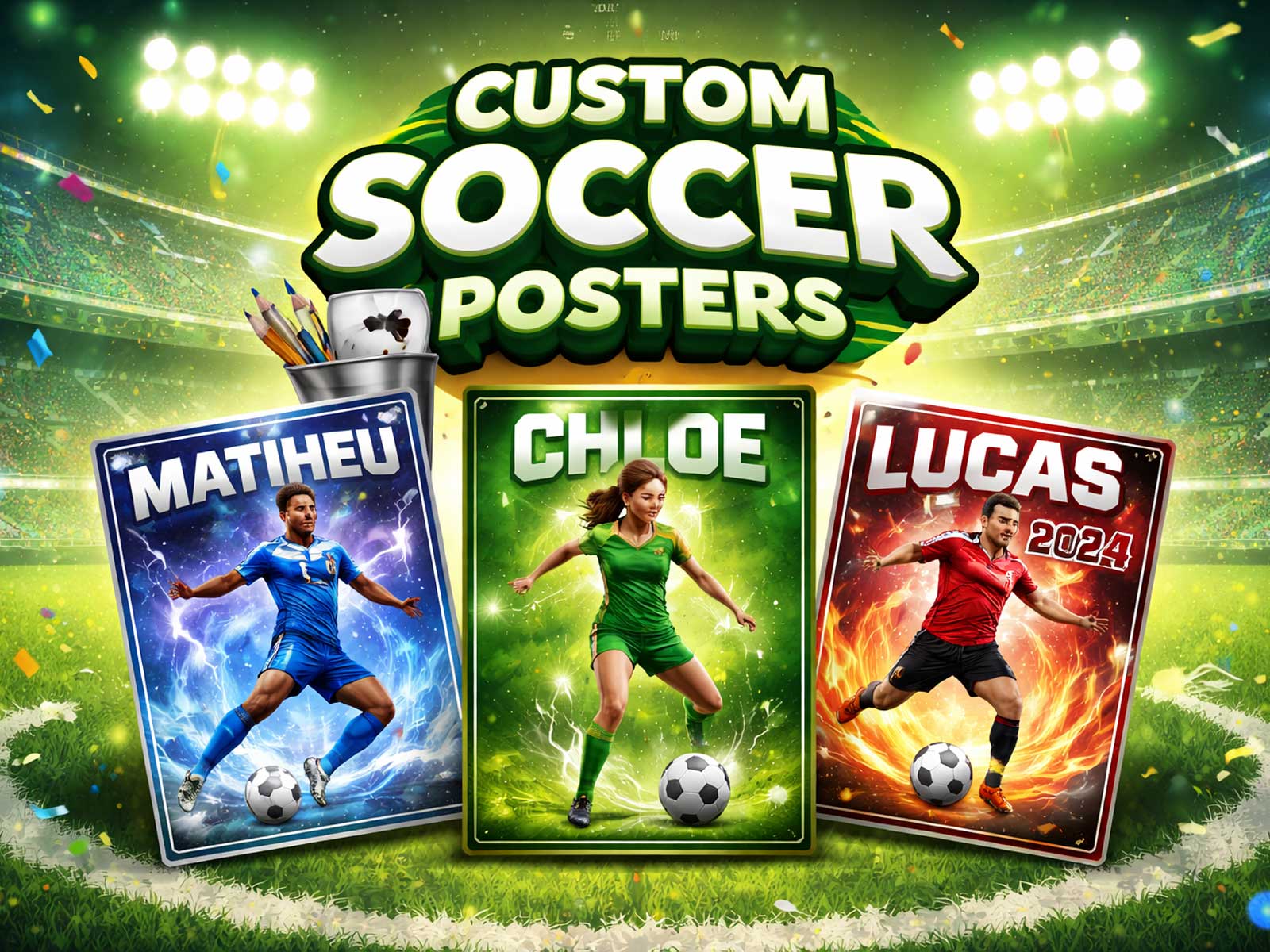
What makes a poster feel personal is the tiny, human details woven into a bold composition. A named jersey and number in the foreground, the silhouette of a familiar player posture, or a caption with the match date and opponent turn a generic graphic into a family archive. For a young player, a poster that references their season number and role — forward, keeper, or captain — can act like a milestone plaque: proof of growth and a reminder of who they were at that stage. For parents and coaches, the same piece reads as recognition of time and support.
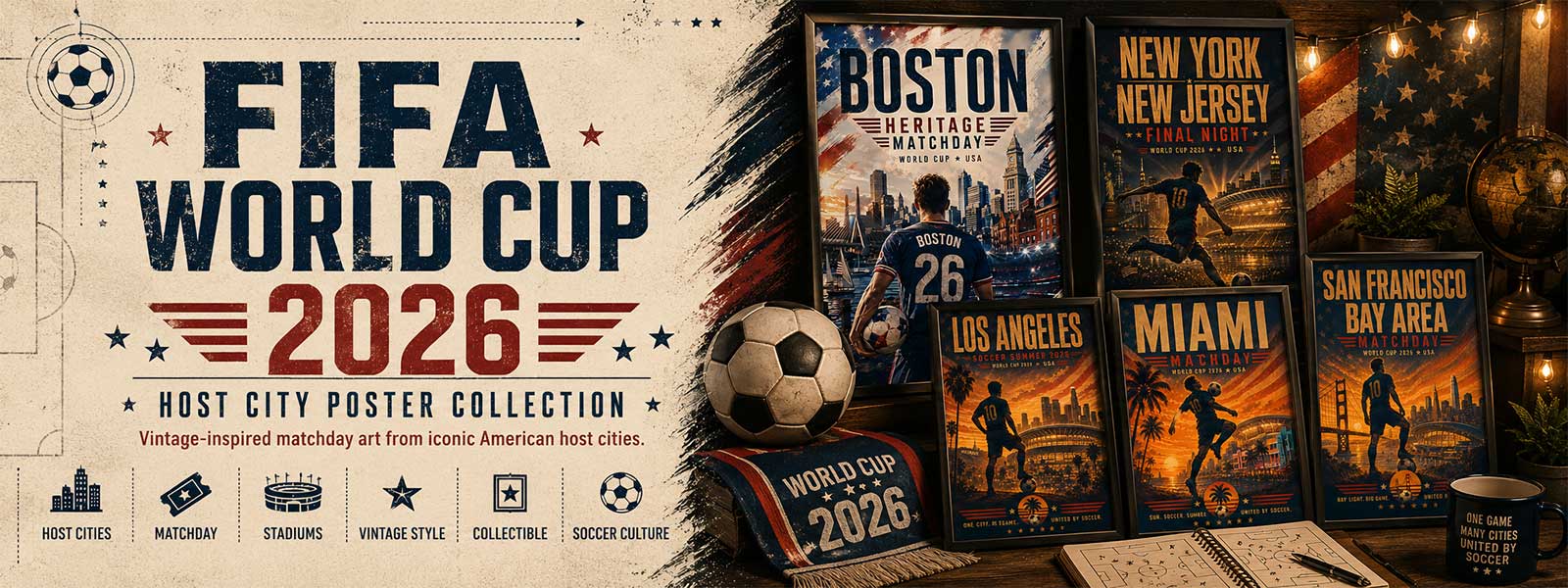
Design choices matter. The Dallas skyline threaded behind a stadium shot or haloed by the warm floodlights of a final creates a sense of place that anchors memory. Team colors and subtle American motifs lend pride without shouting, while restrained typography and clean composition keep the image from becoming cluttered. That visual clarity is why soccer imagery works so well on walls: the body language and motion in a great photograph pair naturally with bold color blocks and typography to produce an image that reads from across a room.
Imagine the poster in several real settings: above a bedroom desk where a teen studies and watches match replays; in a family game room where every trophy has its story; in a coach’s office as a quiet nod to a standout season; or on a locker-room memory wall where teammates pin photos and notes. In each location the poster shifts role — inspiration for practice, a conversation starter, a comfort after a tough loss, or a proud reminder of a shared achievement.
Compared with a generic soccer print, a keepsake-style World Cup poster carries explicit references that carry emotion: the match date, the stadium light motif, a player name or number, and the unmistakable skyline of Dallas. These anchors let anyone who sees the poster reconstruct the scene in their mind. A parent might remember the drive home after the match. A player will recall the last-minute assist or the corner-kick practice that led up to it. Those associations are why a poster becomes heirloom-like — it holds relationships and small rituals, not just a visual.
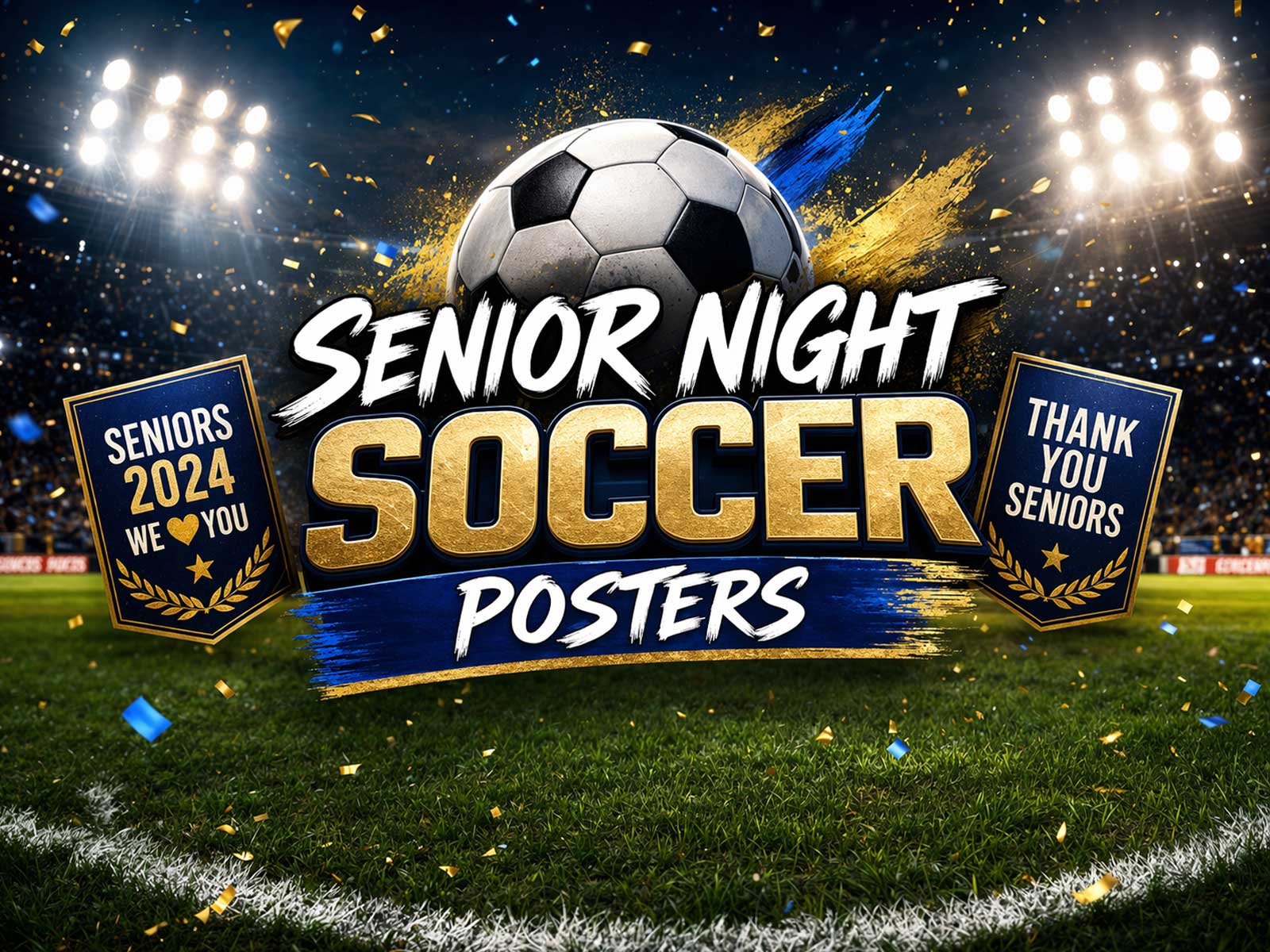
Gifting such a poster is equally specific. End-of-season presents that include the player’s name and season role feel like recognition; a coach gifting a poster to captains marks leadership and service. For families marking a shared trip to a Dallas match, the poster is a way to preserve a rare, joyful gathering. The thoughtfulness is in matching the design to the memory: choose the skyline-and-light composition for a final-night vibe, emphasize the player portrait for individual achievements, or lean into team color and crest for collective identity.
Finally, a poster is a living memory. It ages with the room and the player: a bedroom piece for a teen may later move to a study or a hallway as a reminder of where they started. That adaptability is part of its power. A strong visual — simple, confident, and personally anchored — resists becoming dated. It continues to tell a clear story even as jerseys change and seasons pass.
A Dallas World Cup 2026 poster that mixes skyline, final-light atmosphere, and personal identity does more than celebrate an event. It keeps the feeling of that night alive: the pride, the team, and the small moments that made it unforgettable.