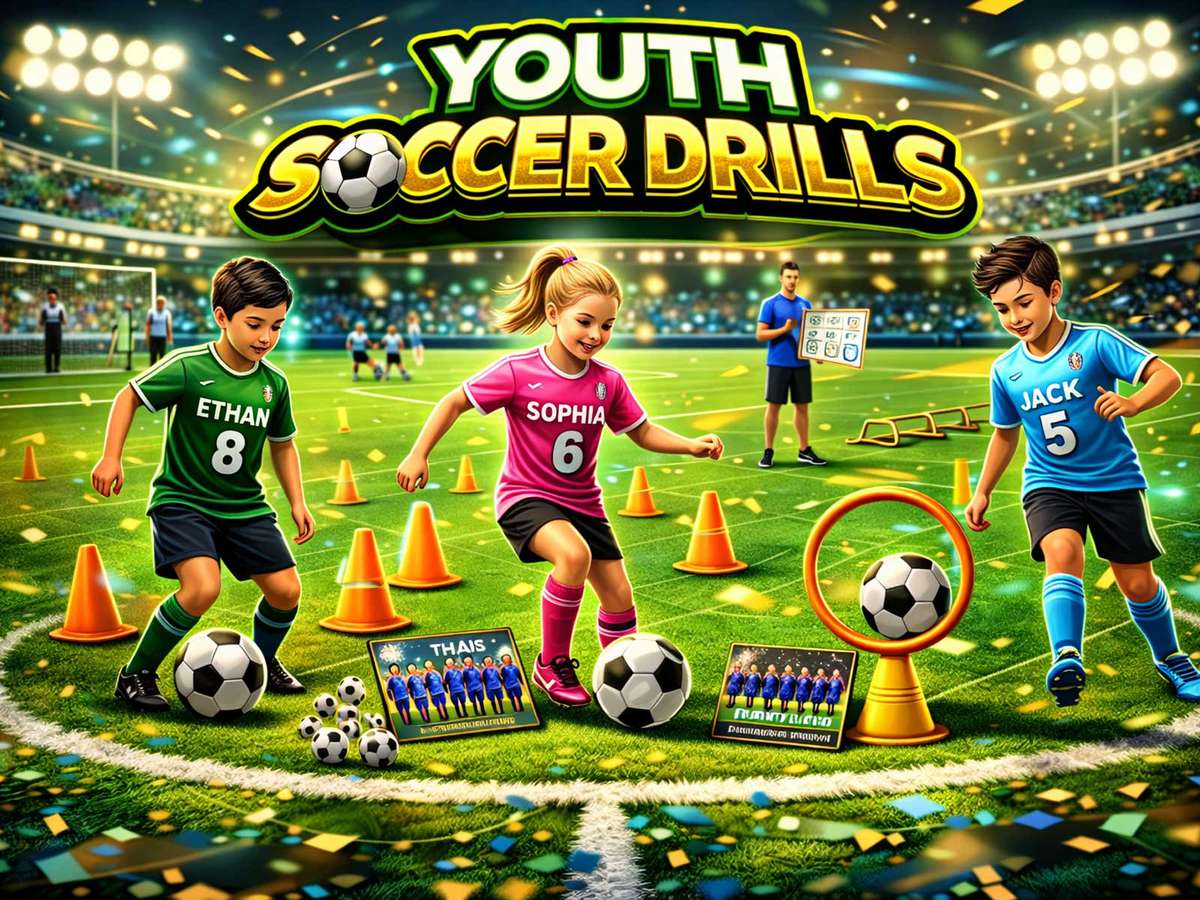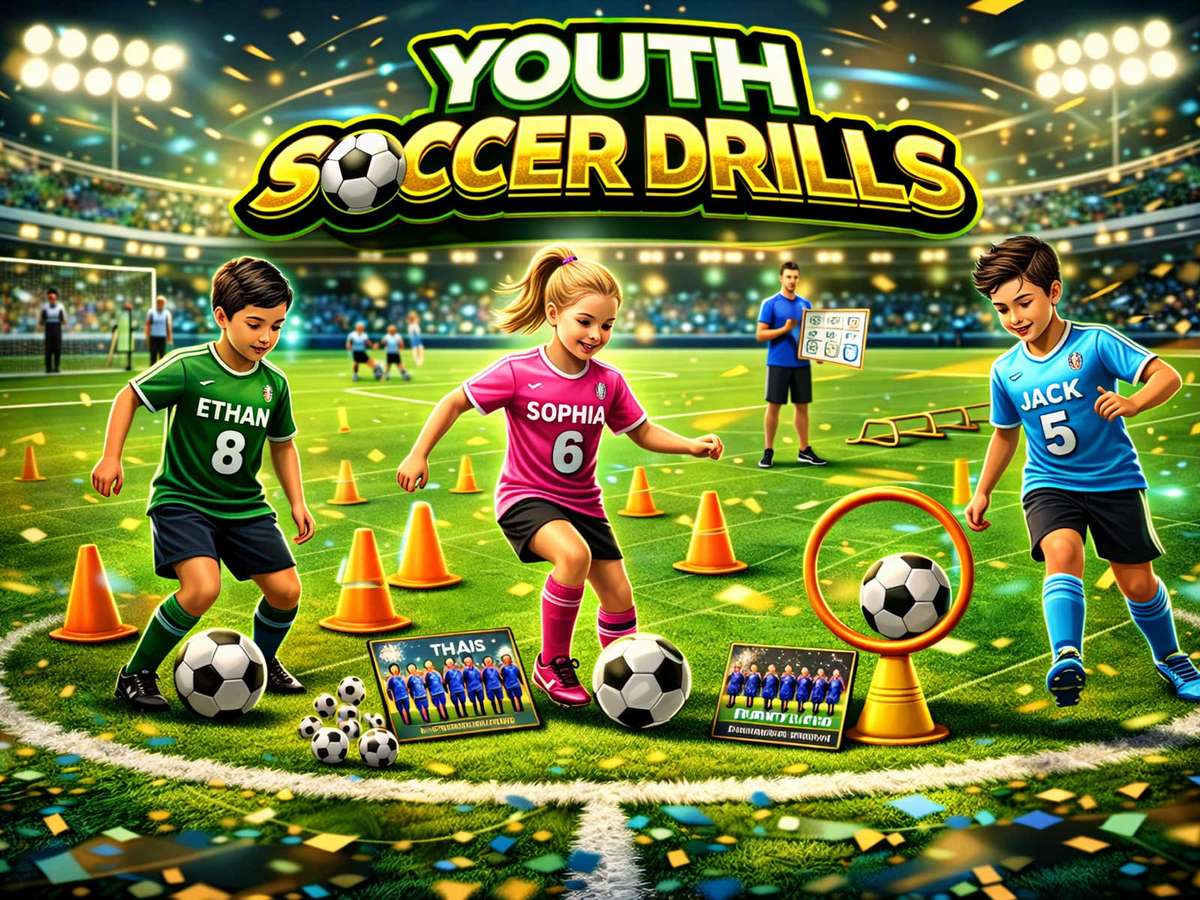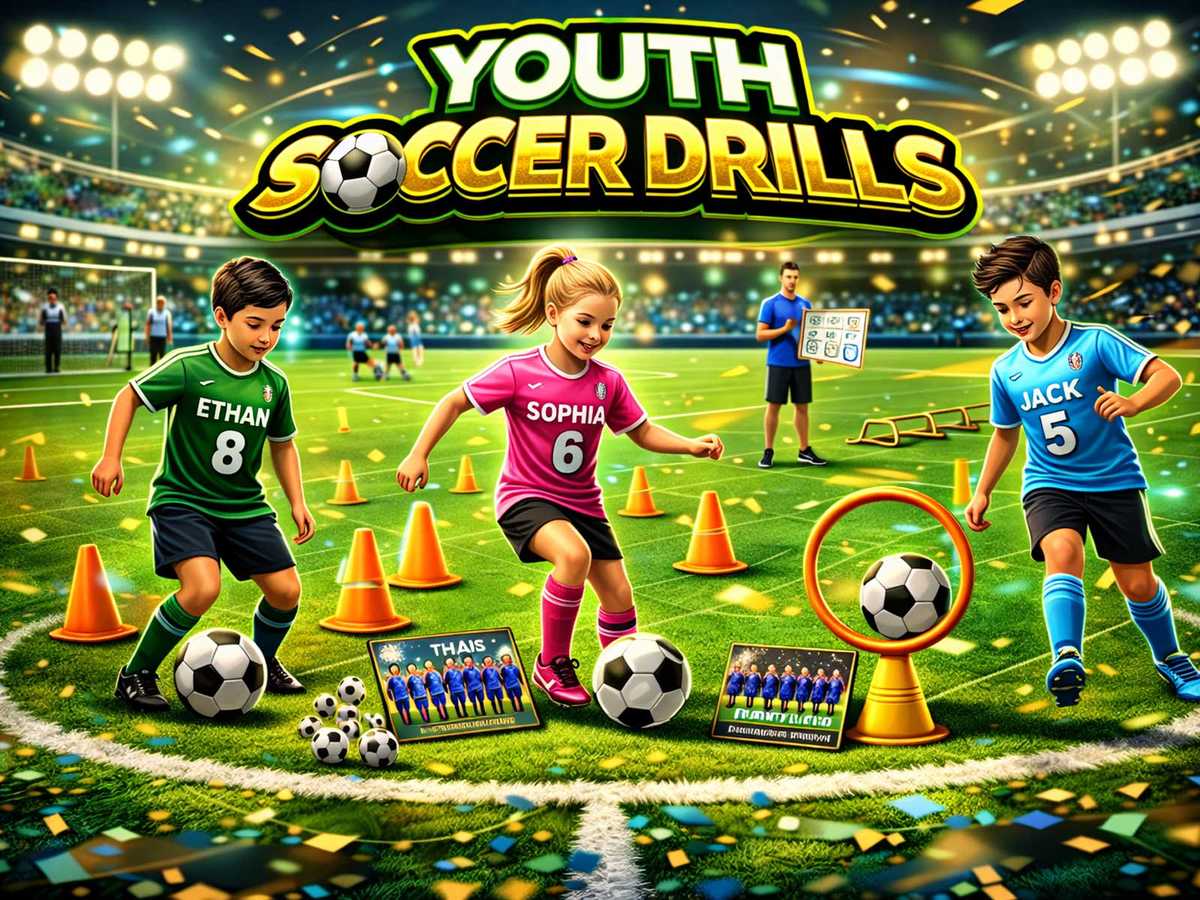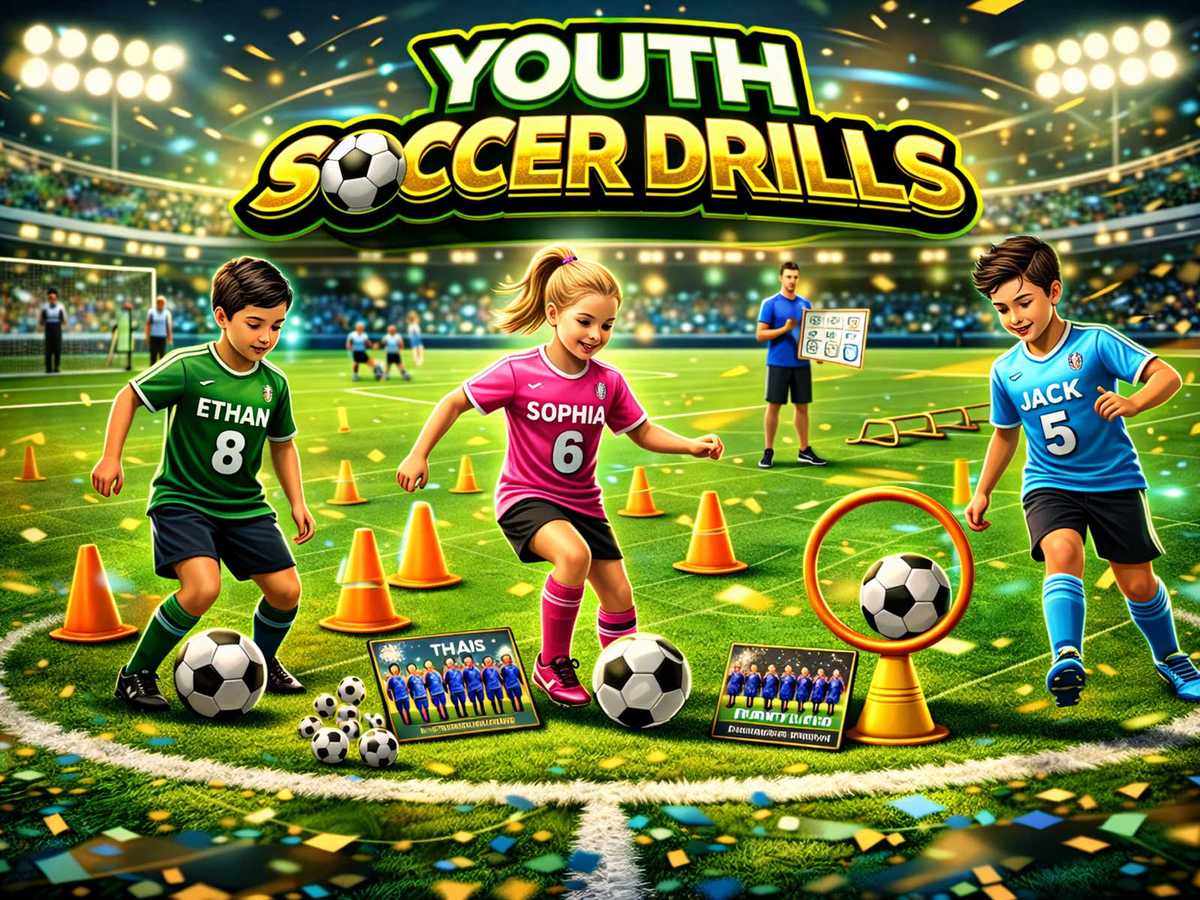
Football drill for 5 year olds: combining movement cues, ball contact and fast…
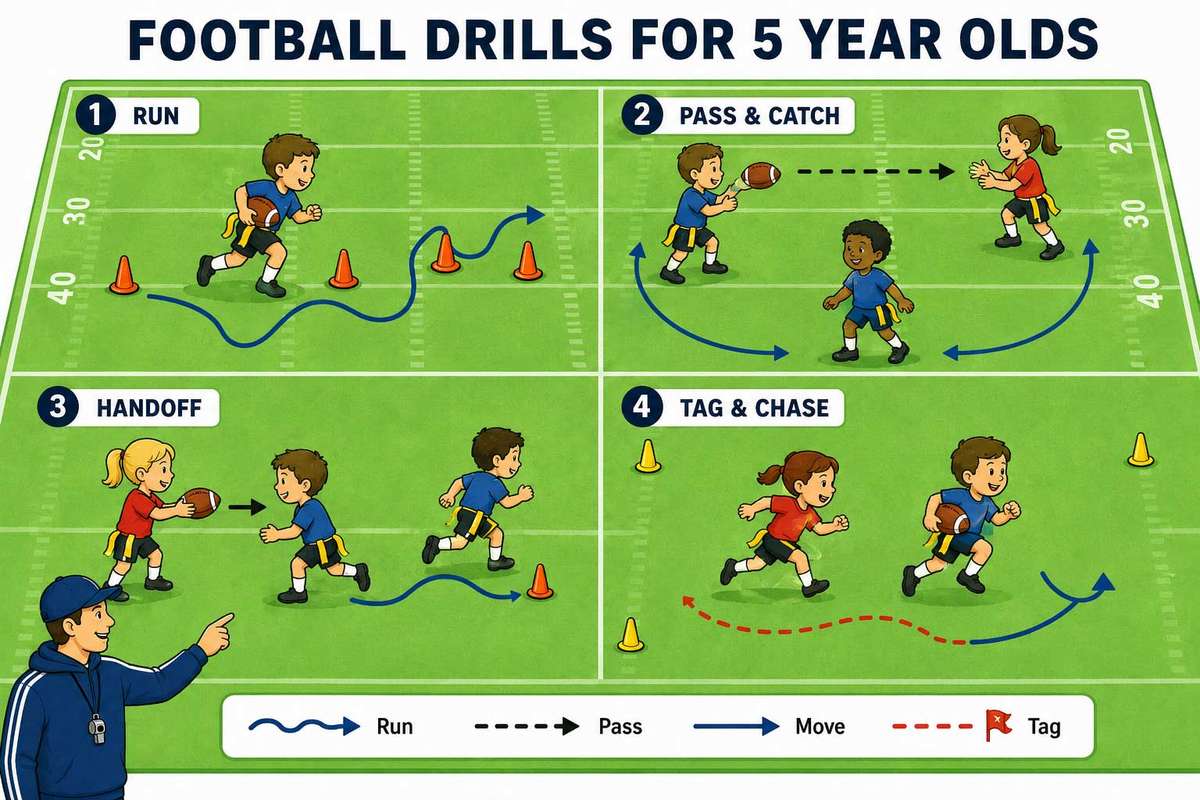
At U5/U6 the priority isn’t tactics or technical polish — it’s movement education, general coordination and ball familiarity. A well-designed football drill for 5 year olds pairs short body-movement patterns with immediate ball contact and very quick restarts so every child stays involved and gets repeated touches.
Quick answer
Use short (3–5 minute) stations where each child has a ball; cue simple movements (run, stop, turn), link one immediate ball action (dribble, stop, pass to target) and allow instant reset so touches and movement patterns repeat rapidly.
What you will learn here
- Why movement, ball touch and fast resets are the correct U6 priorities.
- Concrete movement cues and how they control speed, turns and ball contact.
- Common mistakes and coach observations to keep the drill meaningful.
WHAT SPEED, AGILITY, AND COORDINATION DRILLS REALLY TRAIN
For 5-year-olds these drills are not about sprint mechanics or adult-style agility. The verified coaching guidance says the focus should be movement education, general coordination and ball familiarity. That means simple patterns that teach children how to run, stop, turn and control a ball under low cognitive load. When a drill mixes a body action (e.g. a short run or pivot) with an immediate ball task, the child learns how the body and ball interact rather than practising them separately.
BALANCE, FOOTWORK, AND MOVEMENT CONTROL
At this age look for observable behaviours: upright but slightly forward lean during acceleration, soft knees on stopping, feet under the centre of mass when changing direction, and small, controlled touches on the ball. Coaching cues should be simple — traffic-light style or single words — so children can react without overthinking. The aim is quality of movement (controlled stops, balanced turns) more than speed or perfect technique.
ACCELERATION, DECELERATION, AND DIRECTION CHANGE
Developing acceleration basics and stopping control in U5 work means short efforts with clear, short stops. Use brief run-and-stop tasks that finish in a ball action (stop the ball with the sole, tap it back). That links deceleration to a soccer action. Keep directional changes gentle and frequent so kids learn body control before being asked to make sharp cuts or reactive changes under pressure.
COORDINATION BEFORE BALL WORK AND WITH BALL WORK
Curriculum guidance for U6 recommends each child has a ball to maximise touches. Begin with coordination patterns without the ball or with light ball interaction, then immediately layer a single, repeatable ball task: a short dribble, a foot-stop, or a gentle pass to a marker. The concrete mechanism: repetition of the combined pattern (move & touch) builds the neural link between body movement and ball control so the child learns to coordinate both together.
REACTIVE MOVEMENT AND SIMPLE DECISION LAYERS
Reactive prompts should be extremely simple — examples from coaching practice include 'green light' to go, 'red light' to stop, or a coach call to turn left or right. These cues control movement speed and direction change without introducing complex choices. Reactivity here trains fast resets: the child performs a short action, receives the cue, executes a single ball action, and immediately restarts. The repetition supports quick learning while keeping activities playful.
AGE-APPROPRIATE MOVEMENT DEMANDS
Best practice recommends many short activities — roughly 3–5 minutes each — with quick transitions and rotations. Avoid long lines and elimination formats. Keep the space small and assign every child a ball so they stay active. When drills are brief and game-like they match the attention span of 5-year-olds and ensure high touch counts and frequent movement resets.
COMMON MISTAKES IN YOUTH AGILITY PRACTICE
Several common errors reduce value: long waits in lines that kill touch volume; complex verbal instructions that children cannot process; ladder-style or footwork busyness that has no ball link; and elimination games that remove players from practice. The remedy: keep cues simple, minimise downtime, always pair a body pattern with a single clear ball outcome, and keep everyone involved.
HOW COACHES CAN KEEP MOVEMENT WORK SOCCER-RELEVANT
Design drills where the movement problem mirrors a simple match problem: run forward, stop and control; move around a cone and dribble back; sprint on 'green' and trap on 'red'. Use short, repeatable tasks with instant restart so children get many attempts in a session. Observe specific behaviours (knee flexion during stops, foot placement on turns, size of touches) and correct one thing at a time with quick, visual demonstrations rather than long verbal explanations.
CLOSING INTERPRETATION
A football drill for 5 year olds that genuinely helps development combines three things: simple movement cues that control speed and direction, immediate ball contact so movement links to ball actions, and fast resets so each player repeats the pattern many times. This aligns with U6 guidance: prioritise movement education, general coordination and ball familiarity using short, game-like activities where every child has a ball.
Author: Eric M.