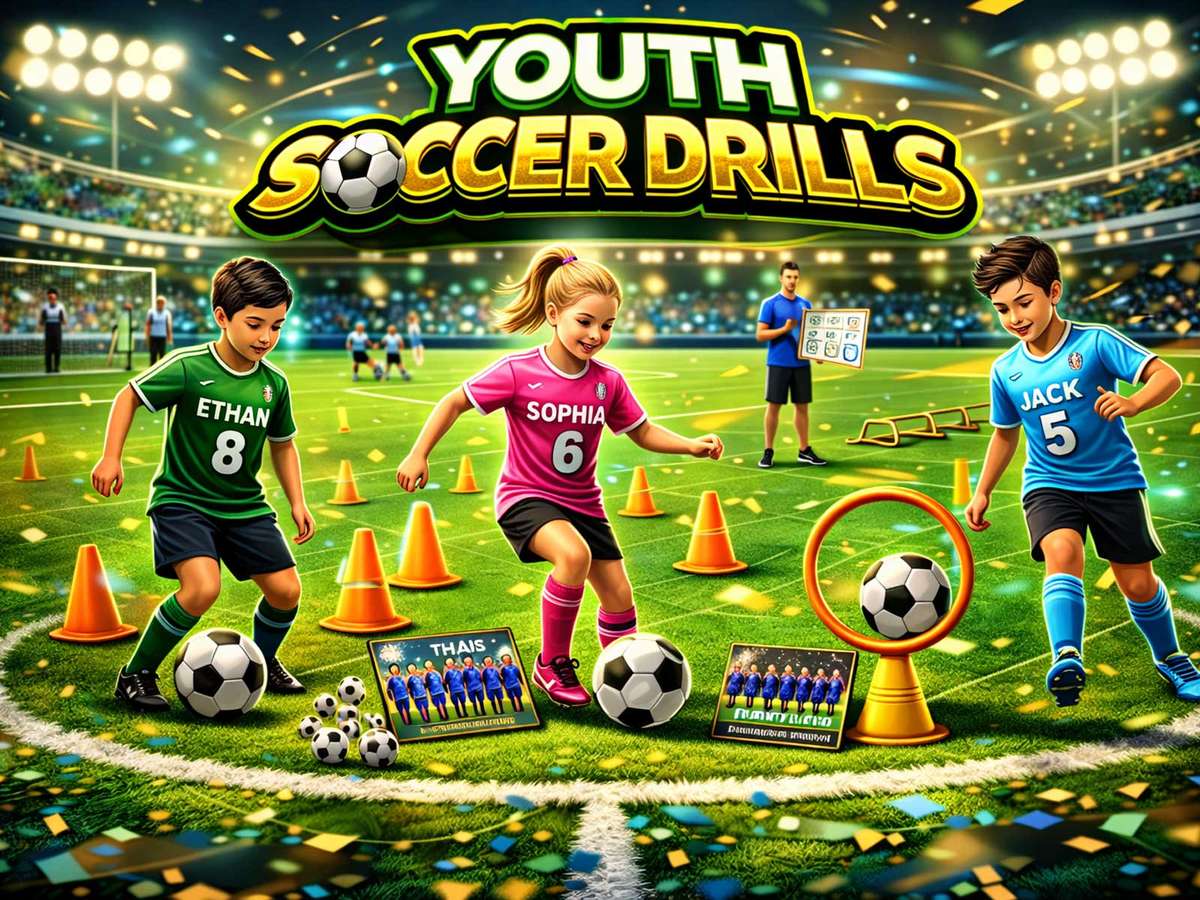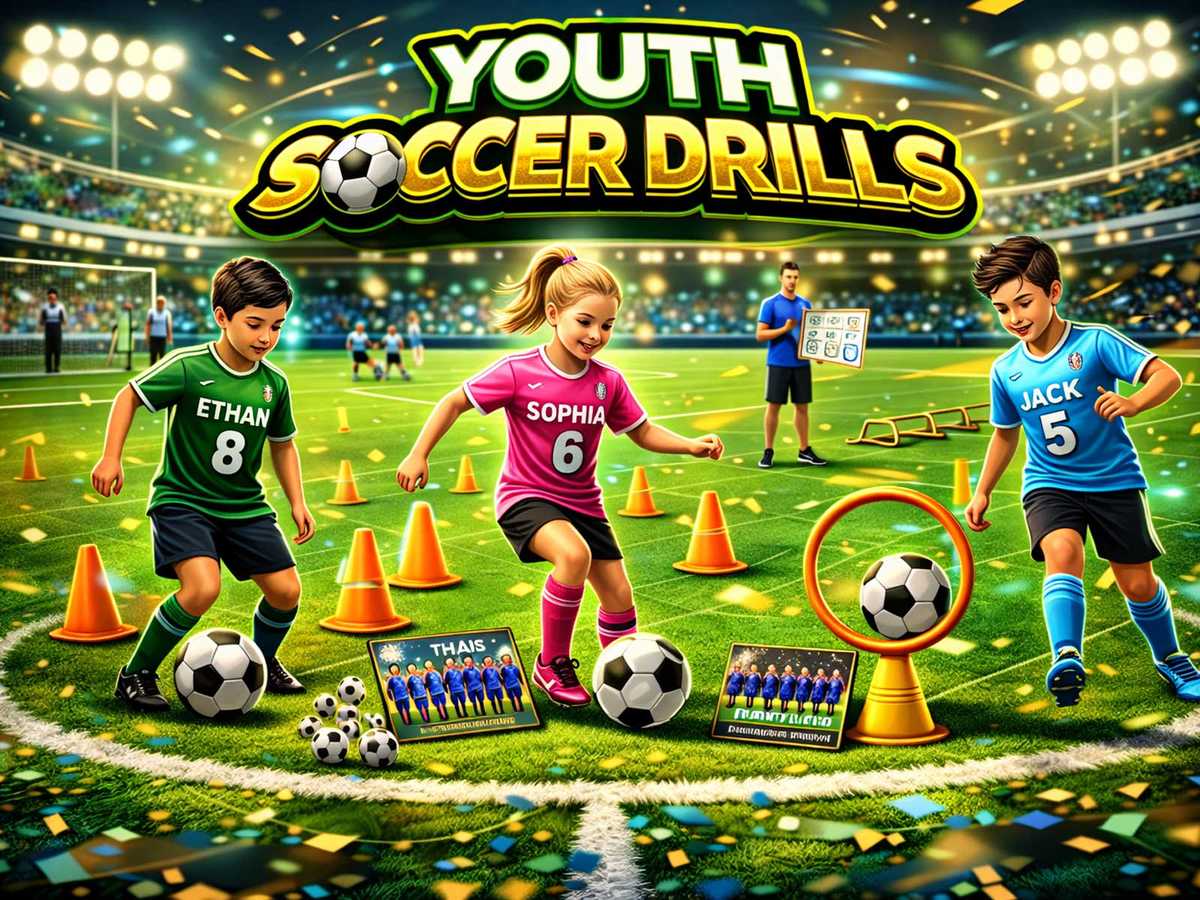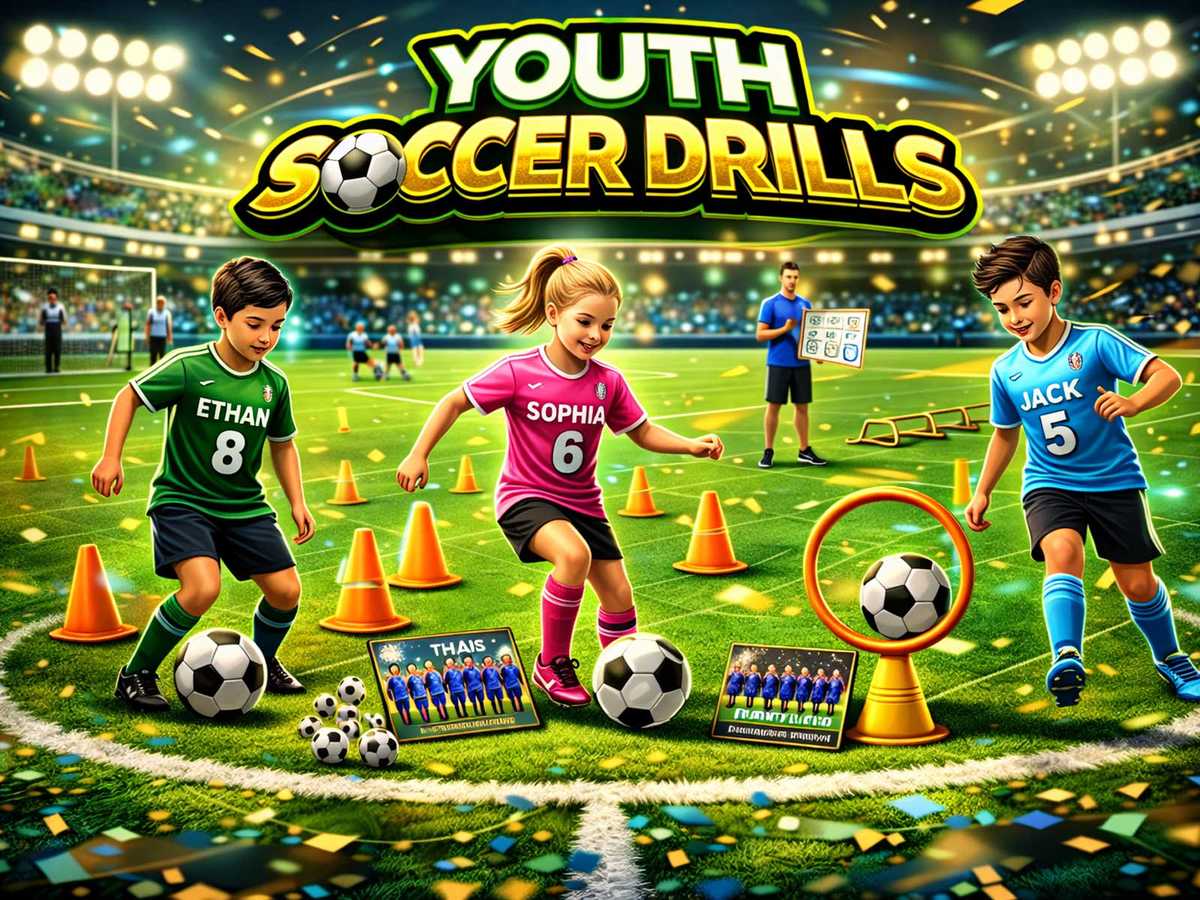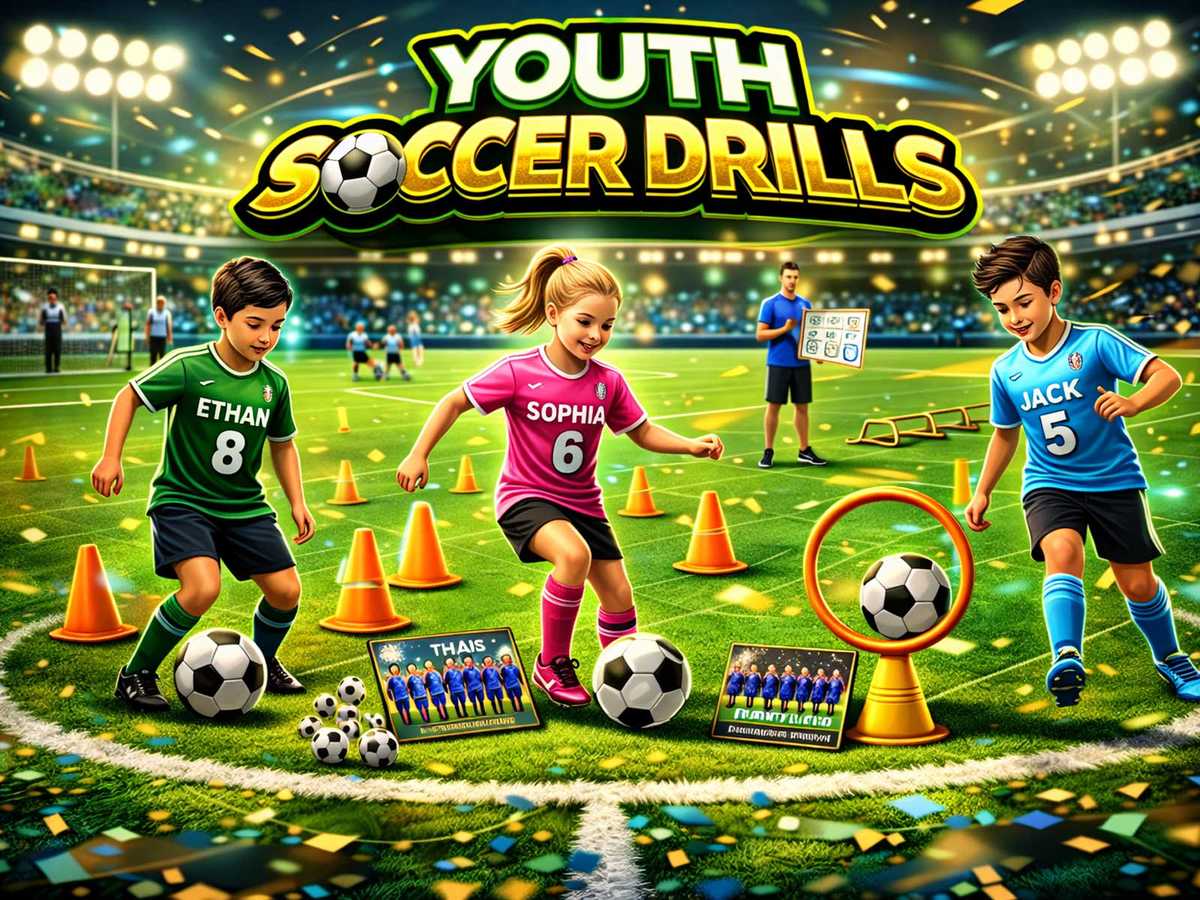
Why U8s football drills work better when they move quickly from isolated…
For coaches working with U8 players the practical question is not whether to use ball work or games, but how to join them. National and regional guidance recommends short, focused individual touches followed quickly by small-sided formats (3v3–5v5). That flow increases real decisions, repetitions under pressure and clearer match transfer than long isolated repetition alone.
Quick answer
Start with very brief isolated touches to sharpen technique, then move into small-sided games (3v3–5v5) so players apply those skills immediately in game-like decisions where they get more touches, 1v1s and passing opportunities.
What small-sided games really train
Small-sided games compress the full match into a simpler problem set that U8 players can perceive and practice repeatedly. In formats like 3v3, 4v4 or 5v5 each player receives more technical actions—more touches, dribbles, passing and shooting attempts—than in larger-sided formats. That increased frequency supports skill acquisition because players face similar situations often enough to learn cause-and-effect between a decision and its outcome.
Space, spacing, and player involvement
Reduced-player formats change how space is used. With fewer players each individual's movement creates and exploits space more obviously: a touch into a pocket, a quick turn to carry past a defender, or a simple pass to a supporting teammate. For U8s this makes the consequences of spacing visible and teaches them to move for the ball and to create passing options rather than simply chase the ball.
What you will learn here
- Why brief isolated work needs fast progression into small-sided play
- Which behaviours SSGs reveal and train for U8s
- How to design constraints and common coaching cues
Decision-making under simple pressure
Game-based pedagogies recommend representative practice: giving youngsters the decision-making problems they will see in matches. Small-sided games provide simple, repeated pressure—1v1s, quick transitions and limited support—so players learn to choose between dribbling, passing or turning away. Brief isolated touches sharpen the technical capacity to perform those actions; the SSG shows whether a child can use the touch under time and defensive pressure.
Constraints, rules, and learning design
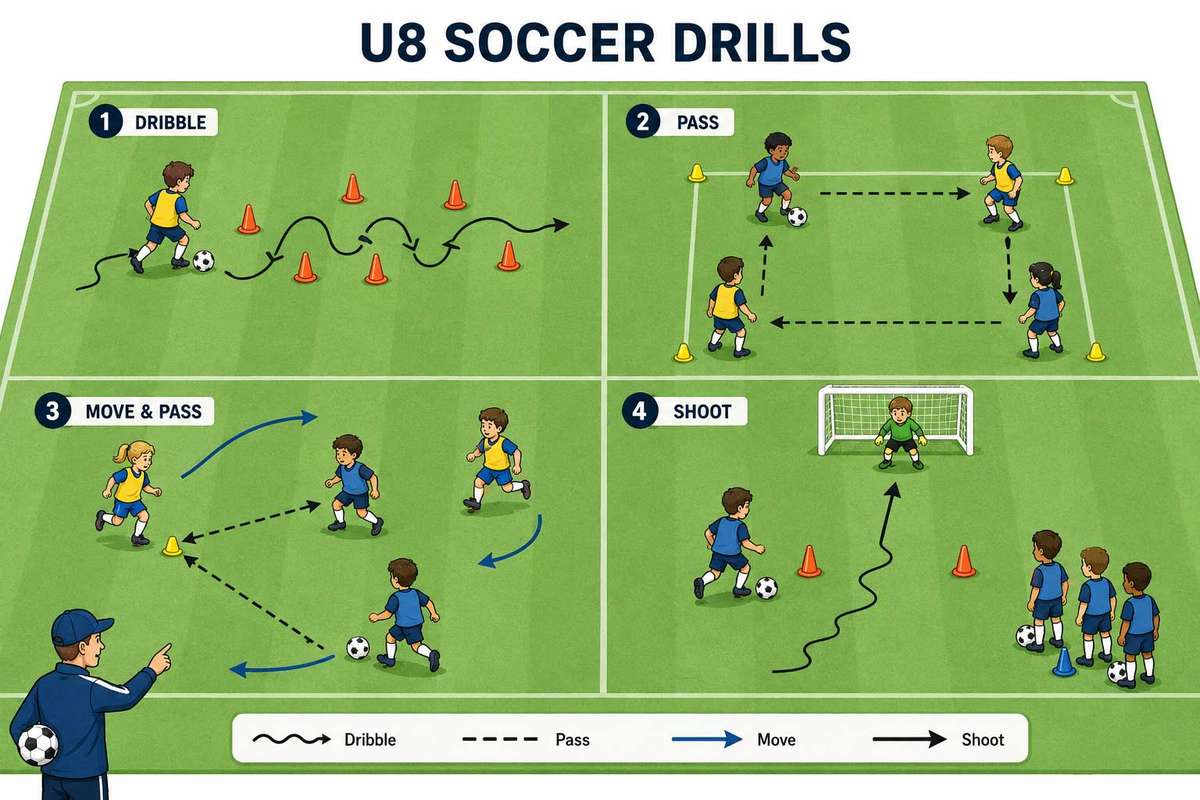
Constraints shape what players practise inside the SSG. Rules such as limiting touches, requiring a certain number of passes before scoring, or reducing pitch size direct behaviour without excessive instruction. For U8 sessions, the recommended structure is warm-up, brief isolated technical touches, then progressions into 1v1/2v2 and finally 3v3–5v5. That progression follows widely used youth coaching guidance and keeps learning representative while avoiding overload.
Transitions, support, and game flow
One of the main developmental wins from moving quickly into small-sided play is repetition of transition moments—losing the ball, regaining it, and converting a turnover into space. In small formats these transitions happen frequently and involve all players. Coaches can watch for support angles, immediate recovery runs, and simple positional sense; these behaviours are harder to rehearse effectively in isolated drills because there is no reactive opponent forcing real-time choices.
Common mistakes in youth small-sided practice
Several recurring errors reduce the value of SSGs for U8s: (1) too long on isolated repetition without timely game application, which prevents players from learning decision outcomes; (2) overcomplicated rules that confuse rather than focus; (3) excessive adult intervention that removes the child’s opportunity to problem-solve. Keep isolated work short and clear, then let the small-sided game expose what the player can and cannot do under realistic conditions.
How coaches can shape the game without killing it
Effective coaches use minimalist interventions. Change one constraint at a time (e.g., pitch size or touch limit), use brief, precise coaching points, and allow play to repeat naturally. Observation priorities: who gets the ball most, how often support arrives, and how players handle immediate defensive pressure. If a behaviour is missing, alter the constraint to nudge the solution rather than prescribing it verbosely.
Match transfer and tactical understanding
National guidance and coaching manuals for U6–U8 recommend this practice flow because SSGs increase technical frequency and expose tactical problems in a scaled environment. By repeating simple attacking and defending tasks in small-sided games, players build an intuitive sense of how to progress possession and how to defend space—transferable lessons to full-team matches when players are older and the problems become more complex.
Closing interpretation
For U8s, the practical model is short, focused individual touches followed quickly by small-sided play. This sequence is supported by national and regional guidance and by the pedagogical literature: brief technical practice readies the body, and immediate game-like repetition teaches decision-making, spacing and transitions. Keep formats small (3v3–5v5), constraints simple, and coaching interventions light and targeted to get the best learning per minute with young players.
Author: Cynthia D.