U6 Soccer Drills: Movement Games, Ball Familiarity, and Very Short Routines
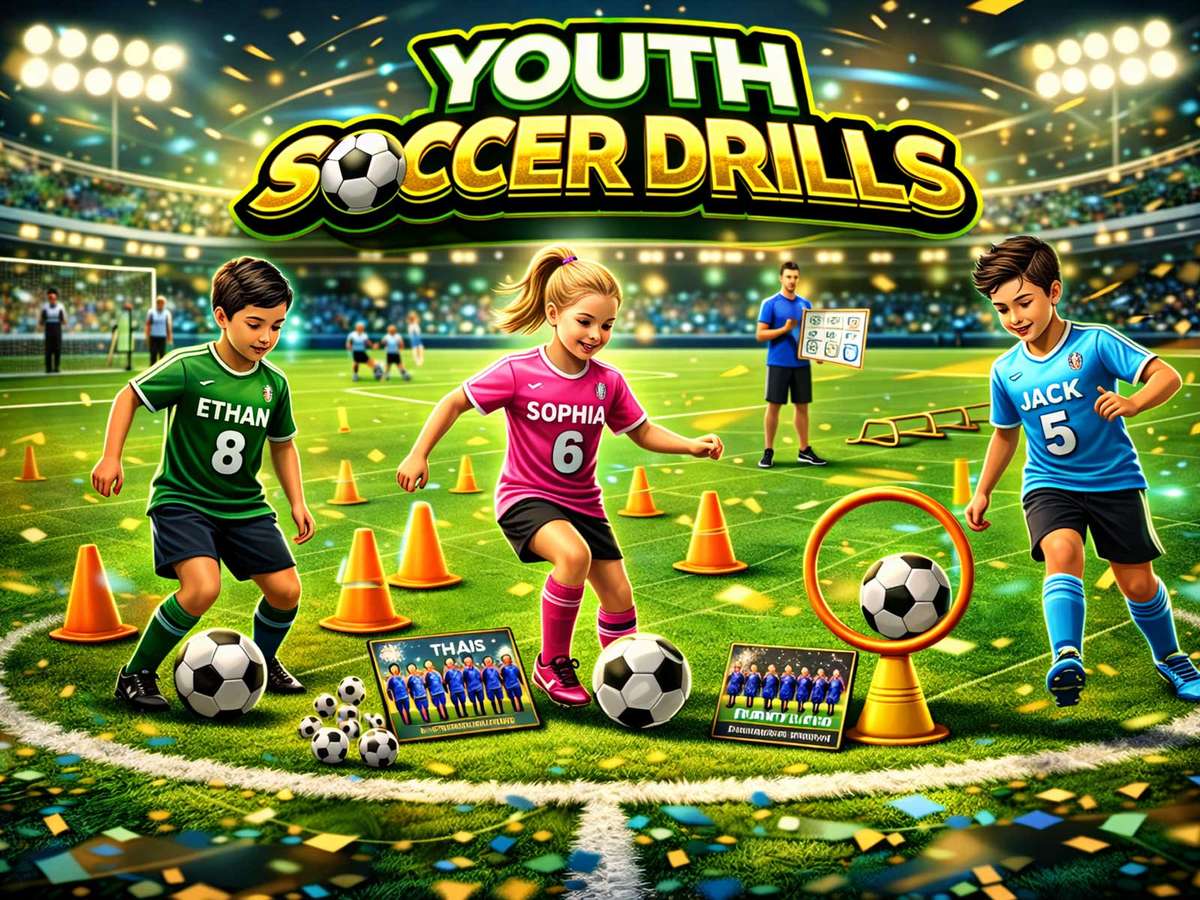
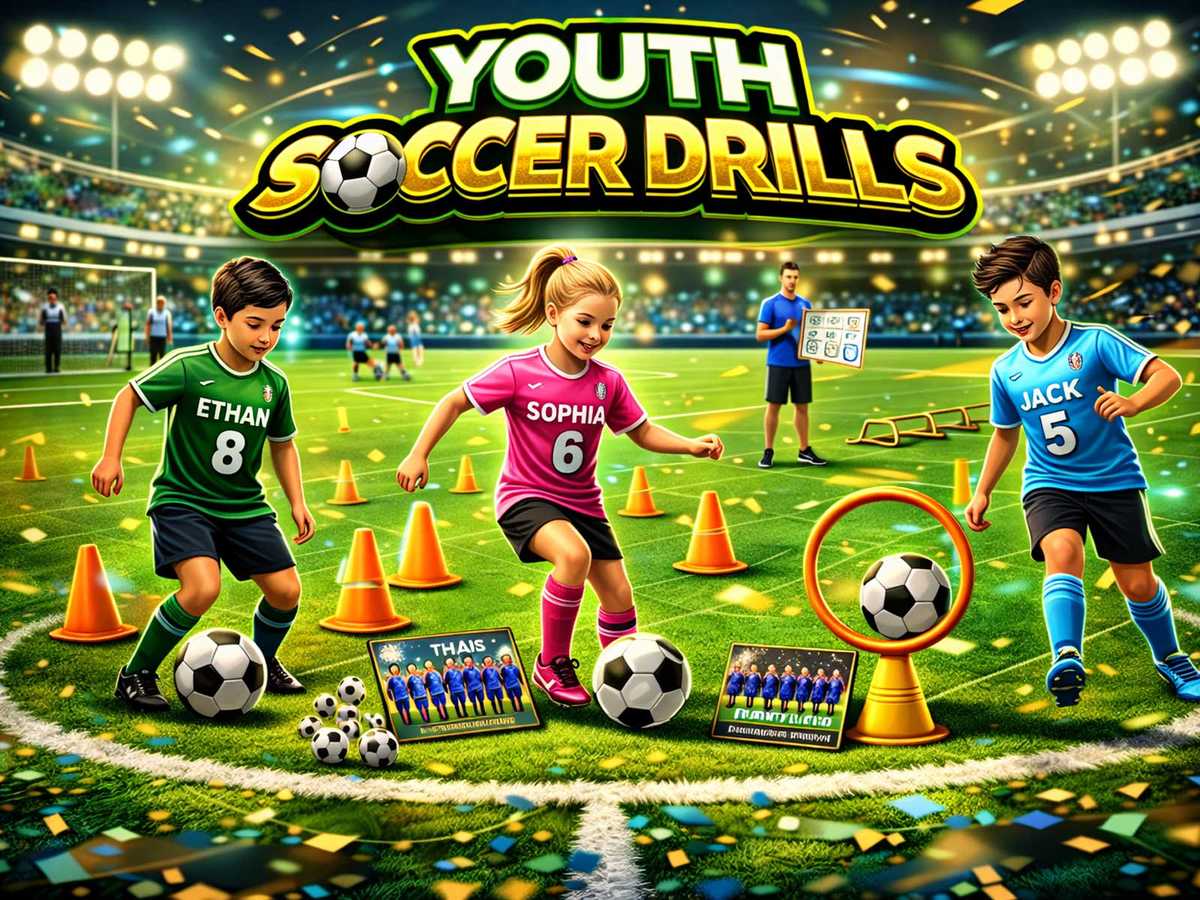
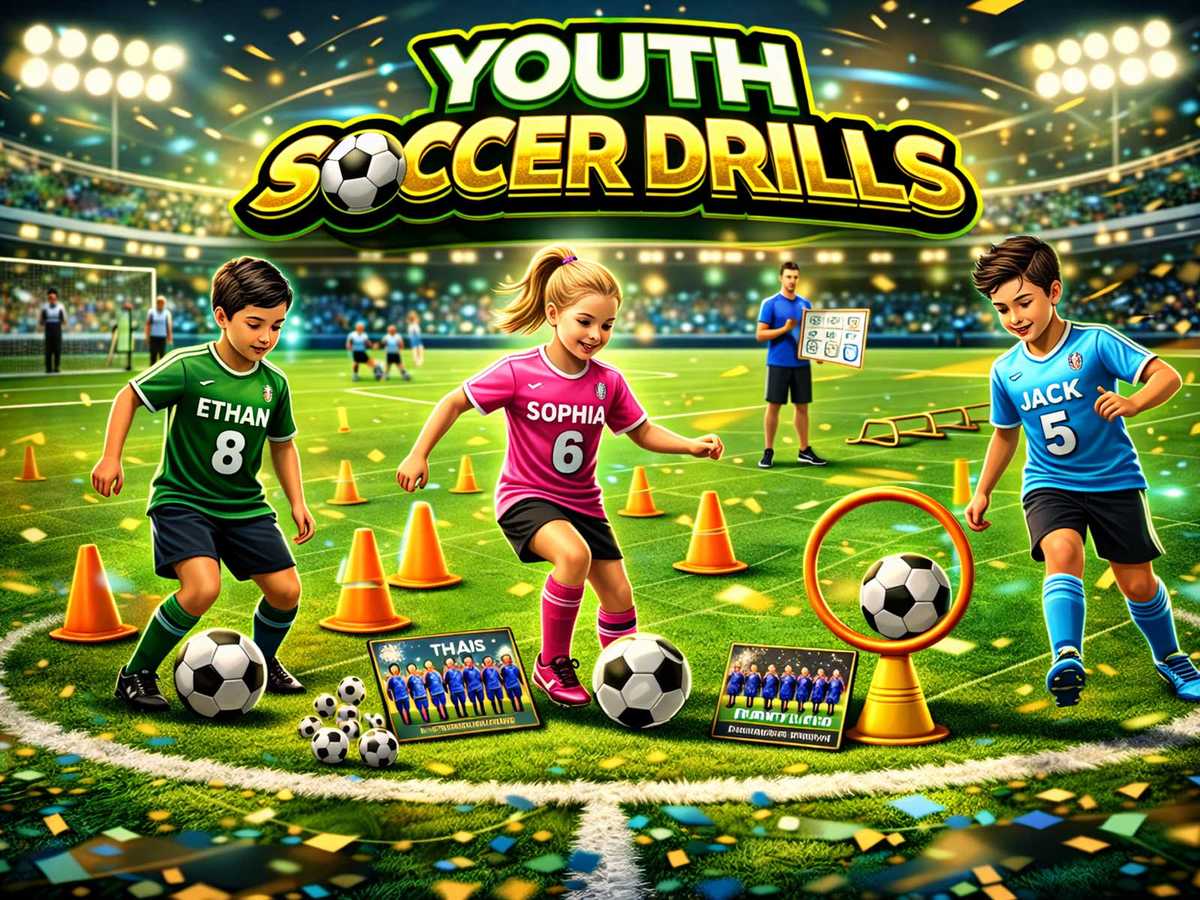
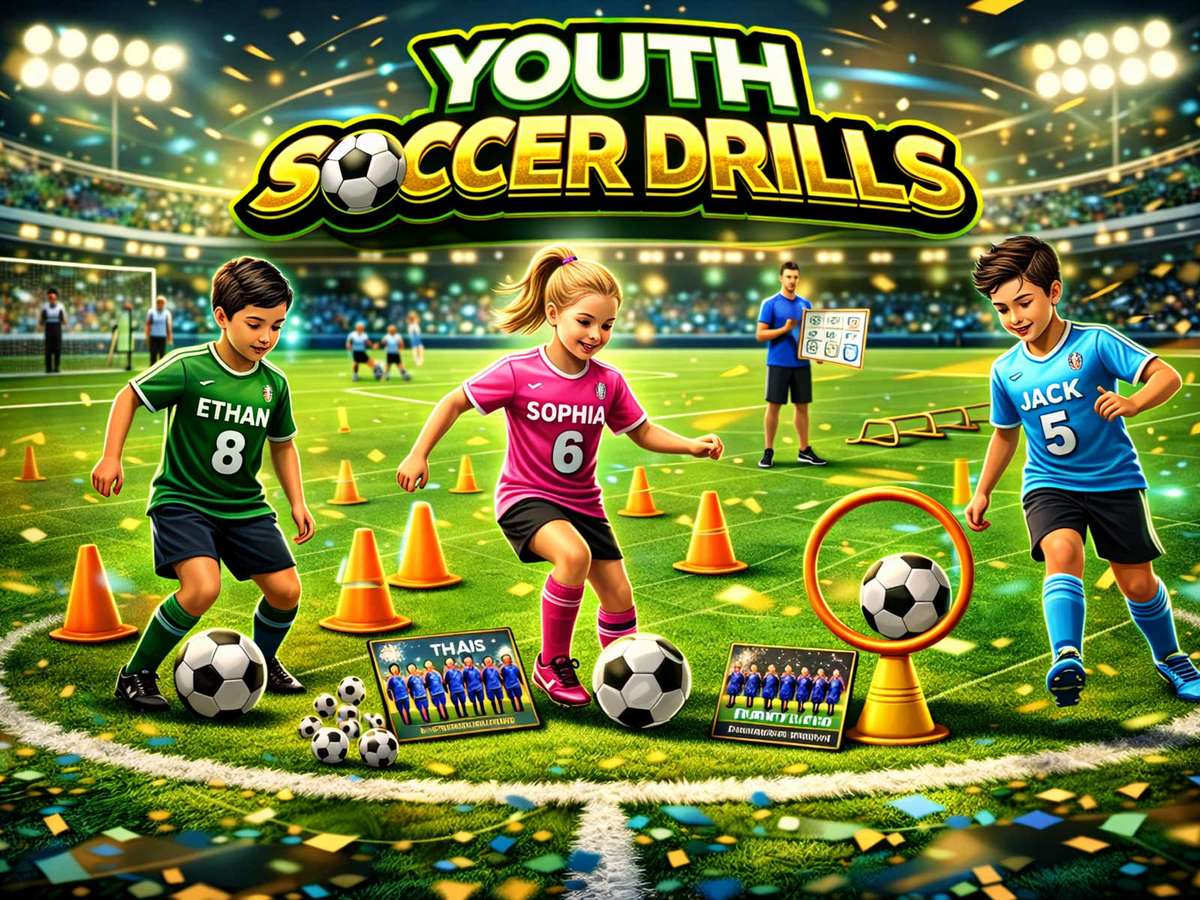
U6 soccer drills are not scaled‑down adult practices — they should prioritise movement, frequent ball contact, and very short routines that match a young child’s attention span. For 5– and 6‑year‑olds the coaching aim is positive, repeated touches and dynamic games rather than long technical instruction.
Quick answer
Design U6 sessions around 30–45 minutes total, use 5–10 minute activities, give every child a ball for most of the practice, and focus on movement games that combine running, change of direction and simple ball touches.
What this article explains
- Why movement games and ball familiarity are primary goals for U6.
- How to structure very short, game‑like activities and a realistic session flow.
- Common mistakes and simple progressions that keep the group together.
What beginner coaching drills really need to do
At U6 the drill’s job is first to create repeated, positive contact with the ball and to develop basic movement skills — running, stopping, turning and balance — inside playful, game‑like contexts. Coaches should expect imitation learning: short demonstrations followed by immediate practice are far more effective than long verbal explanations. Drills should be short, active and return the ball to each child frequently so touches stay high and frustration stays low.
Simplicity, clarity, and attention span
Evidence for U6 coaching recommends 5–10 minute activities aligned to a total session of roughly 30–45 minutes. Keep instructions to one or two clear points, demonstrate quickly, and start the activity. When attention drops, switch to the next short game rather than extend drilling. Avoid long lines or elimination formats — they remove touches and kill engagement.
How young players actually learn early skills
Young children learn through movement and repetition inside enjoyable contexts. Movement games that require running, changing direction and simple ball actions build coordination and ball familiarity together. Frequent, low‑pressure contacts (dribbling, rolling, stopping) help children recognise the ball as their tool. Practical coaching insight: high touch volume + short bouts = more natural discovery of control than repetitive, isolated technique instruction.
Session organisation and repetition without chaos
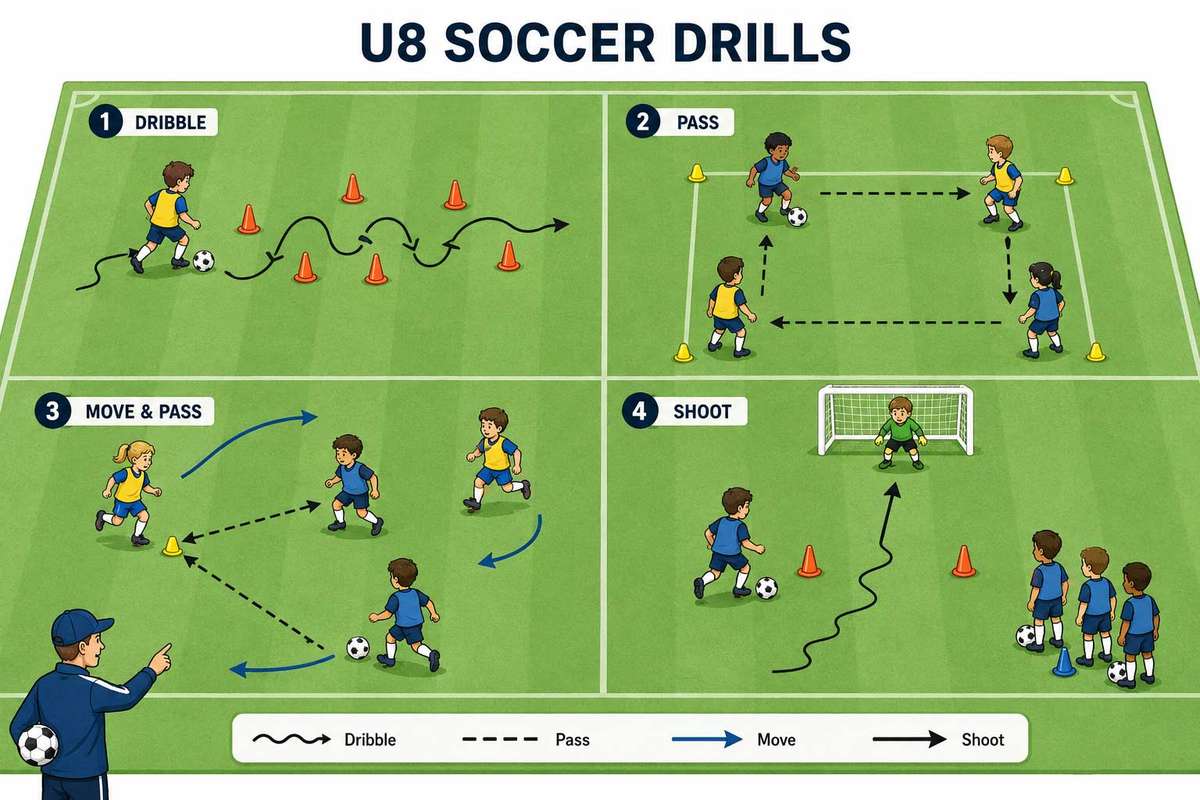
Organise practice into 3–6 small blocks of activity, each 5–10 minutes long, with short breaks or water between. Typical flow: warm‑up movement game, ball familiarisation activity, small‑sided play, fun closing game. Use small areas and small goals so play stays compact and every child remains involved. Rotate activities quickly; that preserves energy and maintains high touch counts while avoiding boredom.
Correction, demonstration, and coaching language
Minimise verbal complexity. Demonstrate one action, use simple language and praise attempts rather than outcomes. Corrections should be brief and only address one issue at a time — for example “keep the ball close” — and immediately show what you mean. Use imaginative themes (animals, traffic lights) to explain movement and behavior; these reduce verbal overload and keep children engaged.
Fun, confidence, and keeping players engaged
Game formats recommended for U6 include imaginative movement games and very short small‑sided play. Small‑sided games (3v3 or 4v4 with small goals and no goalkeeper) maximise touches and decision moments, while movement games (e.g., follow‑the‑leader variants, traffic light‑style drills) develop coordination and attention. Keeping play positive and non‑elimination based builds confidence: every child should have the chance to touch the ball frequently.
Common mistakes new coaches make
Typical errors include over‑coaching with long explanations, allowing long lines or elimination formats, and running activities that exceed the 5–10 minute effective window. Another common mistake is using large fields or adult‑style drills that reduce touch frequency and decision opportunities. Correct these by shrinking the area, giving each child a ball during ball‑skill segments, and keeping activities brisk and varied.
How to progress a drill without losing the group
Progressions at U6 should be small and immediate: reduce space to increase touch pressure, add a simple opponent or introduce a scoring condition for incentives. Always keep the main rule simple and keep the duration short. If a progression causes chaos or long waits, revert to the previous version. The objective is repeatable success — tiny, visible wins maintain confidence and attention.
Foundations that transfer into real play
Movement games combined with high ball familiarity create the basic comfort players need to join small‑sided games. When a child has practiced stopping, rolling and dribbling in playful contexts, those actions are more likely to appear spontaneously in 3v3 or 4v4 situations. The coaching mechanism is straightforward: repeated success with simple actions builds motor patterns and situational comfort, which in turn permits early decision‑making during match‑like play.
Closing interpretation
Design U6 soccer drills around short, dynamic games that prioritise movement and frequent ball contact. Keep sessions under about 45 minutes, run 5–10 minute activities, give every child a ball for most of practice, and finish with short small‑sided play. These choices preserve attention, increase touches, and create the playful learning conditions that matter most for 5–6 year olds.
Author: Cynthia D.