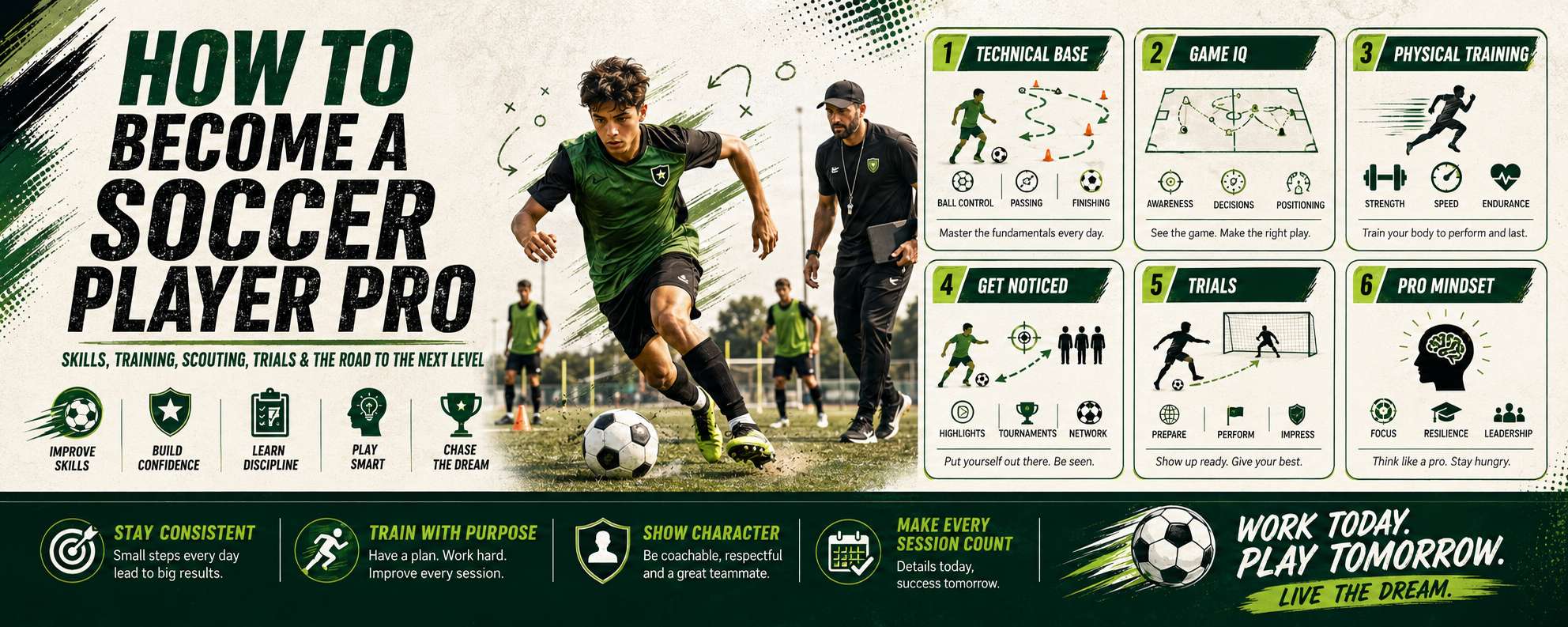
How to Become a Professional Soccer Player: The Real Path from Grassroots to a…
Yes — there is a recognisable route from a local team to a pro contract, but it isn’t a single fast ladder. The pathway is staged: grassroots play, club and youth teams, talent identification (scouts and ID camps), academy or elite programmes, trials, semi‑professional or reserve competition, then a first professional contract. Each step changes what coaches look for and what a player must deliver.
The obvious advice to "join an academy" only tells half the story. The deeper reality is about matching environment, age‑appropriate coaching, consistent match minutes and documented assessment — not just highlights or one trial. Below I map the stages, explain what matters at each point, and show where promising careers typically stall.
Quick answer
Progression is staged and cumulative: play grassroots, join competitive youth clubs, get seen at ID events or by scouts, enter a professionalised academy or elite programme with age‑appropriate coaching, use trials and reserve or semi‑professional competition to gain senior minutes, and then sign a first professional contract under the governing regulations that protect players and training clubs.
What this article explains
- How the recognised stages line up and why each is distinctive.
- What academies are expected to provide and what trials actually evaluate.
- The role of reserve and semi‑professional competition in gaining senior minutes before a contract.
What the pathway really means: stages, not shortcuts
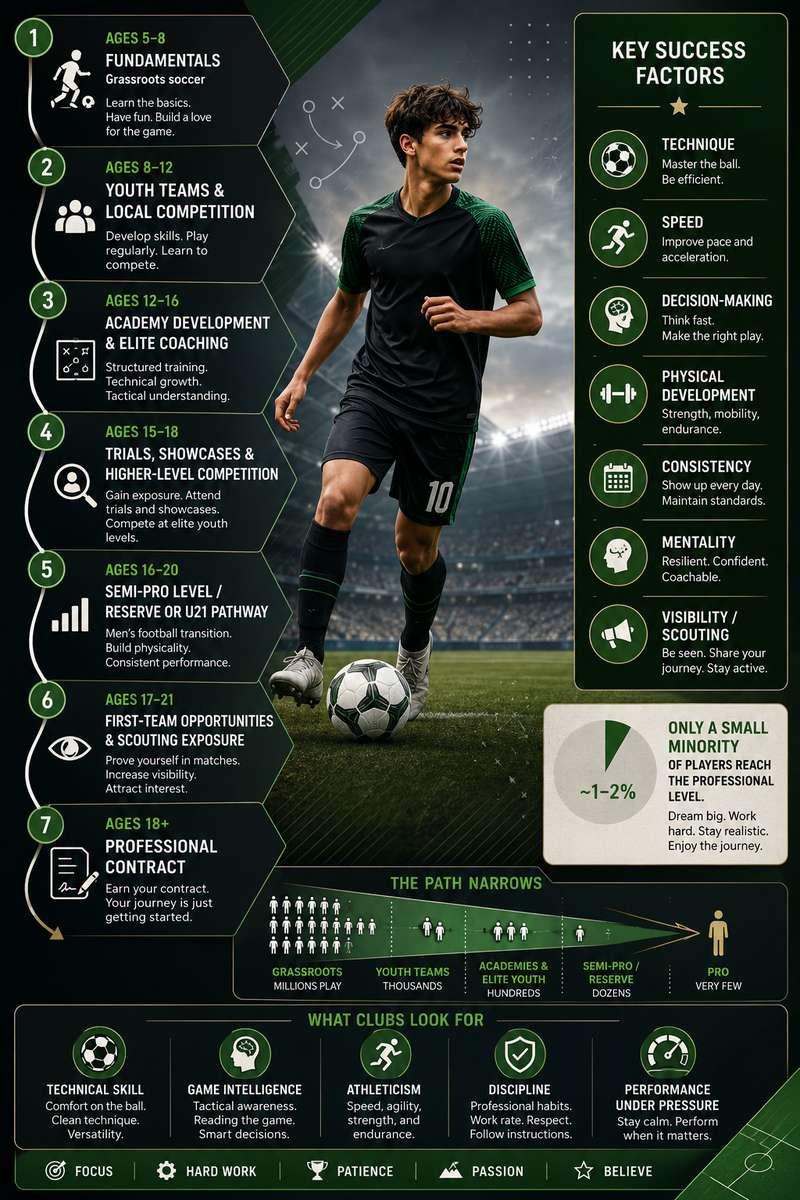
Player development follows a sequence used across federations and FIFA guidance: grassroots/recreational participation, organised club and youth teams, talent identification events, academy environments or elite youth programmes, trials, competitive reserve or semi‑professional football, and finally a first professional contract.
Each stage serves a different purpose. Grassroots builds love of the game and basic repetition. Club/youth teams introduce organised competition and match intelligence. Talent ID and trials create visibility. Academies professionalise day‑to‑day preparation. Reserve and semi‑professional levels give exposure to senior football where physical and tactical demands differ from youth matches. The process is cumulative: missing years of appropriate competition or matches at the right intensity makes later steps harder.
Why academies and elite programmes matter — and what they actually offer
FIFA and national guidance emphasise that professional club academies provide a professionalised, day‑to‑day environment with age‑appropriate training, education and safeguarding. That means structured coaching plans, load management, and a system intended to progress a player toward senior competition rather than solely chasing short‑term results.
Crucially, academies are expected to align technical, physical and mental development with educational support, and to protect minors. They are not merely advanced camps; they are long‑term environments that should document progression and provide consistent, periodised training.
Trials and talent identification: what they are — and how they should be run
Trials are a formal mechanism for clubs to assess players. FIFA materials and agent guidance underline that trial conditions — including any fees, accommodation or travel arrangements — should be agreed and documented in advance. A trial is an evaluation window: clubs use it to observe match behaviour, consistency, decision‑making, and fit with their playing model, not just isolated skill displays.
Talent ID also takes place at organised camps and scouting events. These create visibility when a player’s club level does not already attract scouts. However, a trial or ID invite is an assessment opportunity, not a guarantee of entry into an academy or a contract.
The hidden importance of senior minutes: reserve teams and semi‑professional competition
FIFA guidance highlights the transition to senior football as a critical phase. Reserve teams and semi‑professional competitions exist precisely to bridge youth football and first‑team play. They provide players with regular, competitive senior minutes where physicality, decision speed under contact, and match management are learned in real conditions.
Players who move into reserve or semi‑pro environments gain exposure to different tactical demands and a more physical, less predictable game. This experience is often decisive for coaches when they evaluate readiness for a professional contract.
What coaches and federations evaluate during progression
Across the pathway, the evaluation focus shifts. At youth club level technical repetition and match influence matter. At academy level, consistent progression, tactical understanding, and age‑appropriate physical preparation are emphasised. During trials and reserve matches, coaches look for match‑effective performance: how a player makes decisions under pressure, adapts to coaching, and influences real games over full matches rather than single highlights.
Federations recommend coach education, session design and periodisation to support this evaluation. Properly designed training exposes whether technique is repeatable under fatigue and teaches the tactical behaviours coaches need at senior levels.
Signing a first professional contract — rules you should know
When a player signs their first professional contract, FIFA’s Regulations on the Status and Transfer of Players (RSTP) apply. These regulations include training compensation and protections for minors: clubs that trained the player at earlier stages may be entitled to compensation when the player signs professionally. That legal and financial framework connects earlier stages of development to later transfers and rewards clubs that invested in training.
Because of these rules, academies and clubs document training and progression carefully. This documentation matters during transfers and contract negotiations.
Common misconceptions and the constraints that trip up prospects
Misconception 1: A single trial or a highlight reel is enough. Reality: clubs increasingly rely on documented progression, coach reports and consistent full‑match evidence.
Misconception 2: Paying for an elite camp guarantees access. Reality: while organised programmes create visibility, FIFA and federation guidance warn against assuming paid showcases substitute for proven progression in competitive environments.
Constraint: the transition to senior football. Many talented youth players stall because they do not receive regular senior‑level minutes, physical adaptation is incomplete, or they no longer fit the tactical needs of a club. Reserve and semi‑professional competitions exist to mitigate this, but access varies by country and club structure.
Translating the pathway into practical steps (what progression usually looks like)
1) Start at grassroots with regular match play to build repetition and enjoyment. 2) Move into competitive club youth teams where you face consistent opposition and coached development. 3) Seek visibility through credible talent ID events or by performing in recognised competitions that scouts attend. 4) If invited, experience academy environments that provide age‑appropriate, periodised training and education. 5) Use trials transparently and expect documented terms; treat them as assessment windows. 6) Aim to secure regular minutes in reserve or semi‑professional competition to prove readiness for senior football. 7) If a club offers a first professional contract, understand that FIFA regulations on transfers and training compensation will apply.
Routes differ by country and by federation architecture. For example, national systems may include college, USL, MLS academies and reserve teams as part of a connected pathway. The key is to choose environments that provide consistent match minutes, qualified coaching and documented progression rather than isolated exposure.
Final verdict: realistic ambition without illusion
There is a clear, evidence‑backed progression from grassroots to a first professional contract, but it is a staged ladder that rewards consistent environment, documented development and senior minutes as much as raw talent. Academies matter because they professionalise training and safeguard minors; trials matter because they are formal assessments; reserve and semi‑professional games matter because they test players in senior conditions; and FIFA rules connect training investment to later compensation.
Ambition is reasonable when paired with realistic planning: choose environments that prioritise long‑term development, monitor opportunities for senior match minutes, and treat trials as one part of a documented progression rather than a single make‑or‑break moment.
Author: Cynthia D.