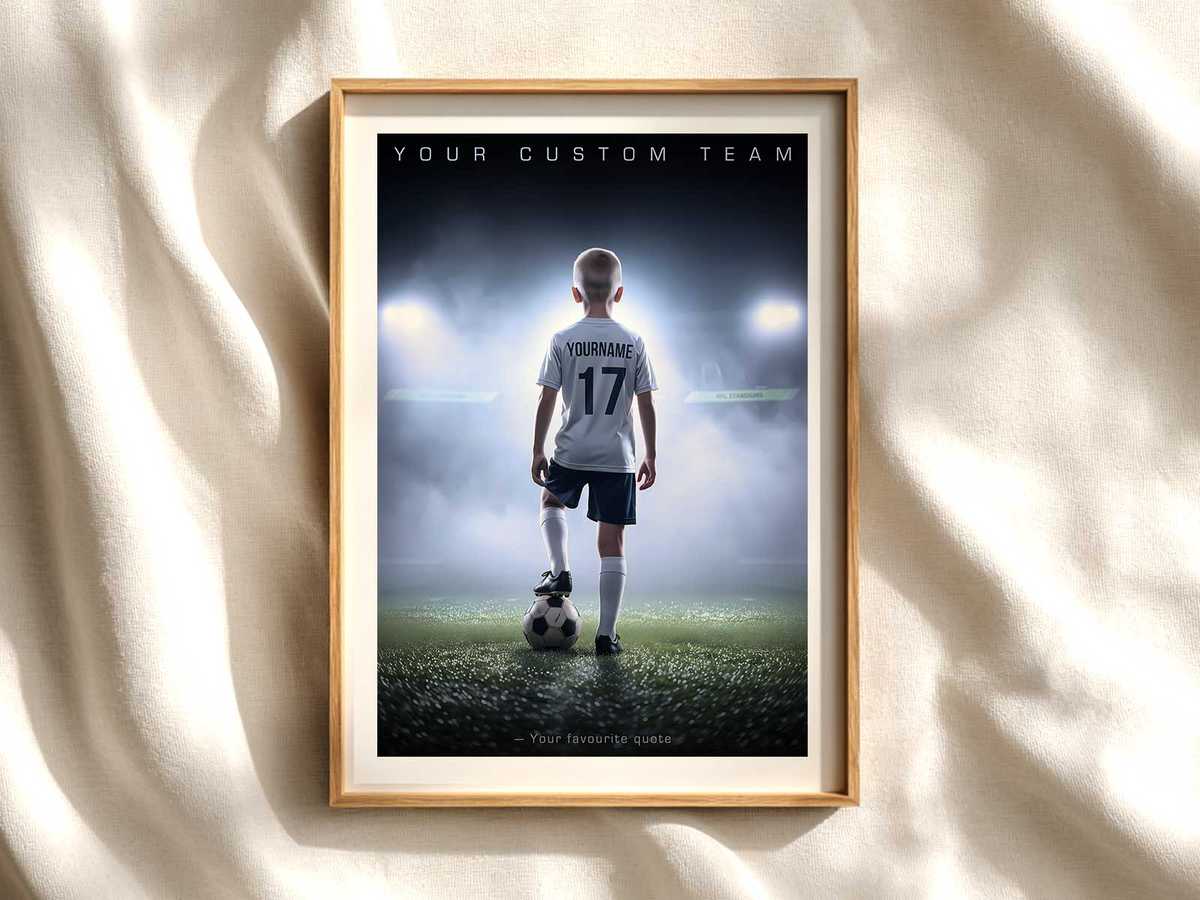
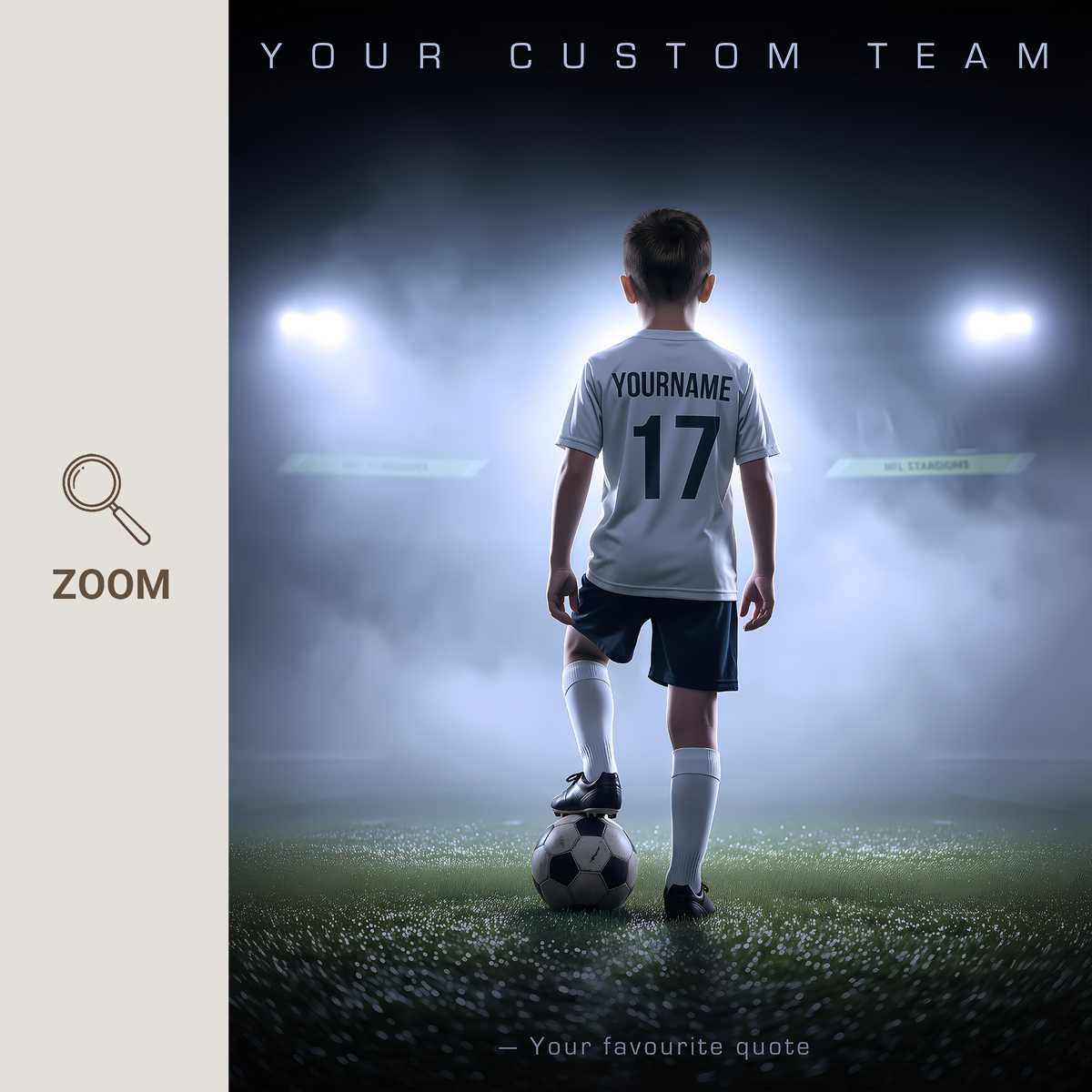
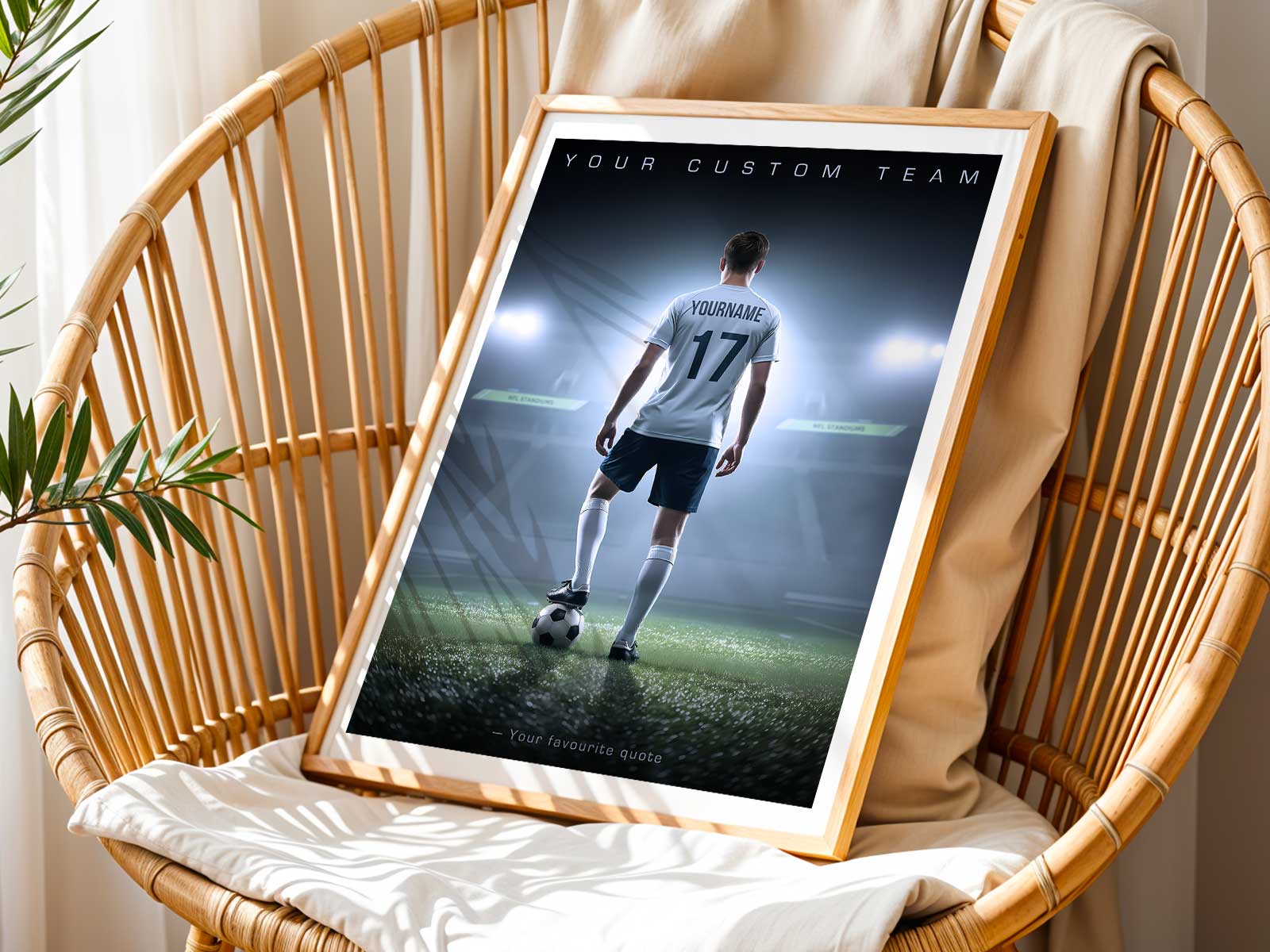
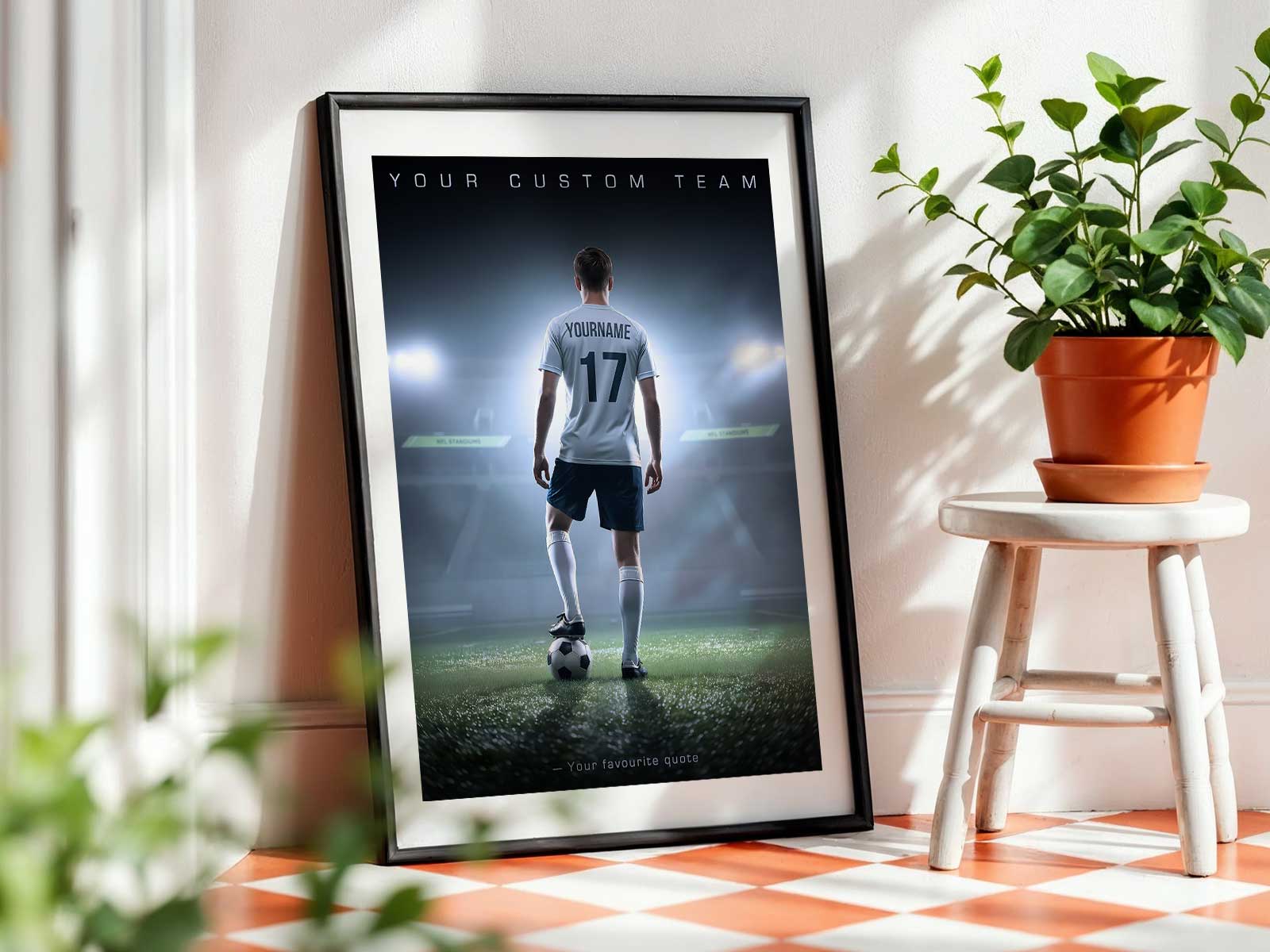
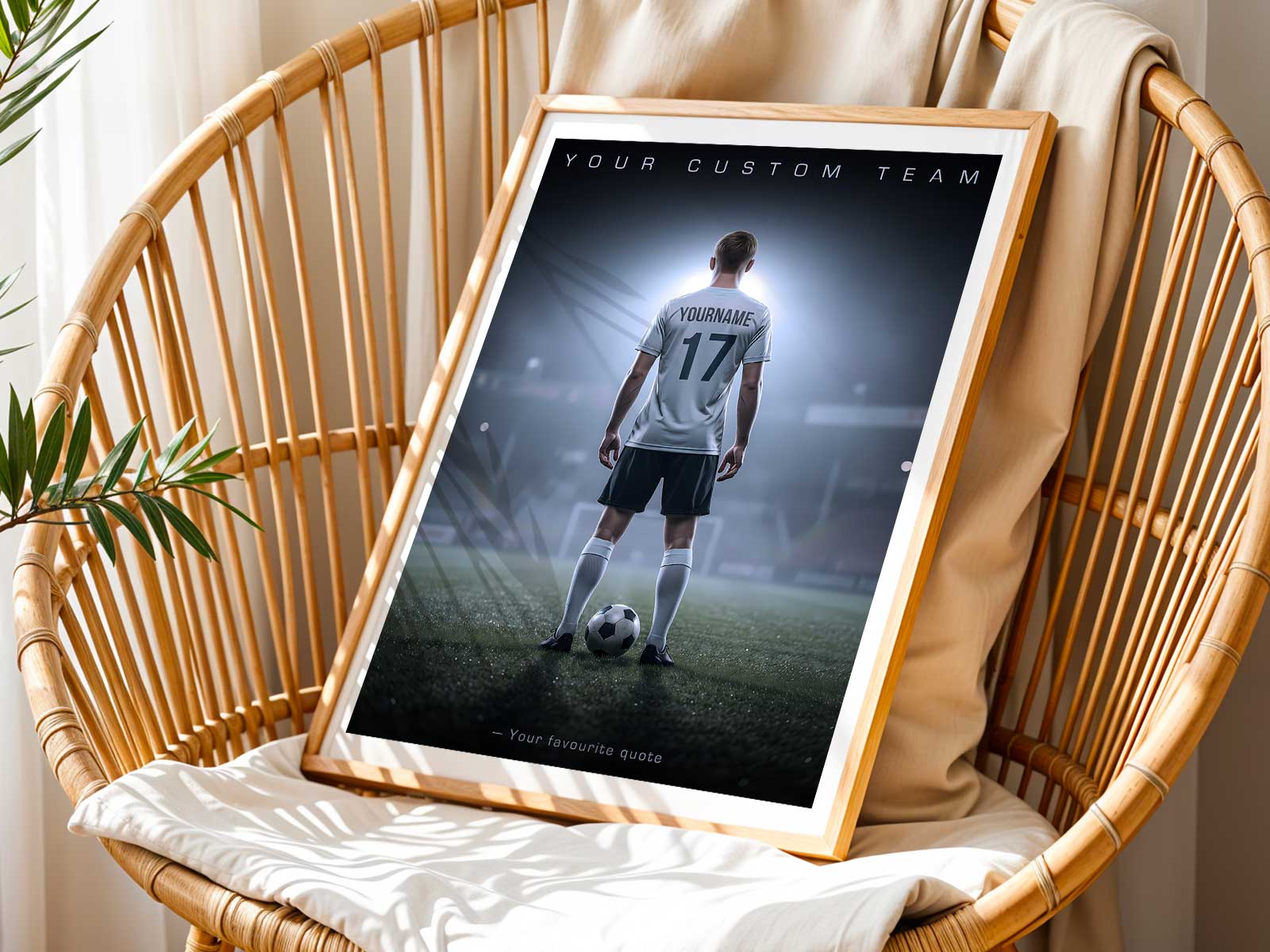
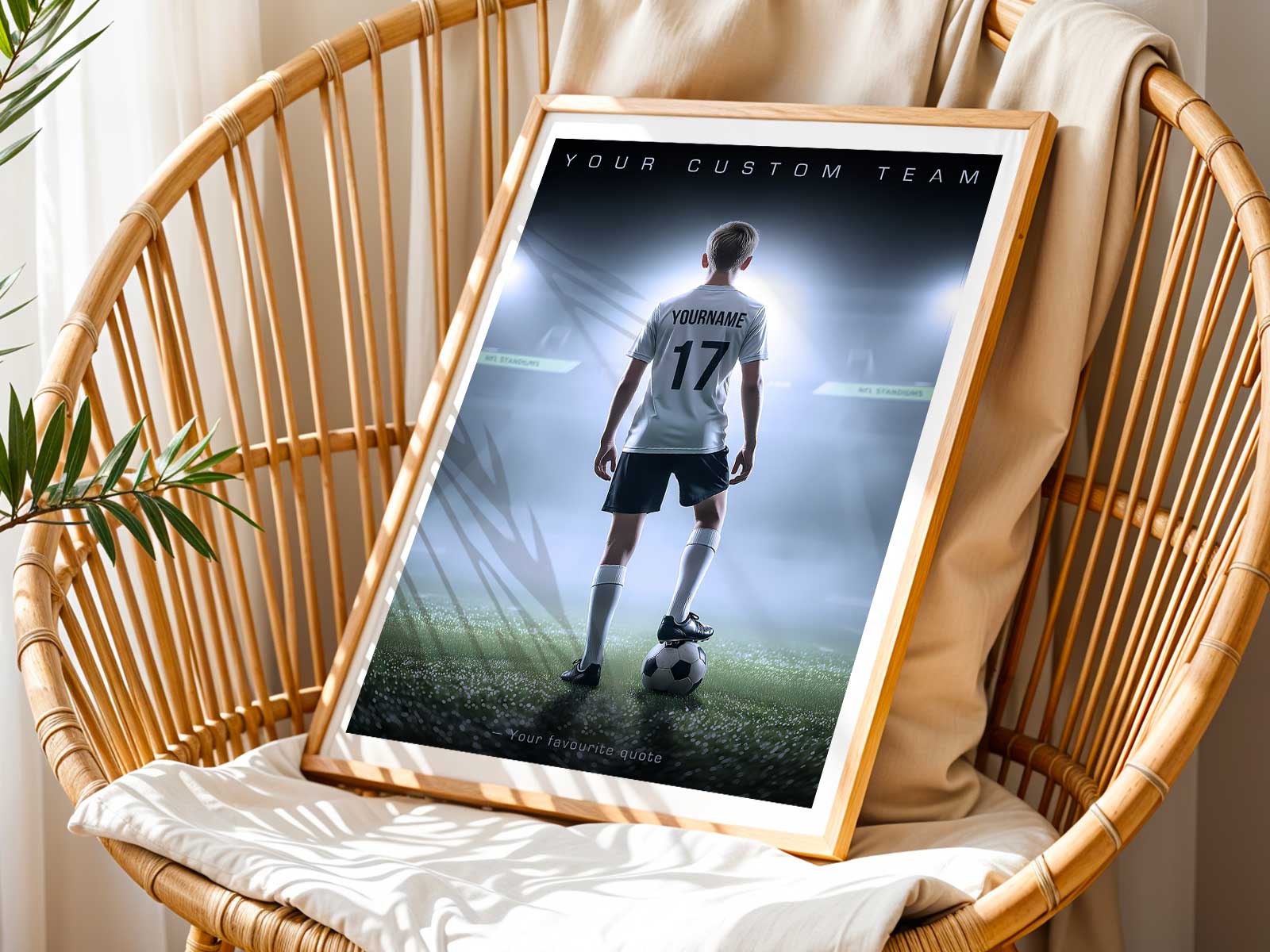
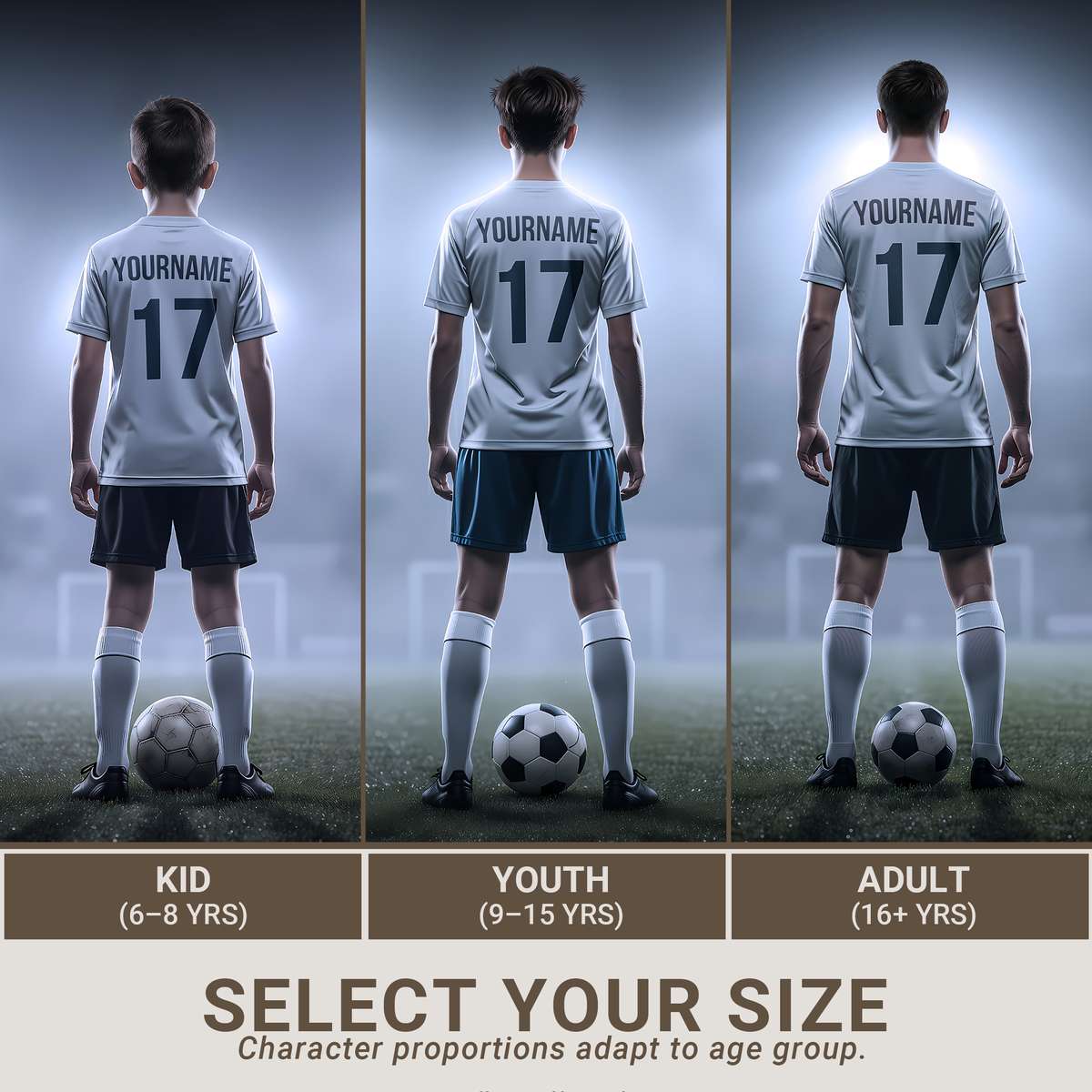
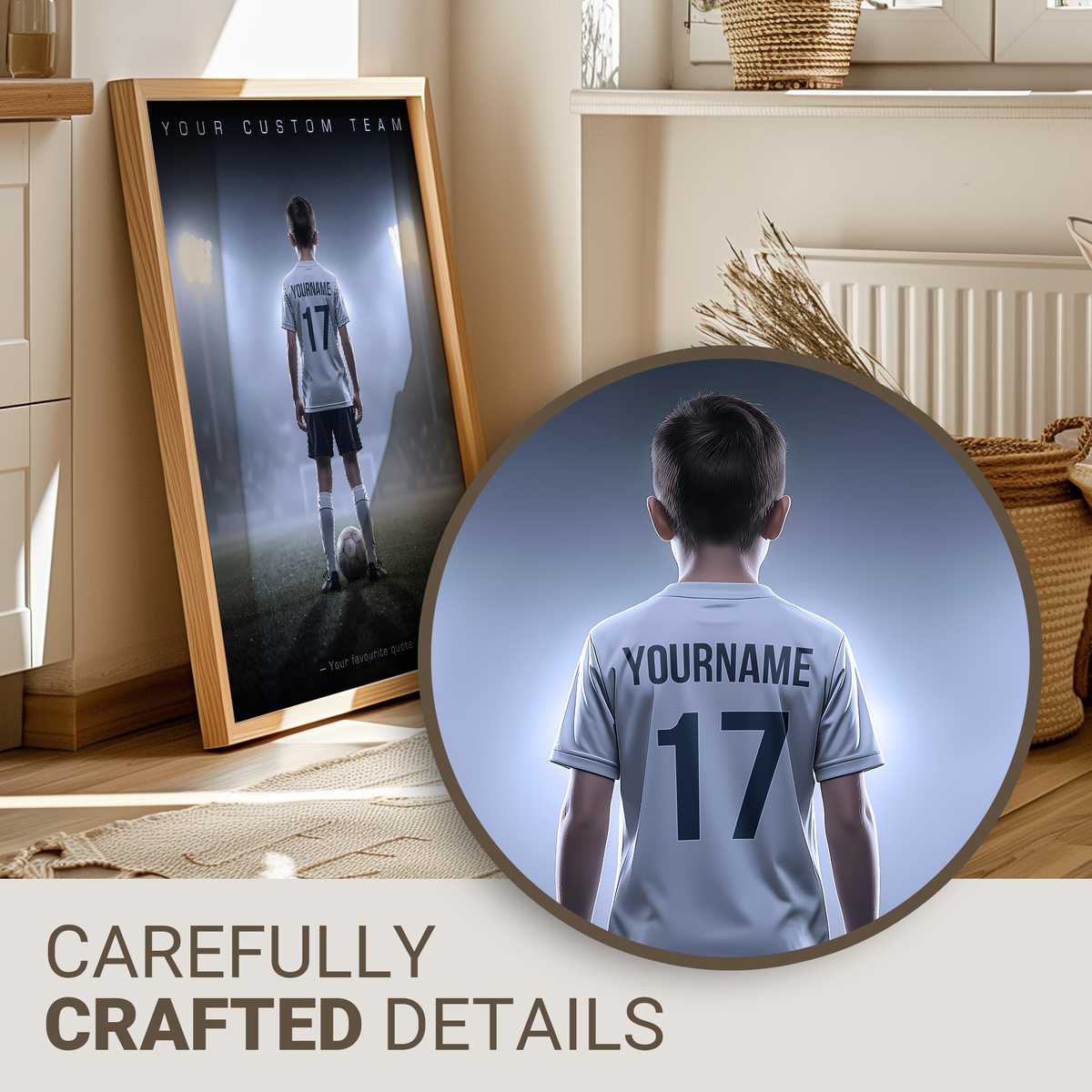
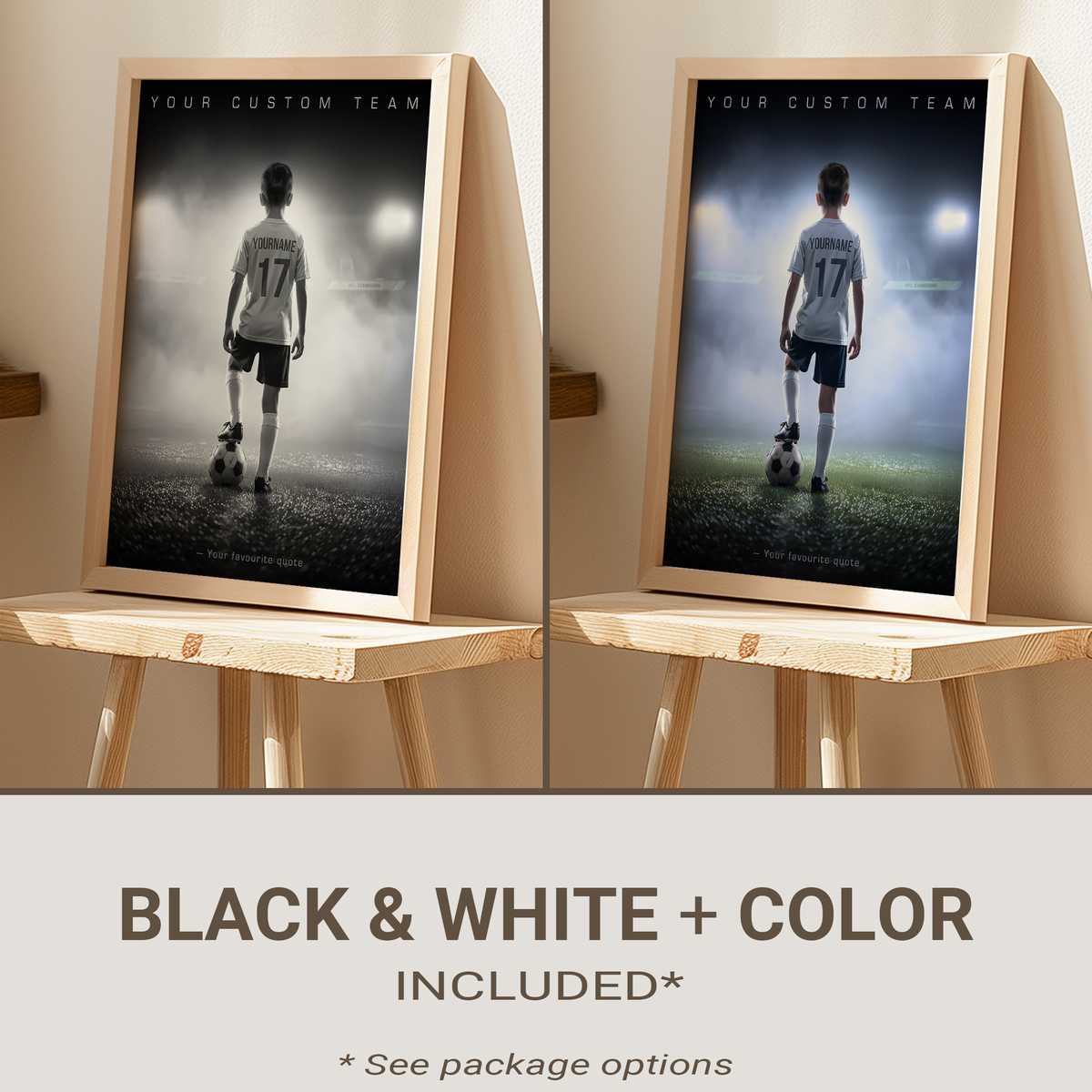
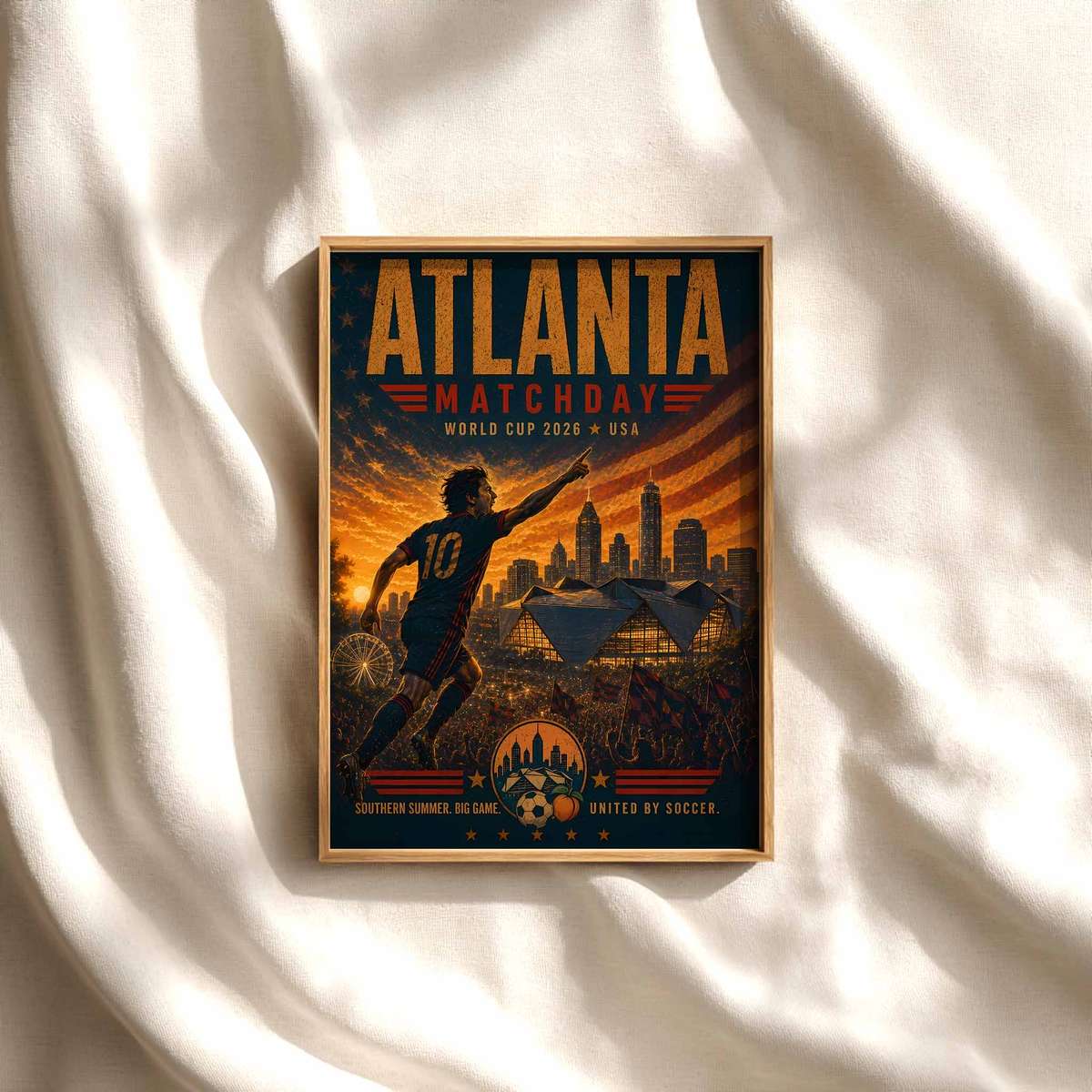
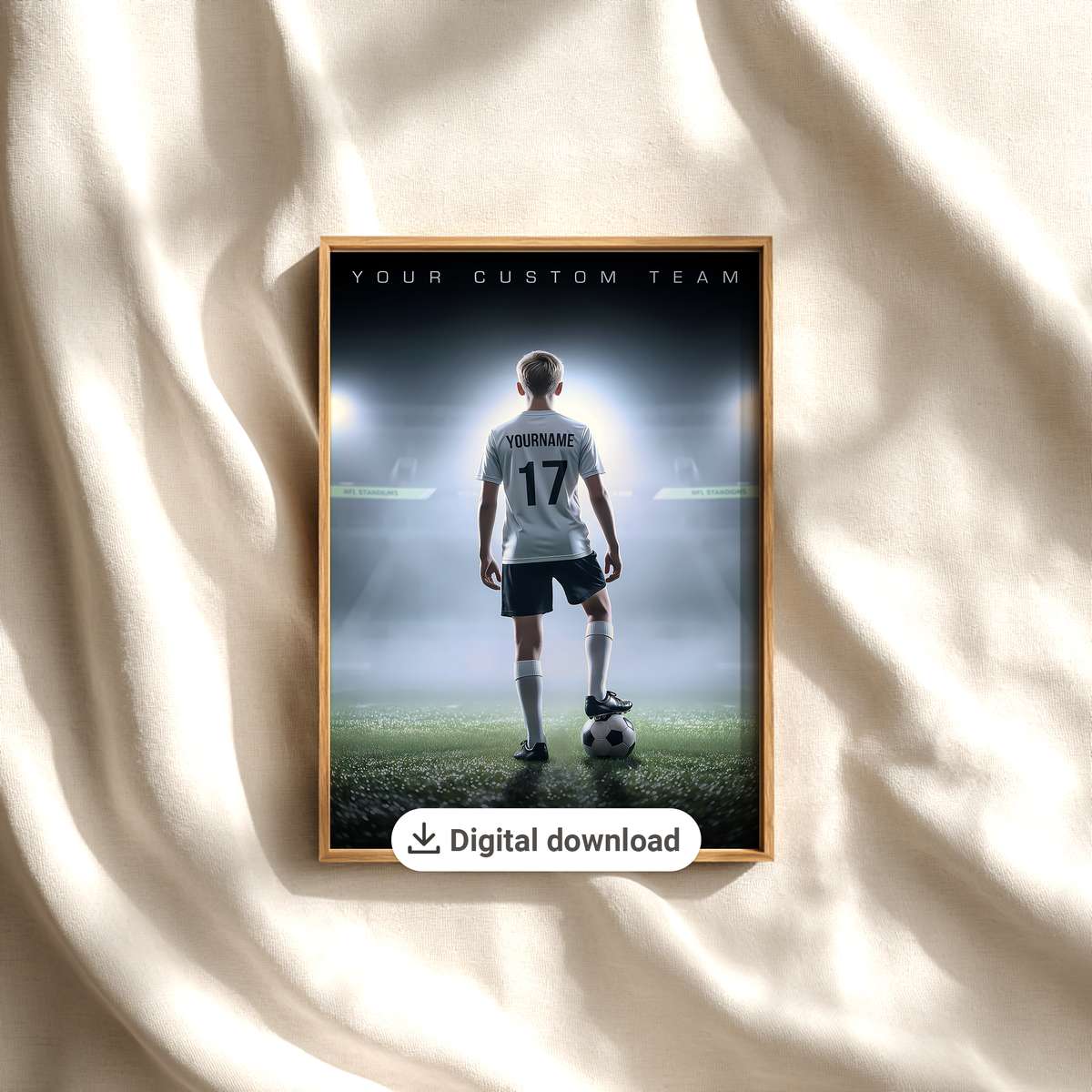
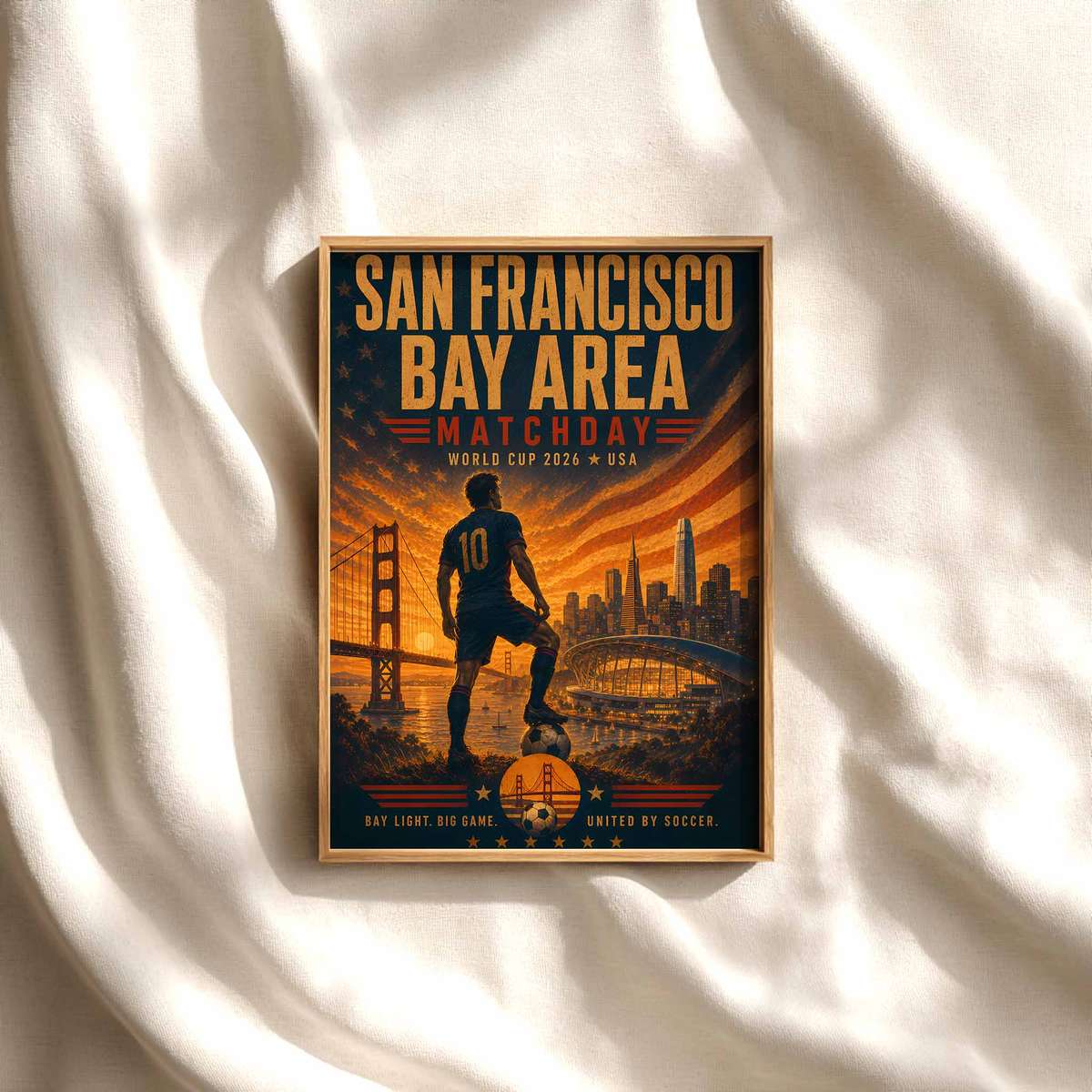
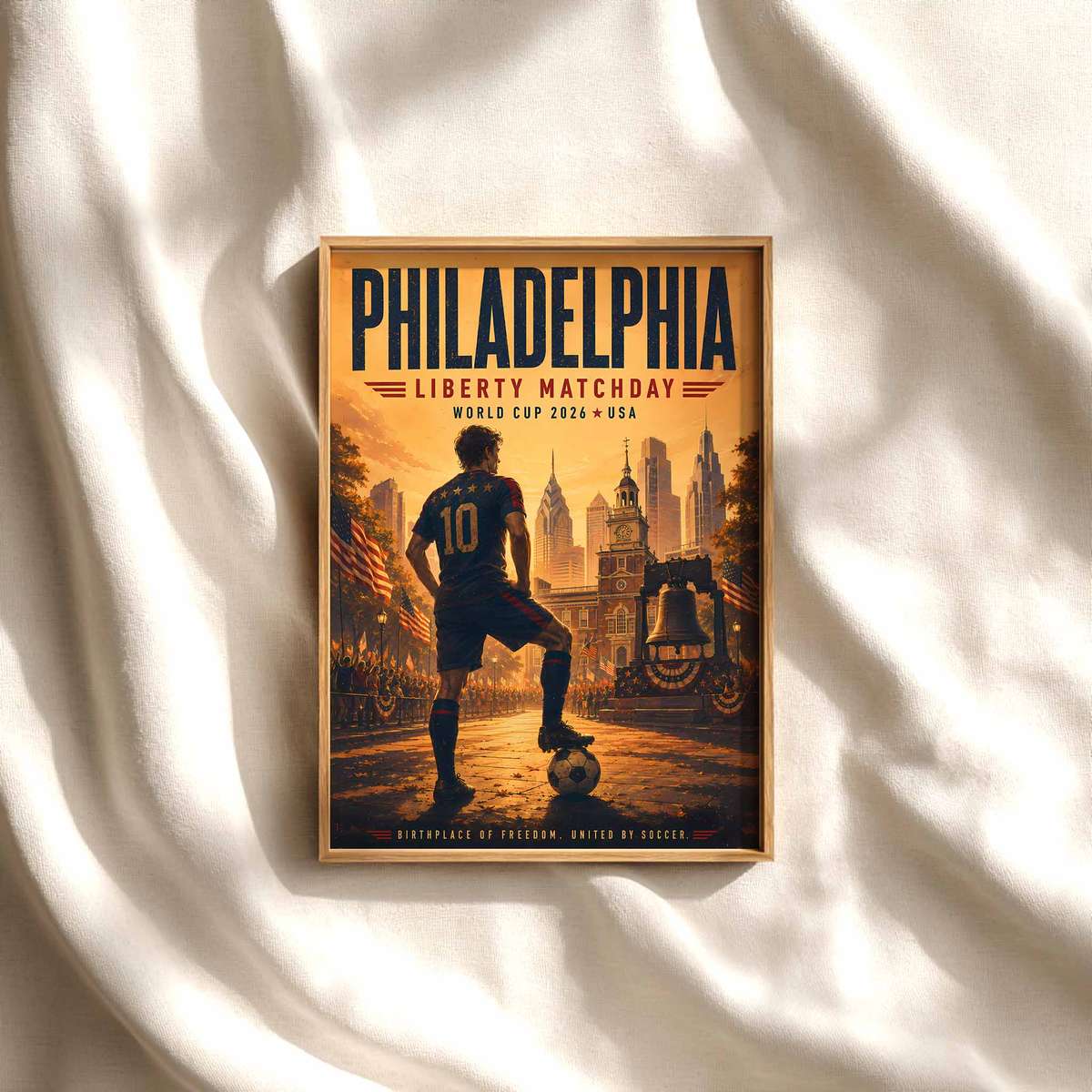
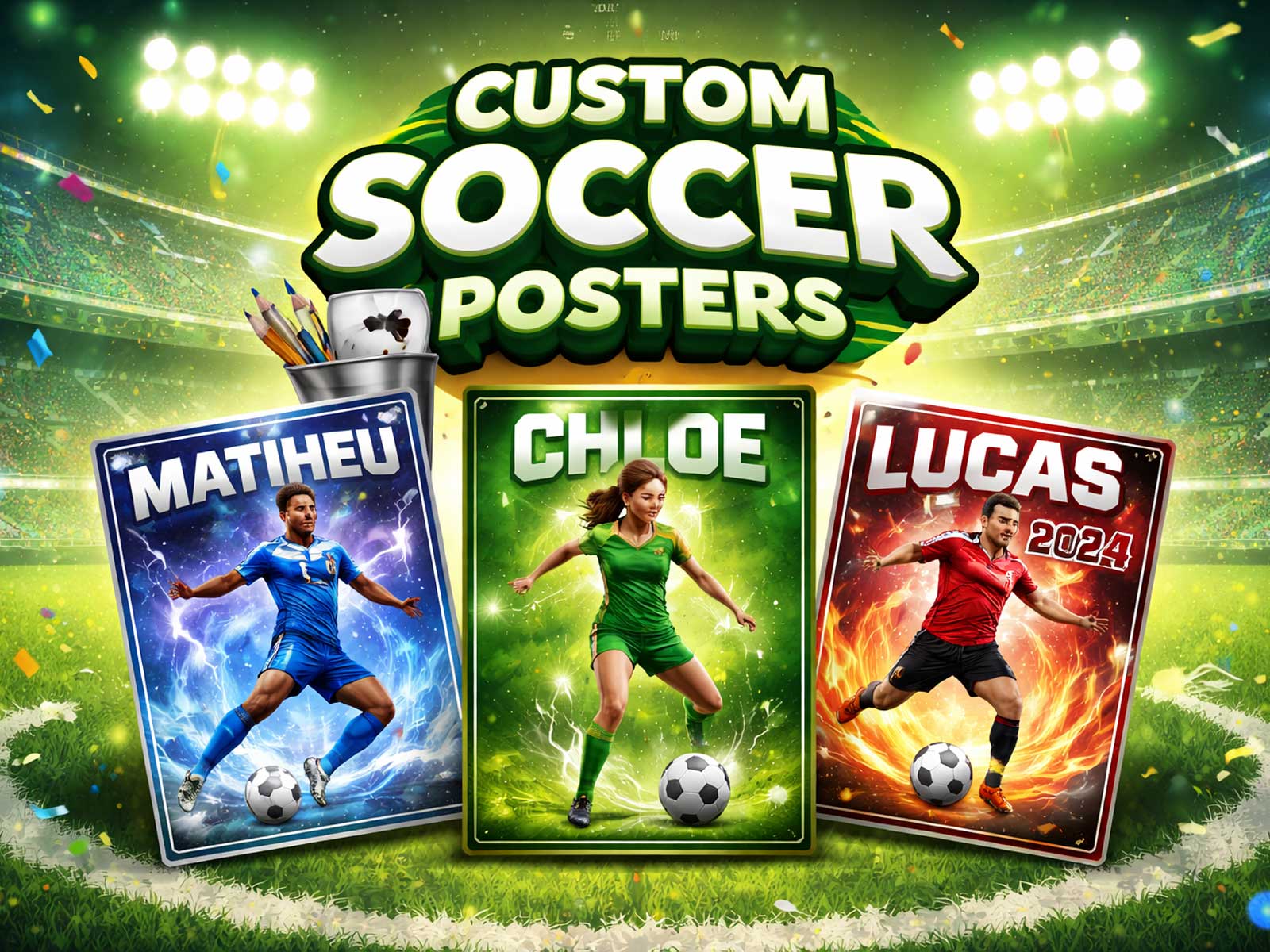
A poster can be wallpaper or it can be a memory. The difference comes down to detail and intention: a keepsake-style custom football poster is built to tell a short personal story at a glance. When you design with the player’s name, number, a meaningful photo, the season and carefully chosen colors, the final print becomes more than decoration — it becomes a marker of effort, growth and belonging.
Start with the name. A first name or nickname stitched into the design immediately shifts the poster from generic to personal. Seeing your own name across a bold layout makes the image claim the space in the room and anchors it to a single life: a kid who trained through rain, a teammate who scored the winner, a captain who led by example. Keep the name legible and proportionate to the overall composition so it reads easily from across the room.
Next is the number. Numbers carry identity in youth soccer: a favored shirt, a season-long role, a tradition passed down. Placing the number prominently — as a jersey badge, a large watermark, or a subtle background element — helps the poster act like a piece of memorabilia. A single digit can conjure dozens of memories in one glance: a debut, a breakout season, or a final game of the year.
Photo choice is where memory becomes visible. Candid action shots show style and commitment; a posed portrait suggests pride and accomplishment. If you want the poster to feel intimate, choose a photograph that captures emotion — a focused look before kickoff, a joyful celebration, or a quiet moment on the sideline. Avoid overly staged stock imagery; authenticity is the easiest path to meaning.
The season label — for example, “Season 2025” or “U12 — Spring 2024” — turns the poster into a time capsule. It tells viewers when the moment happened and allows the piece to age with the player. Years and team seasons communicate progress: later you can hang multiple season posters side by side to trace development, compare jerseys, or celebrate milestones. That chronological context is what transforms a single image into a chapter in a longer story.
Colors complete the emotional signal. Team colors instantly announce belonging and are a visual shortcut to memory. Pairing those hues with a restrained palette — one strong accent and one neutral — keeps the poster elegant while honoring the team identity. Contrasts that echo a match-day kit make the poster feel like part of the uniform rather than an unrelated piece of art.
[IMAGE_INSERT_ARTICLE_01]
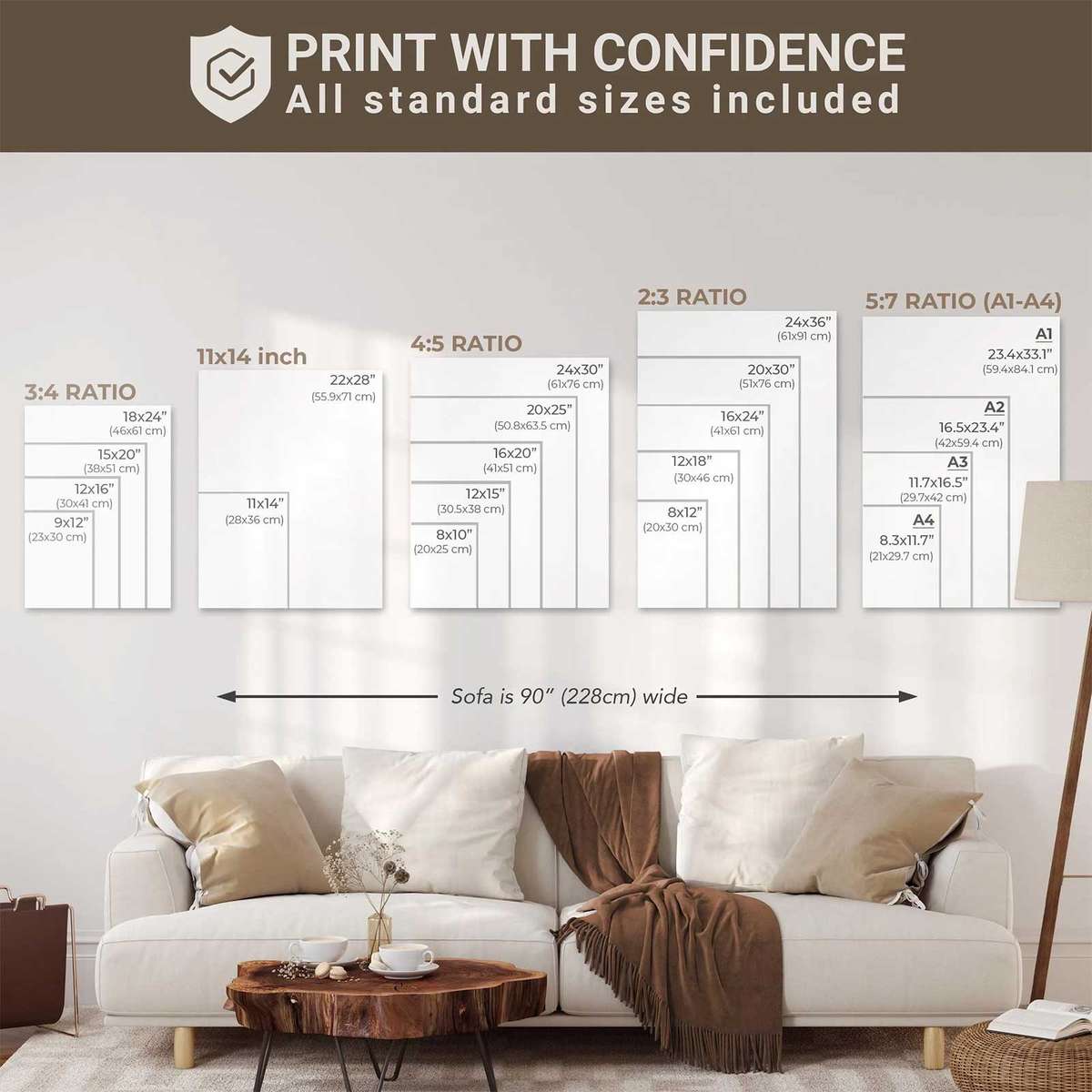
Design choices should always support the story you want the poster to tell. Use clean typography for names and seasons so they remain readable in a bedroom, locker area or living-room gallery. Leave breathing room around the photo and key text so the eye can rest; keepsakes feel intentional when they are visually calm, not cluttered. Consider finishes and sizes: a matte print reduces glare and reads like a classic photograph, while a larger format gives the image presence on a wall where friends and family pause.
Finally, think about who receives this poster. For the player it’s encouragement and evidence of progress. For parents it’s a compact way to preserve seasons of small triumphs. For coaches it’s recognition that recognizes a role on the team. When given at the end of a season, a personalized poster does more than decorate — it marks a rite of passage.
When name, number, photo, season and colors are chosen with care, a custom football poster stops being mere themed décor and becomes a portable memory. It hangs where stories are told — bedrooms, game rooms, and halls — and quietly keeps a season alive long after the final whistle.