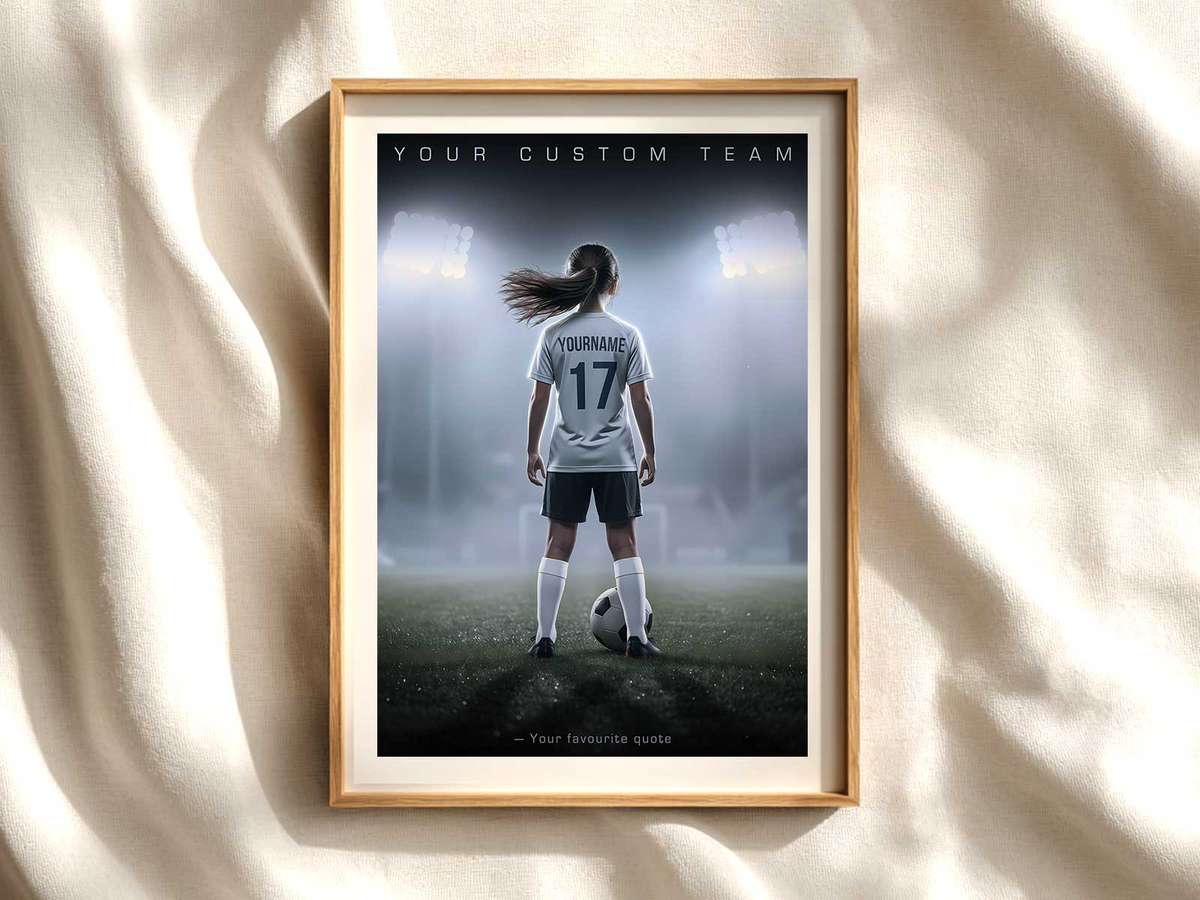
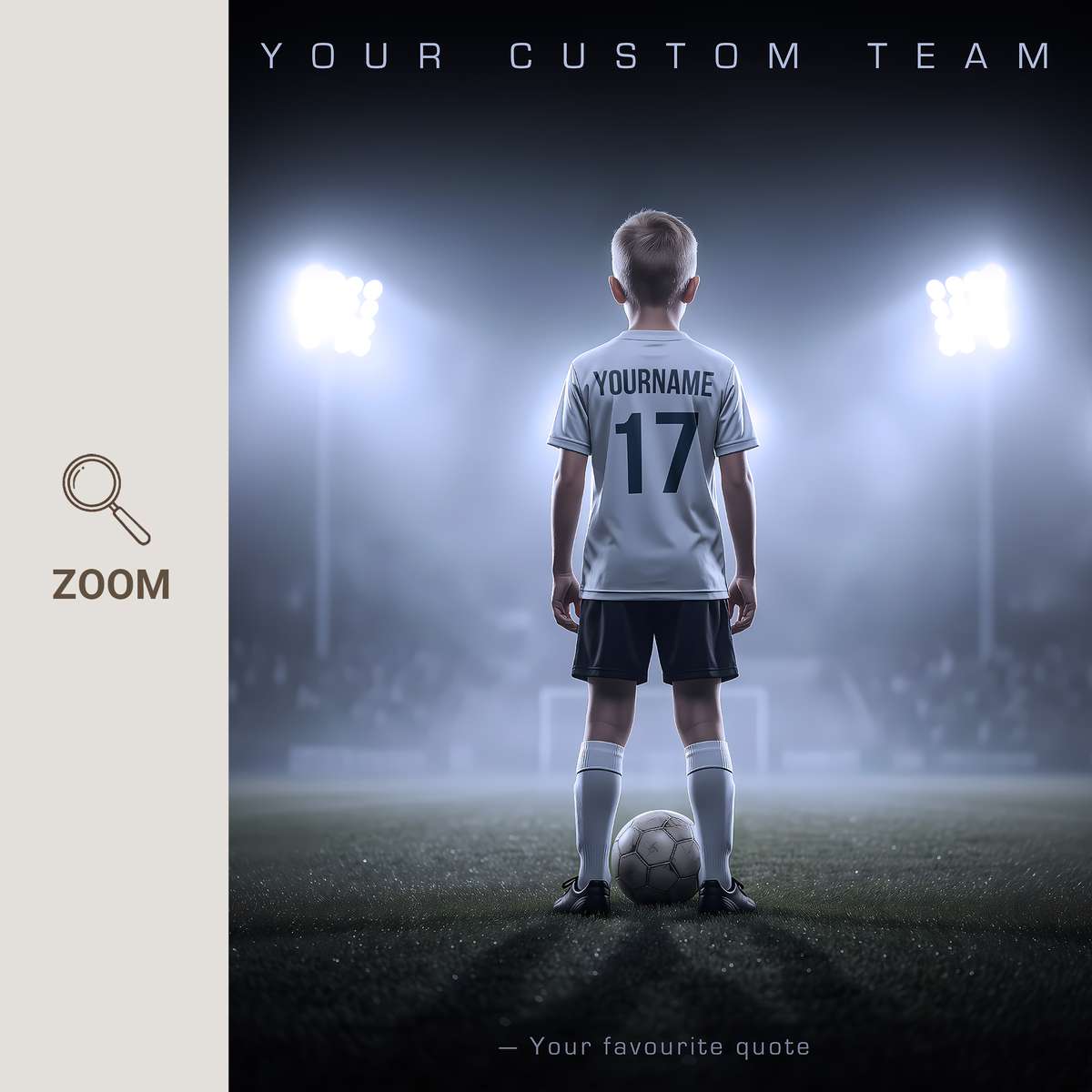
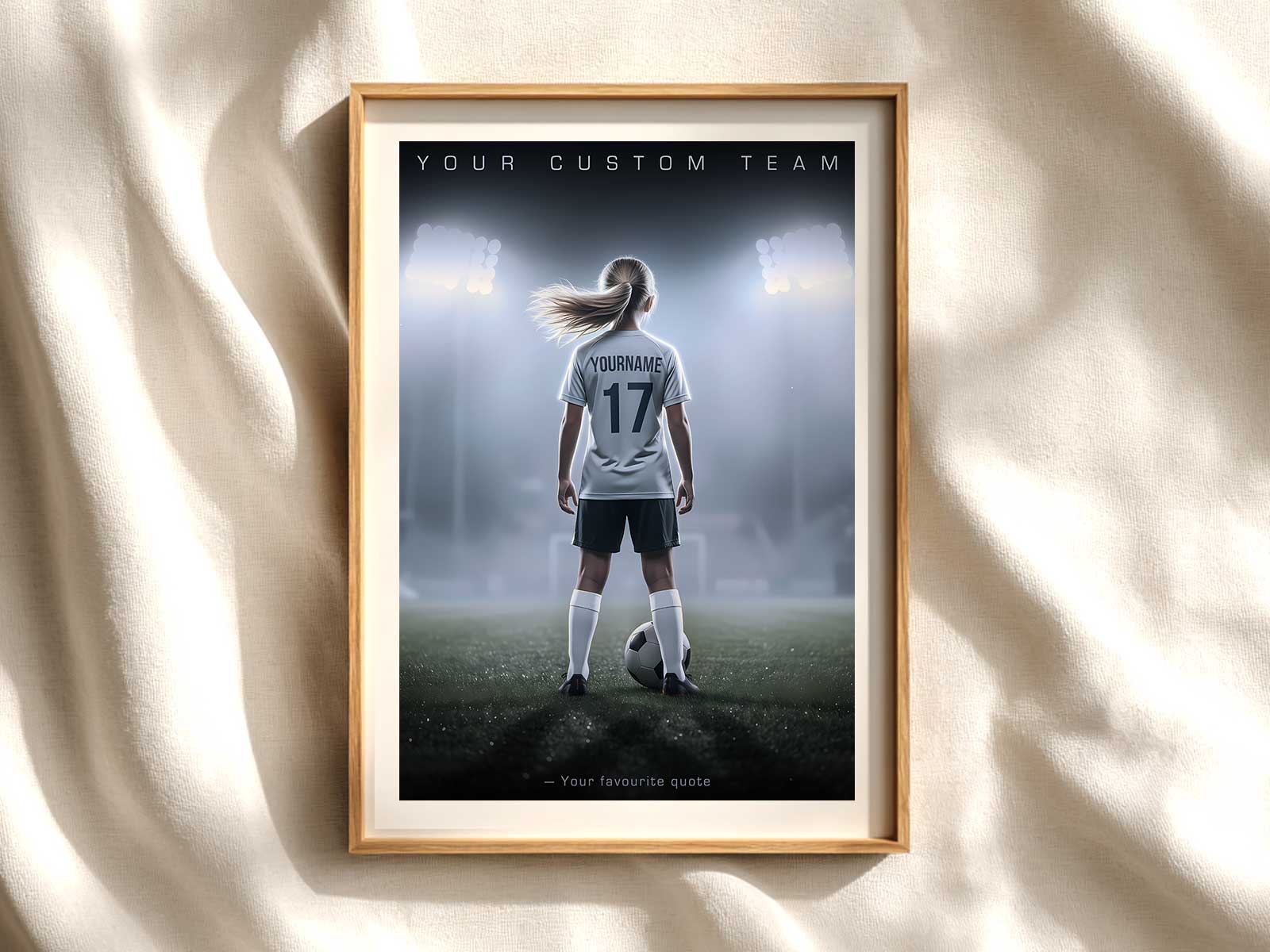
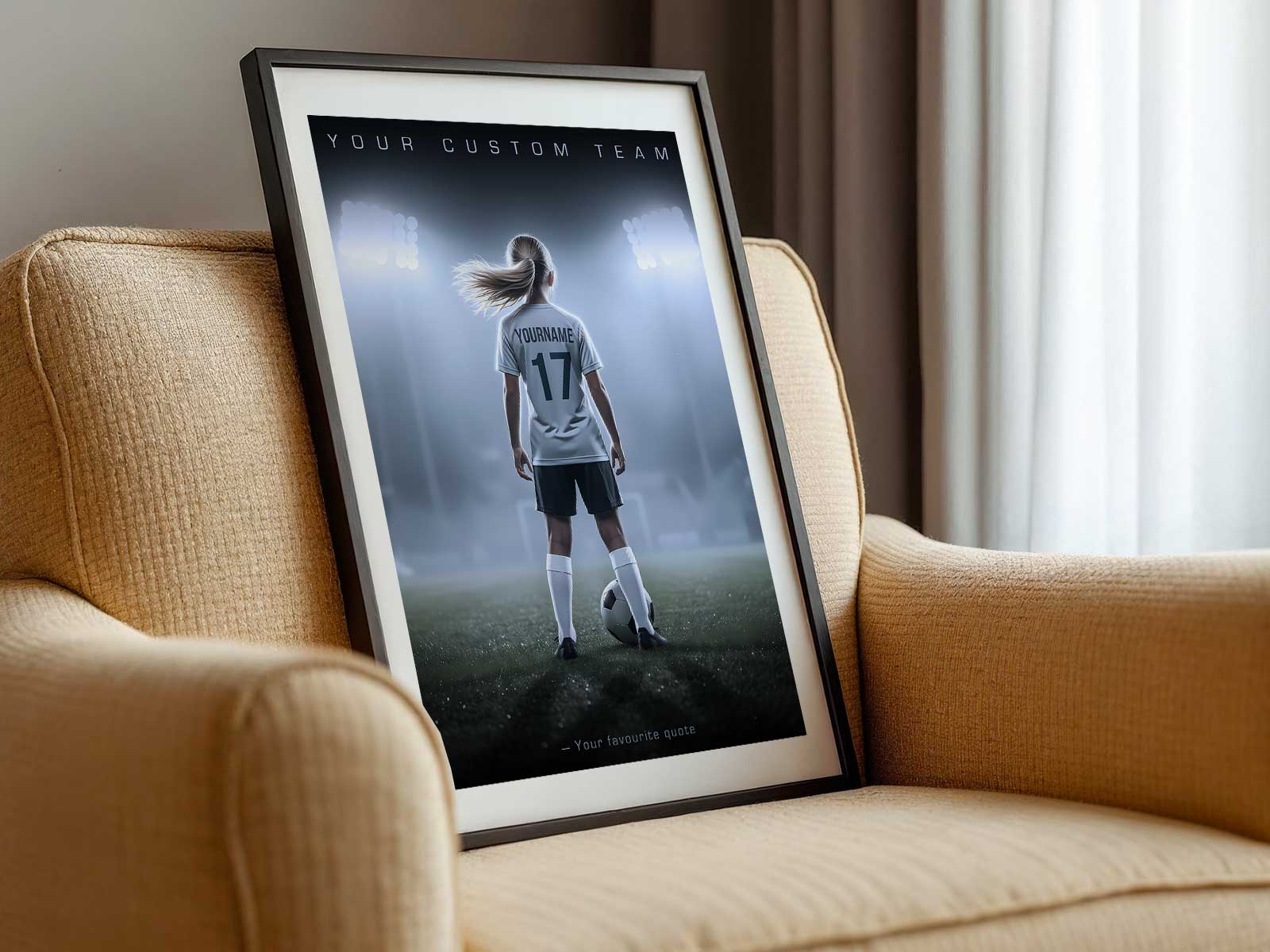
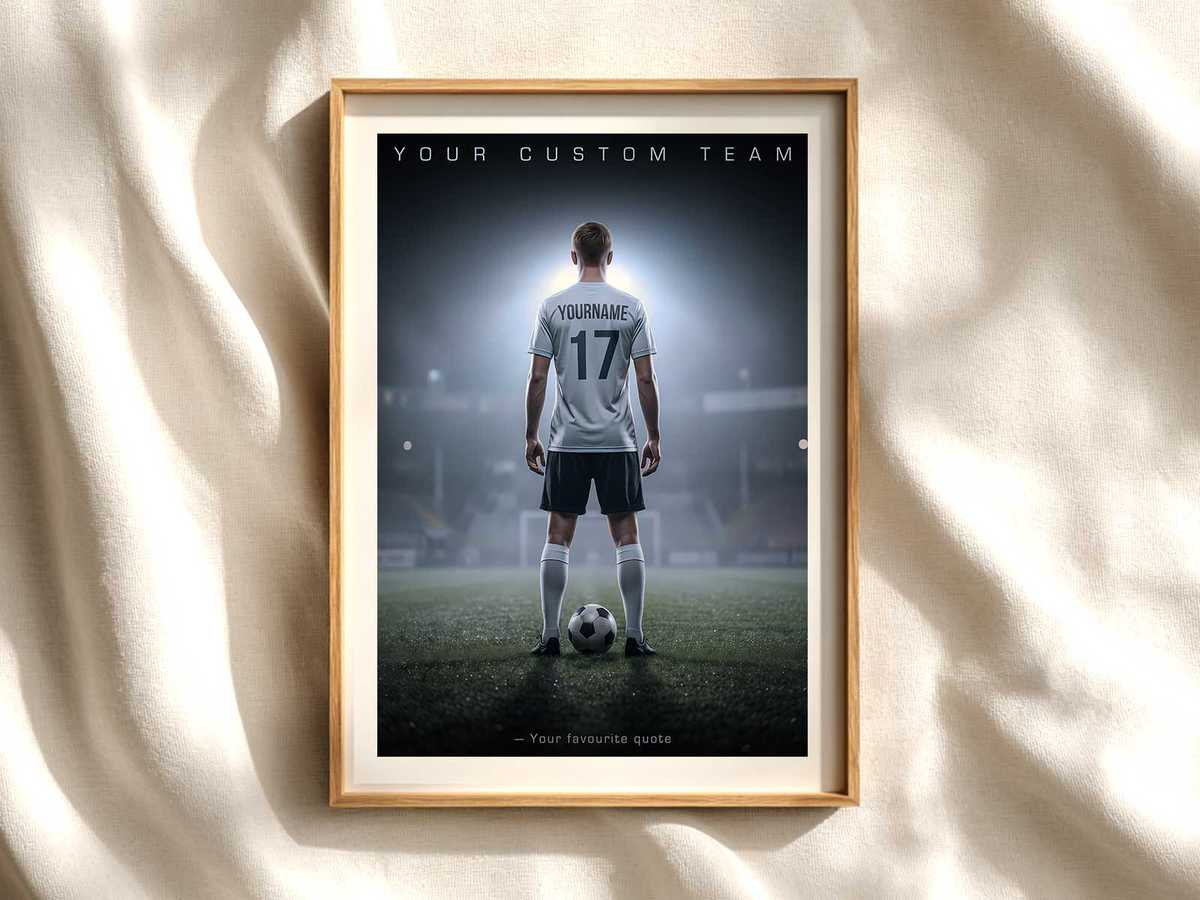
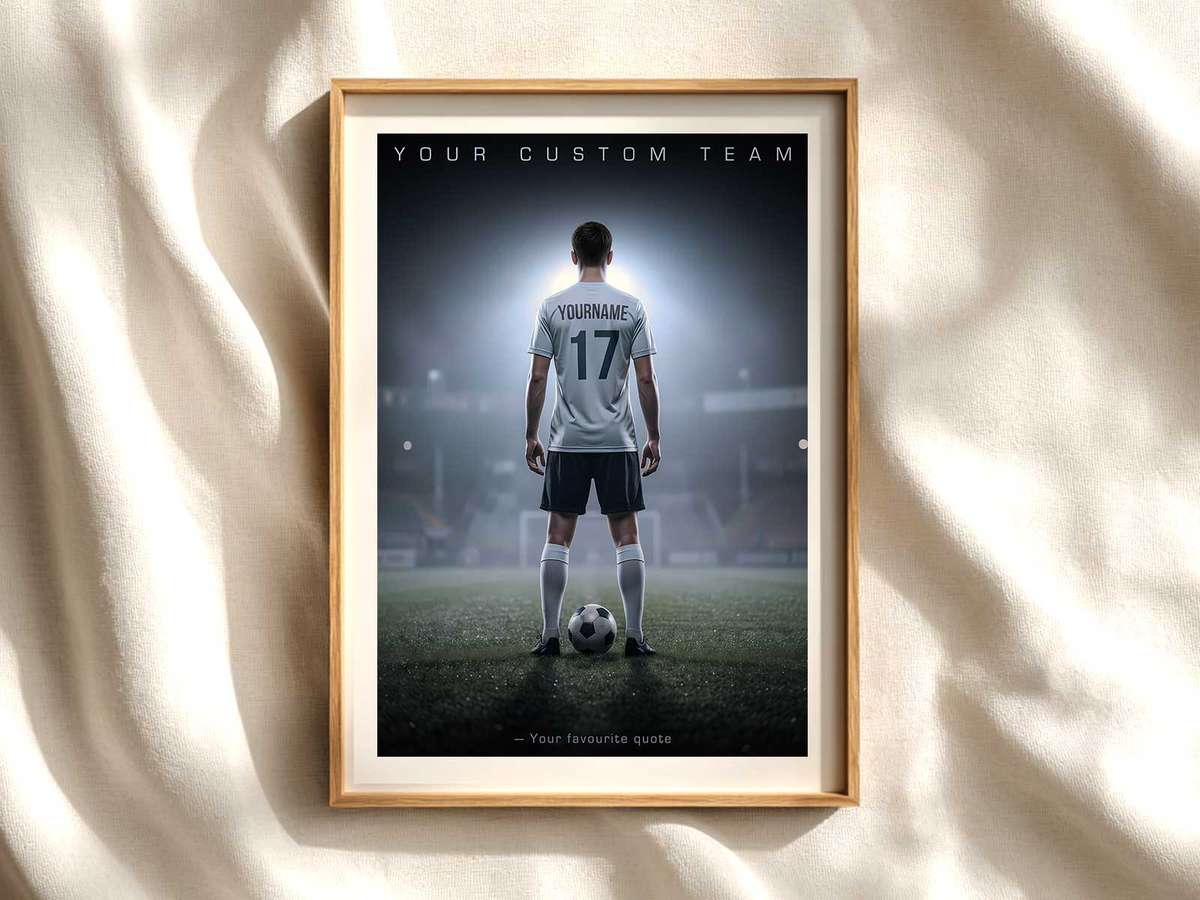
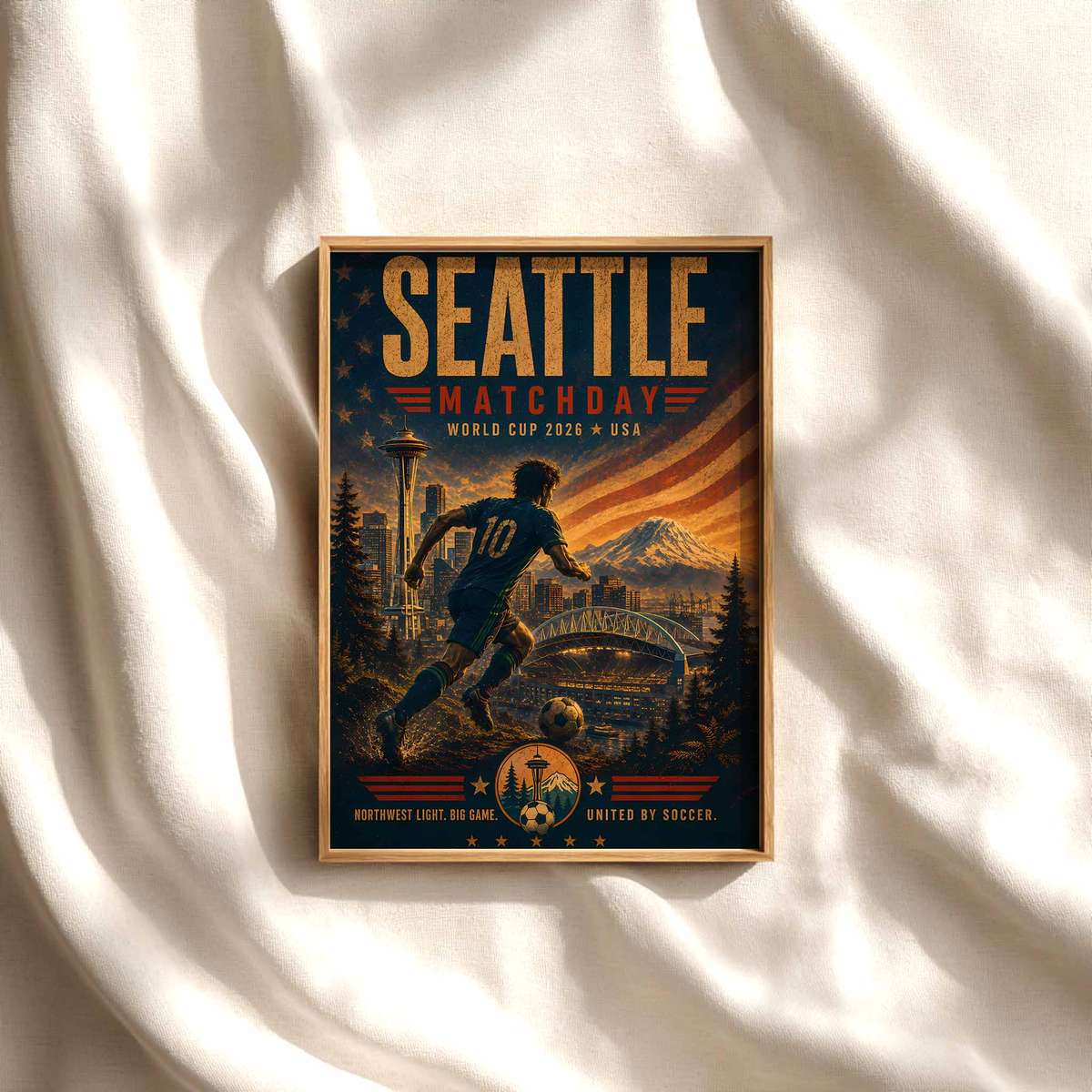
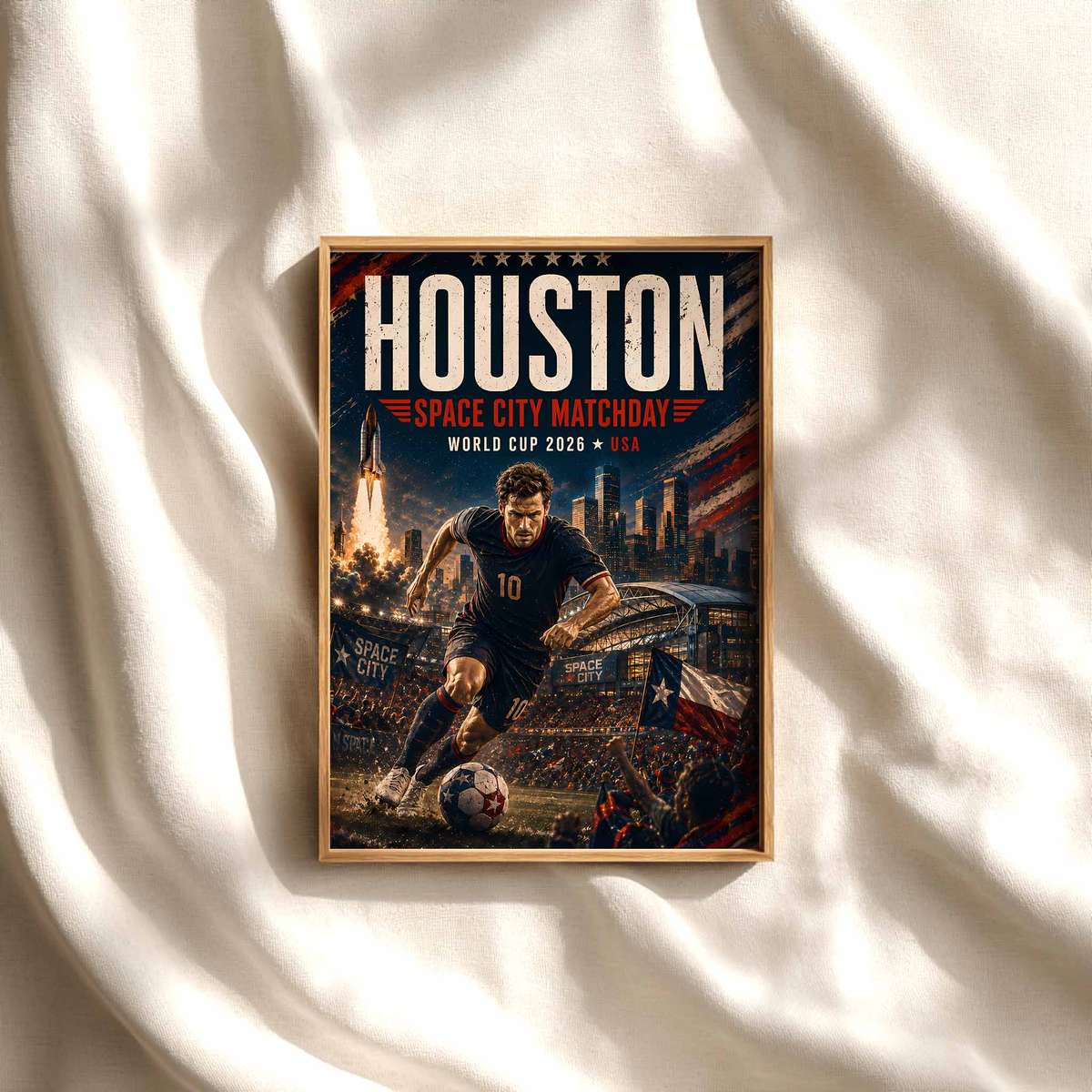
A poster that shows a player mid-kick can look great on a wall. But when a football player poster chooses to tell the story of a particular girl—her name, number, position, season moment, and the team colors she wore—it moves from image to memory. That subtle shift is what makes a keepsake-style poster more meaningful: it anchors a room to a real person’s effort, growth, and identity instead of just celebrating the sport in general.
Start with identity. Seeing a name and number beside a confident pose gives the poster a face and a history. For a player, that combination affirms who she is on and off the field; for parents or teammates, it recalls evenings at practice, long bus rides, first goals, or a season that saw real improvement. The design cues—team colors, the silhouette of her position, or a background hint of the home field—turn a single photo into a compact narrative that a plain action shot can’t convey alone.
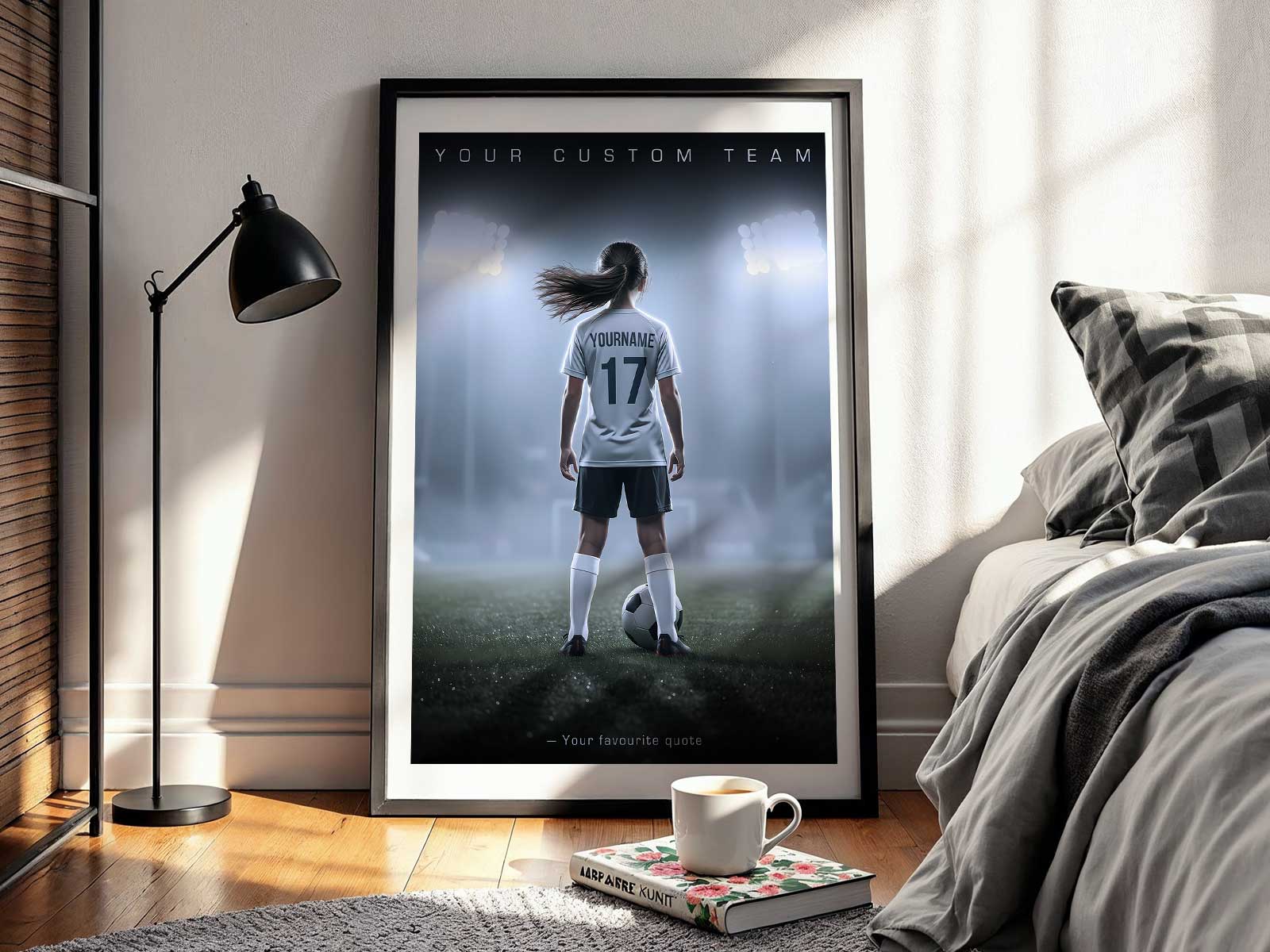
Memory is the heart of why these posters work as both decoration and keepsake. A bedroom or locker wall becomes a curated space of stages: the rookie season, a captain’s year, a comeback after injury. Placed above a desk, next to a shelf of medals, or inside a game-room gallery, a story-driven poster triggers a specific memory every time it’s seen—who cheered on the sideline, the match weather, the moment the ball crossed the line. That immediacy is what transforms everyday decor into an object that carries emotional weight.
Belonging and recognition also give the poster purpose. When teammates or coaches gift a personalized poster at the end of a season, it recognizes belonging to a group and marks an earned place within it. The poster becomes an emblem of shared effort: it signals membership in a team culture and remembers the season as a shared chapter. For a teen building identity, those visual reminders—colors, crest echoes, or a quoted line from the coach—help translate fleeting sports experiences into lasting pride.
Design matters because clarity and restraint keep the story readable at a glance. Clean typography for the player’s name and number, a well-composed portrait or action shot, and a balanced palette make the piece both visually strong and intimate. That is why these posters sit as comfortably in a bedroom as on a family room memory wall: they read well from a distance yet reward a closer look with small, specific details tied to that season or achievement.
[IMAGE_INSERT_ARTICLE_01]
Context makes them useful as gifts. A parent who wants to mark a final youth season, a coach who wants to honor leadership, or a teammate who wants to celebrate a breakout year can all choose a poster that explicitly names the moment being remembered. The giver’s choice of which memory to highlight—an underdog win, an undefeated stretch, a leadership quote—makes the gift feel intentional rather than generic.
Finally, these posters grow with the player. They don’t have to freeze a girl in one static identity; instead, they bookmark a stage of development. Years later the same poster can serve as a reminder of where she began or how far she’s come. That layered meaning—decoration now, memento later—is the durable value of a story-driven football player poster. It promises more than a picture: it offers a visible, daily link to effort, progress, and belonging.