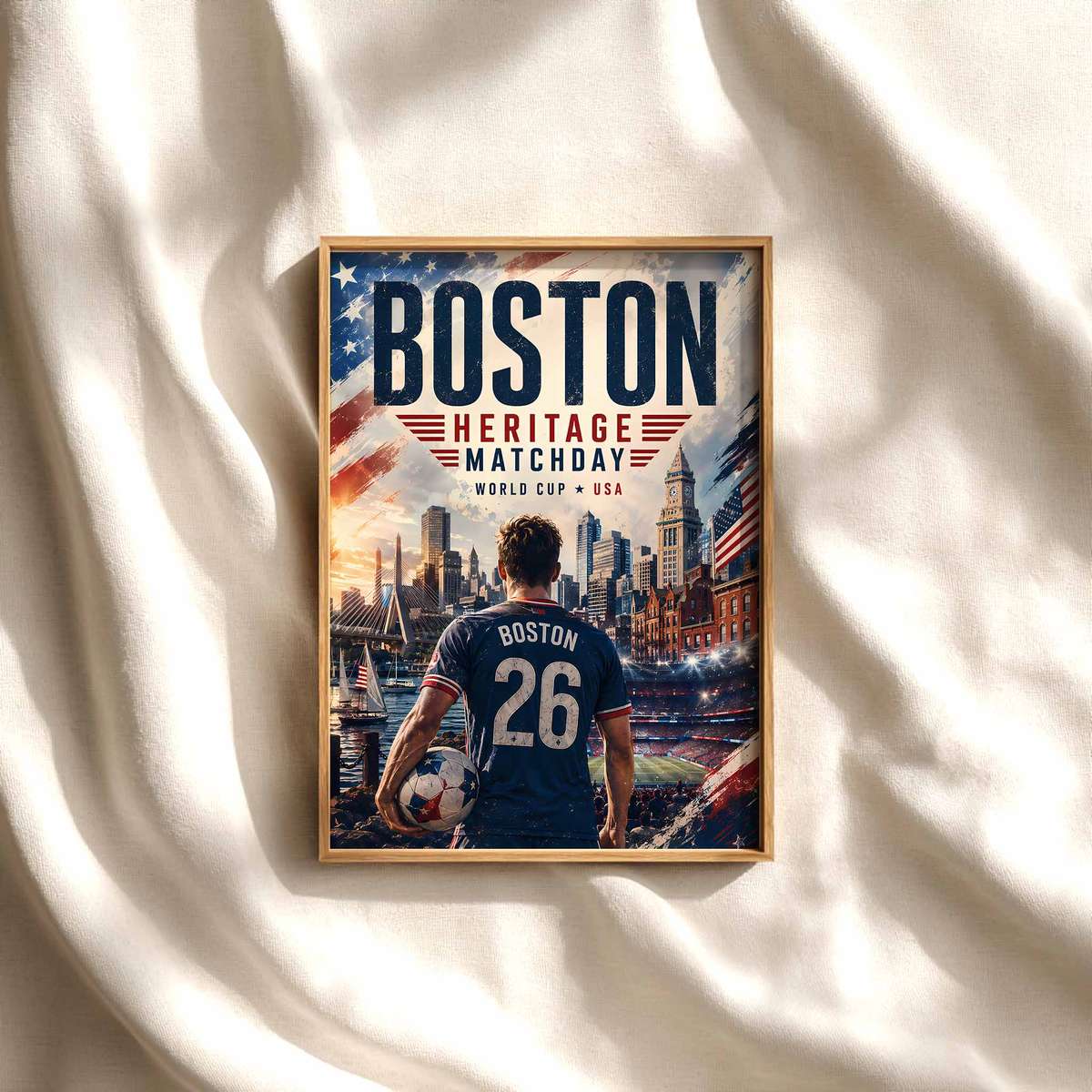
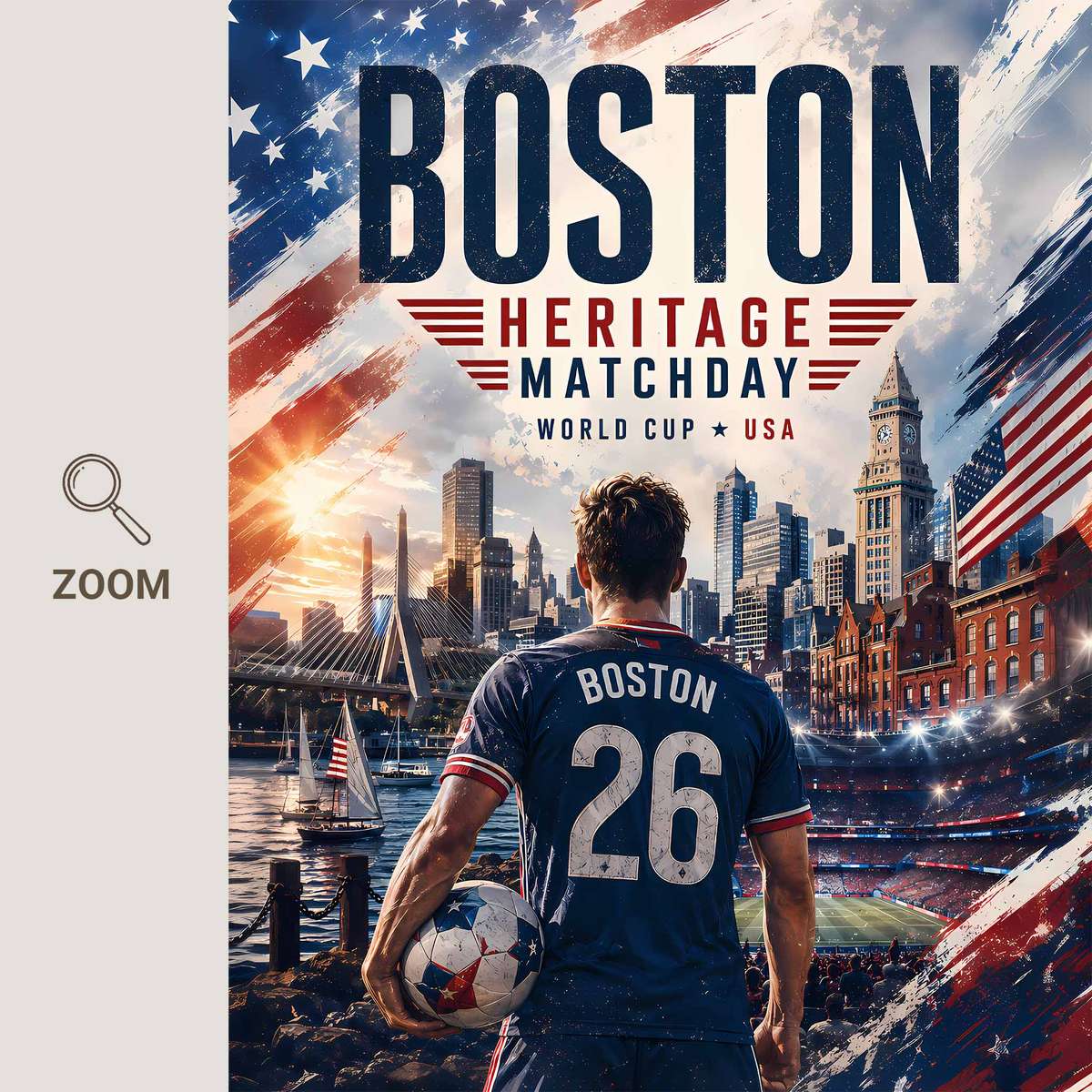
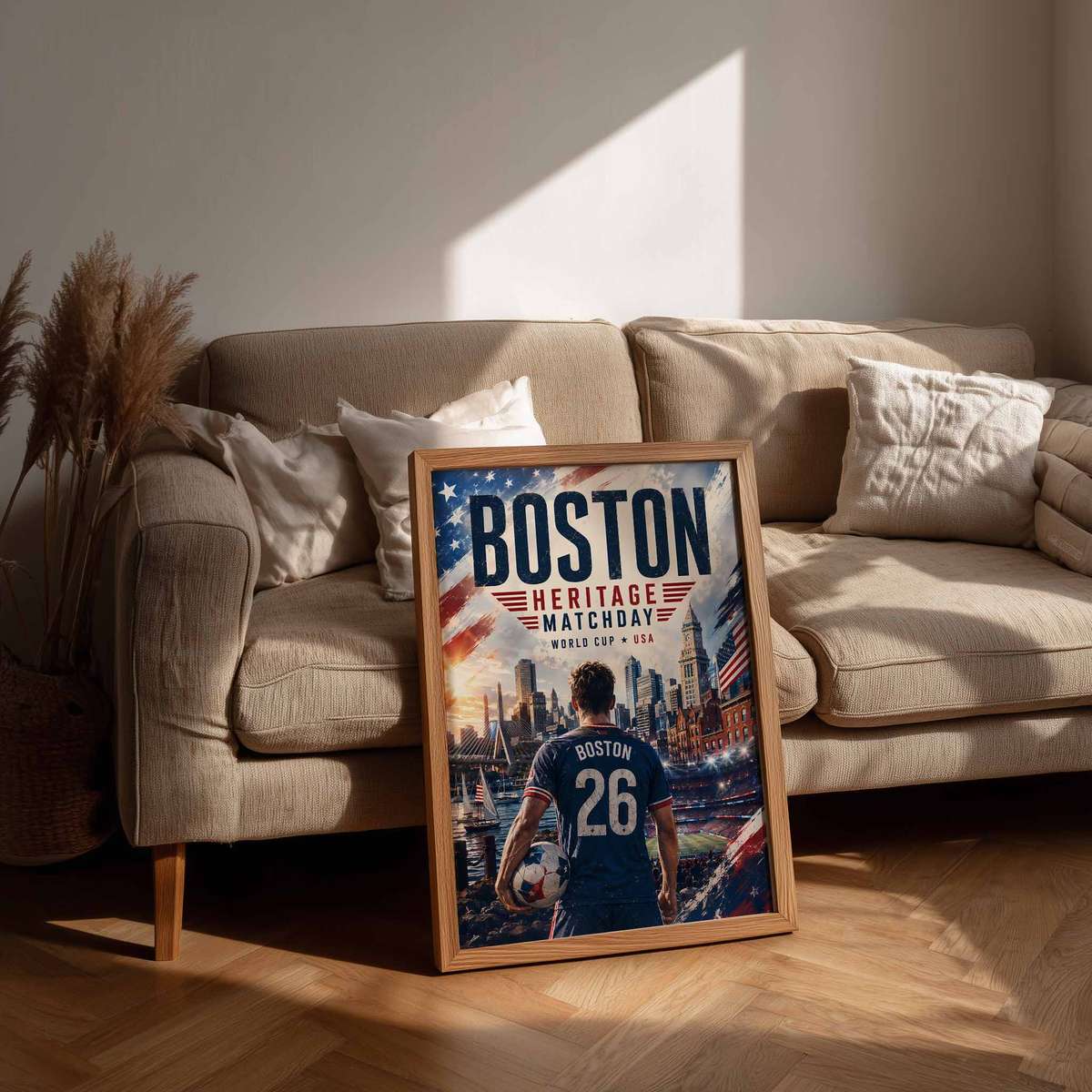
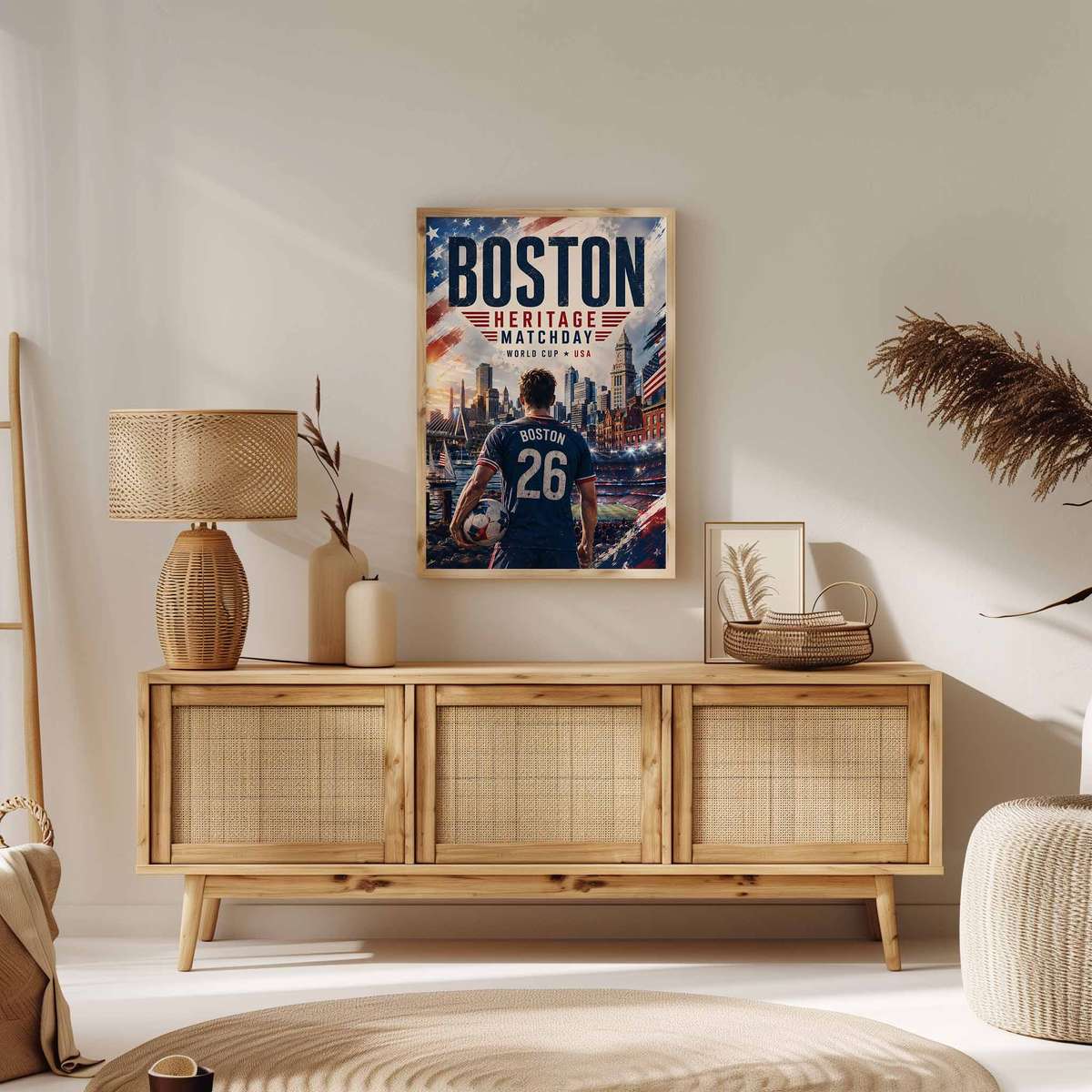
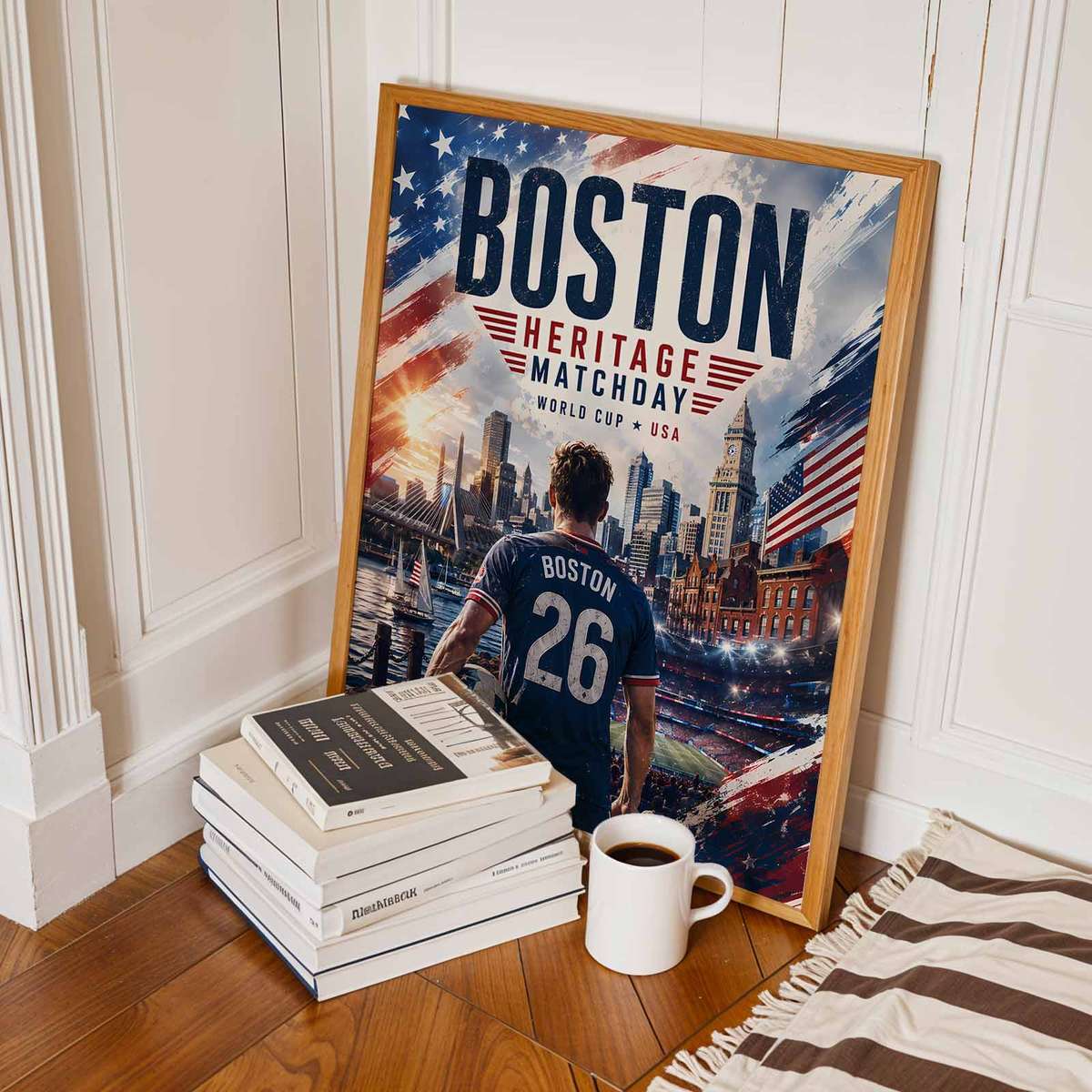
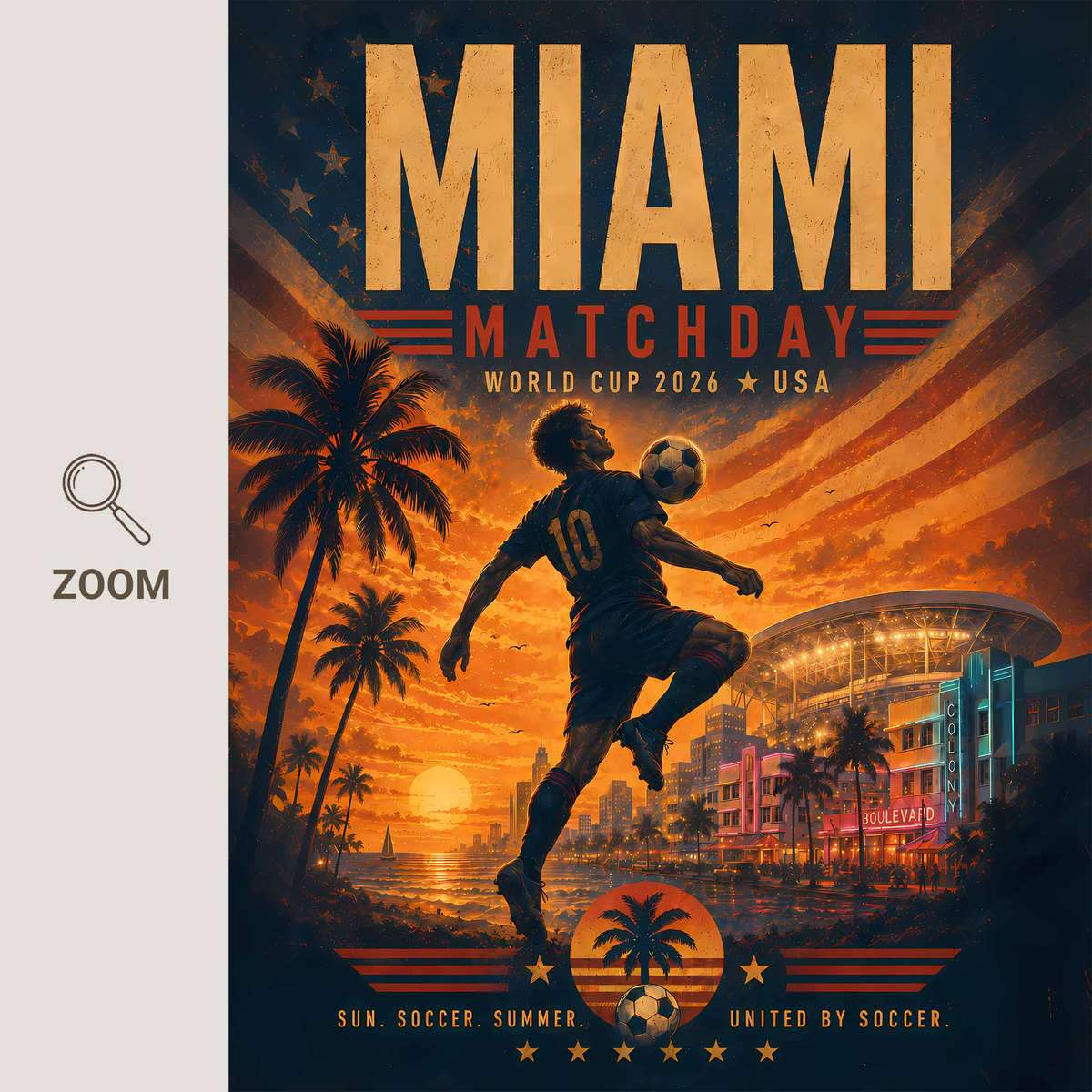
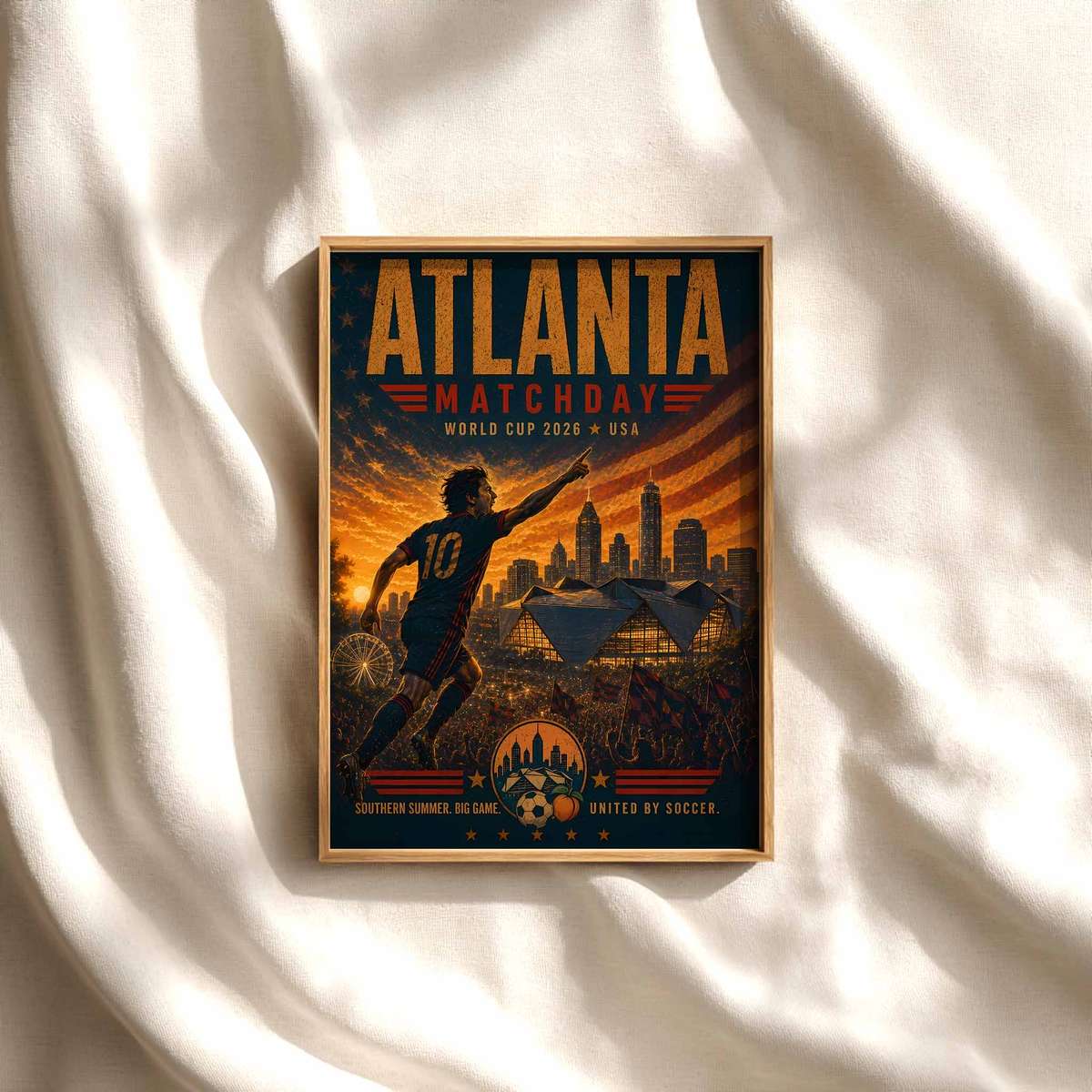
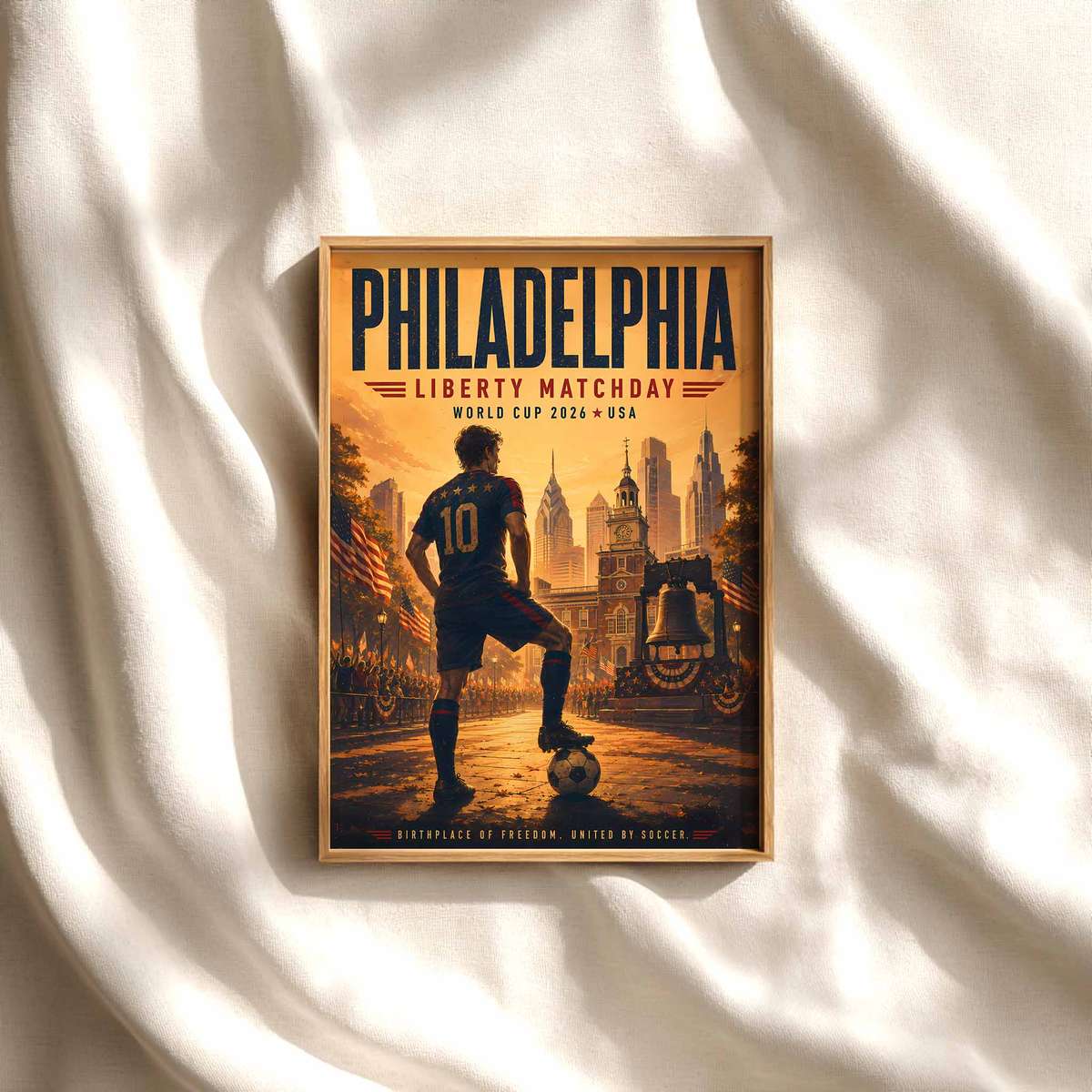
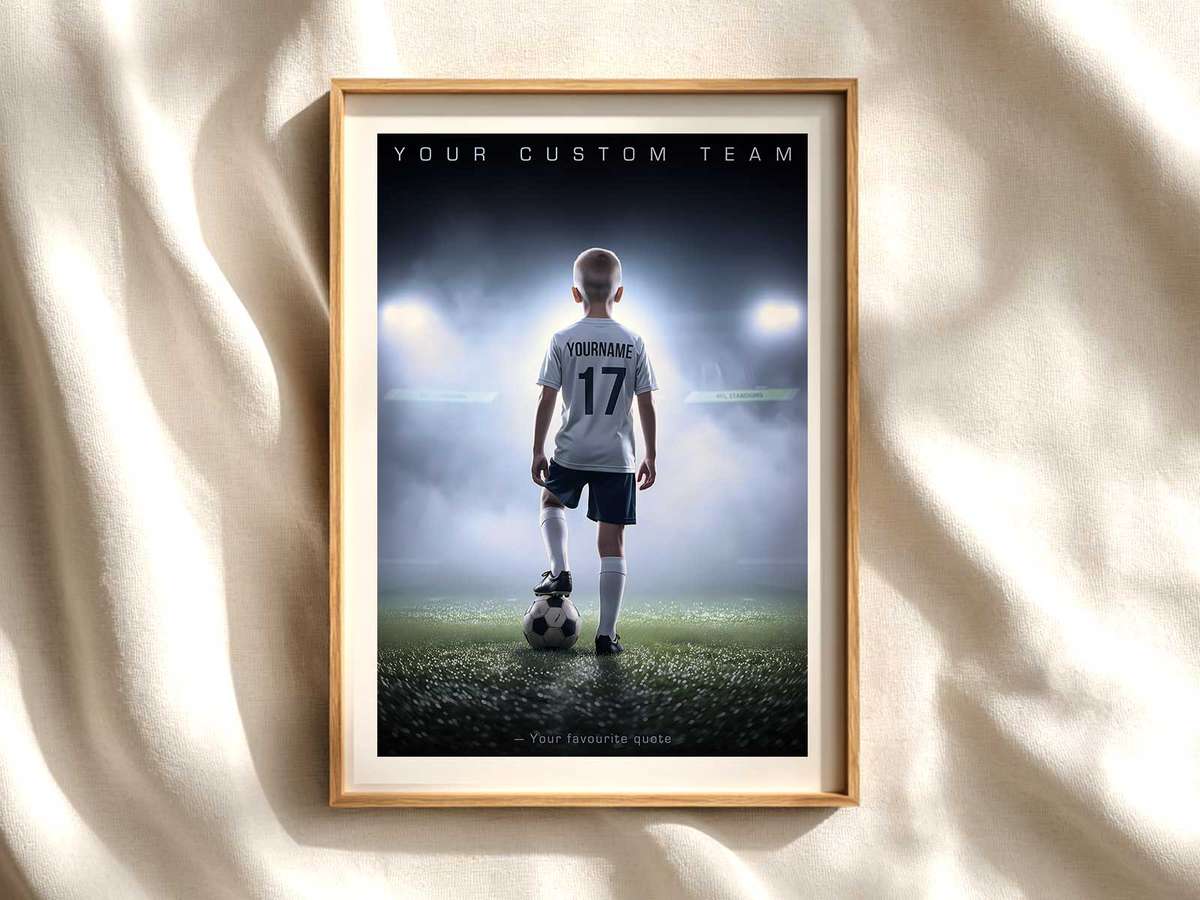
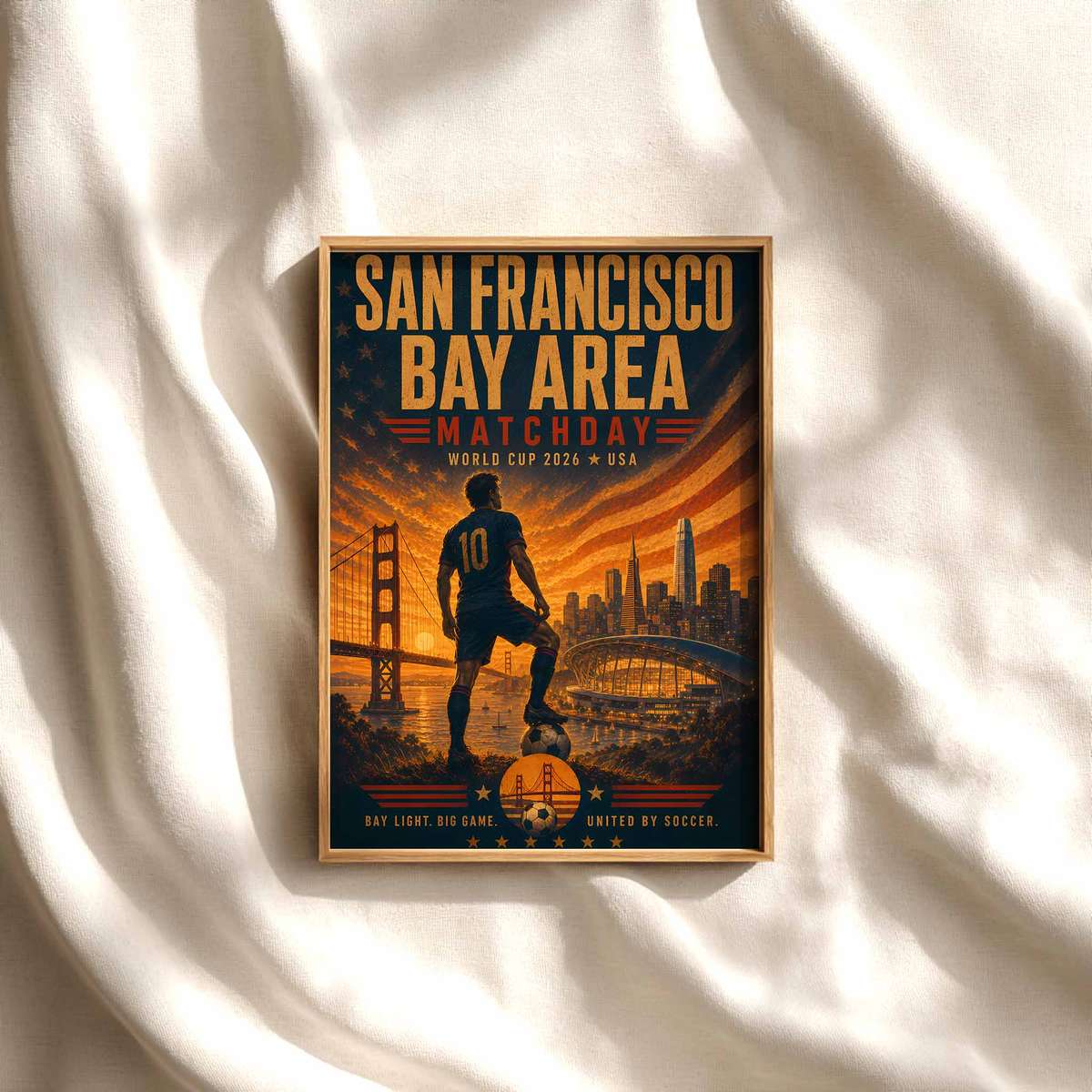
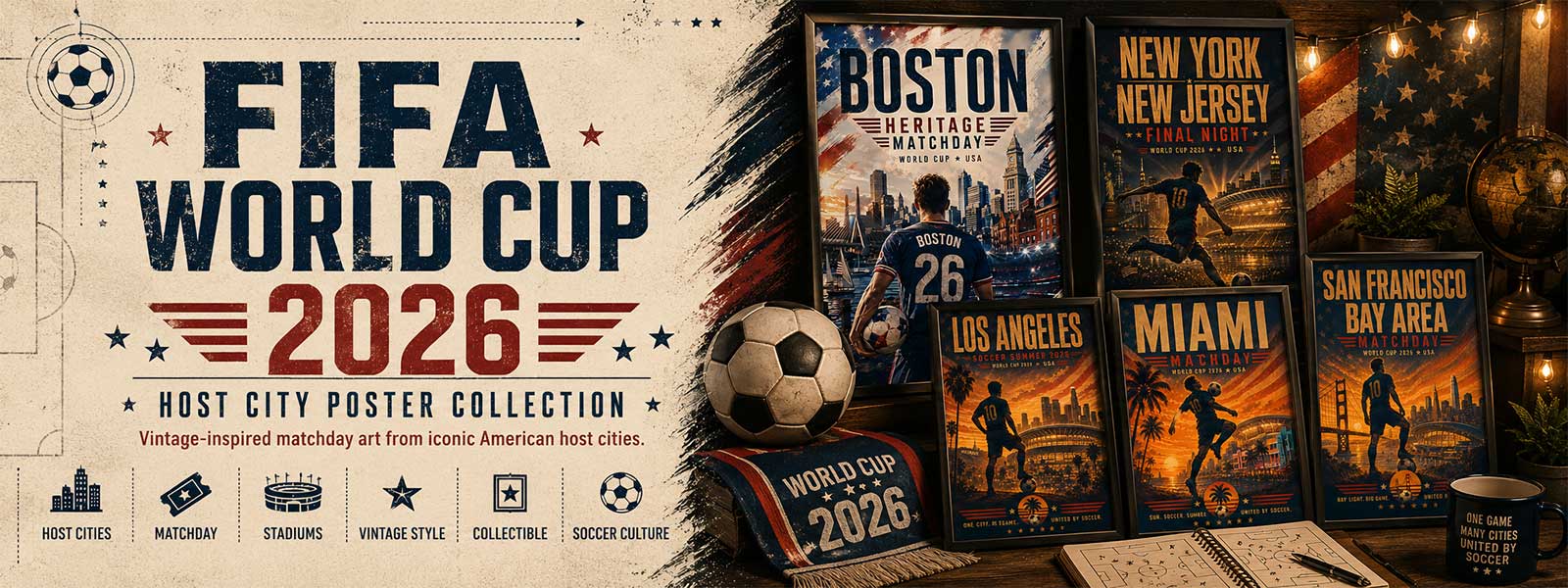
There is a particular kind of electricity in a stadium night that lingers long after the last whistle. A custom World Cup 2026 poster that centers on Boston—its skyline at dusk, the final-match lights, and the visceral pride of an American crowd—does more than decorate a wall. It freezes a lived moment: the exact angle of light that fell on the pitch, a player’s silhouette against city towers, a season’s worth of grit tied to a single image. That is why a thoughtfully designed poster becomes a personal keepsake rather than mere sports decor.
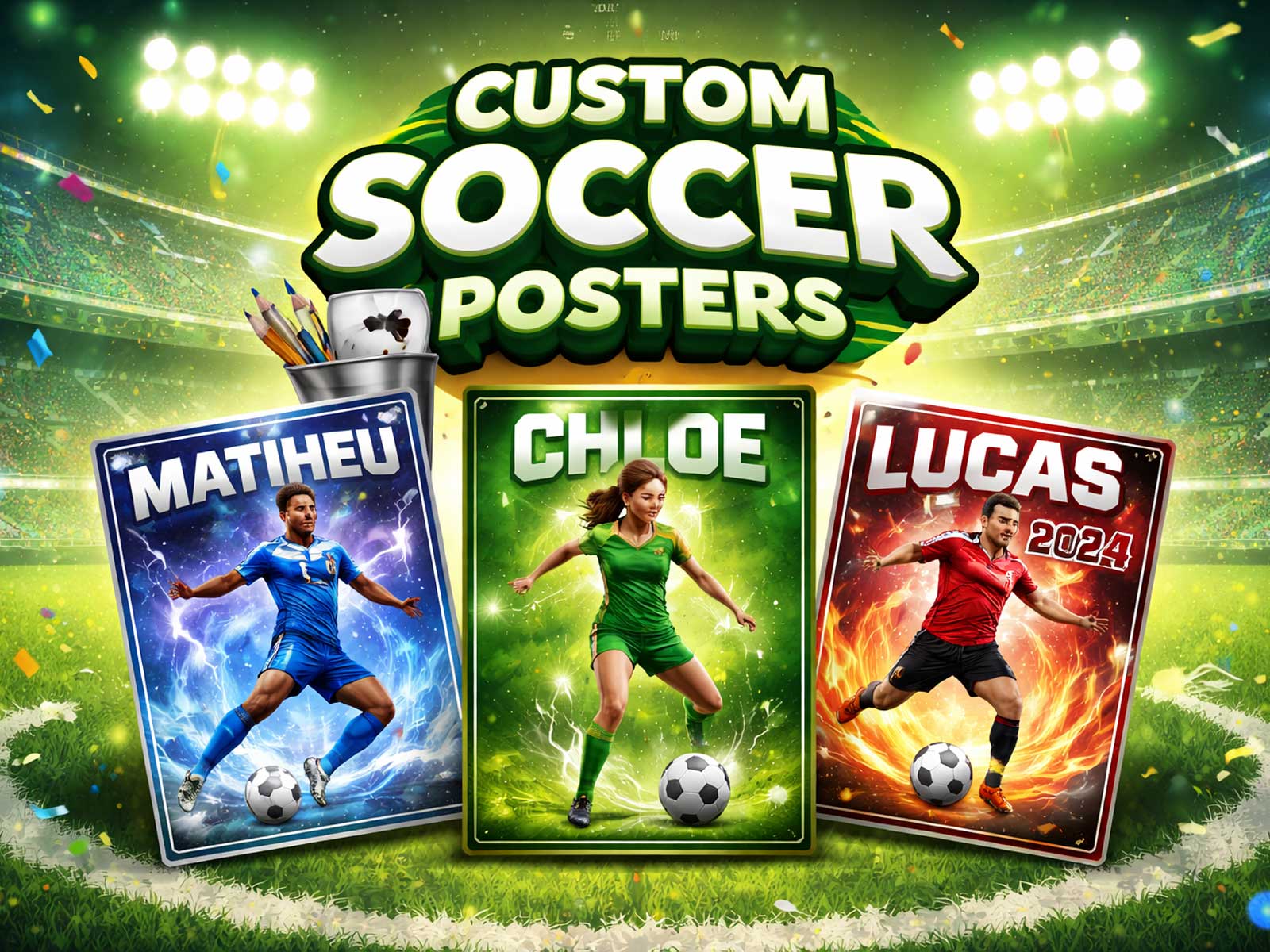
What makes this poster feel personal starts with identity. A keepsake-style wall print that includes a player’s name and number, a team color palette, or a season marker names the memory. For the player, seeing their name and number against Boston’s skyline is recognition of effort and growth—a visual bookmark for a chapter of their career. For parents and coaches, it’s a way to remember a milestone: a tournament run, a memorable match, or a last season together. Those specific, named details are what separate a generic soccer print from an emotional object that tells a story.
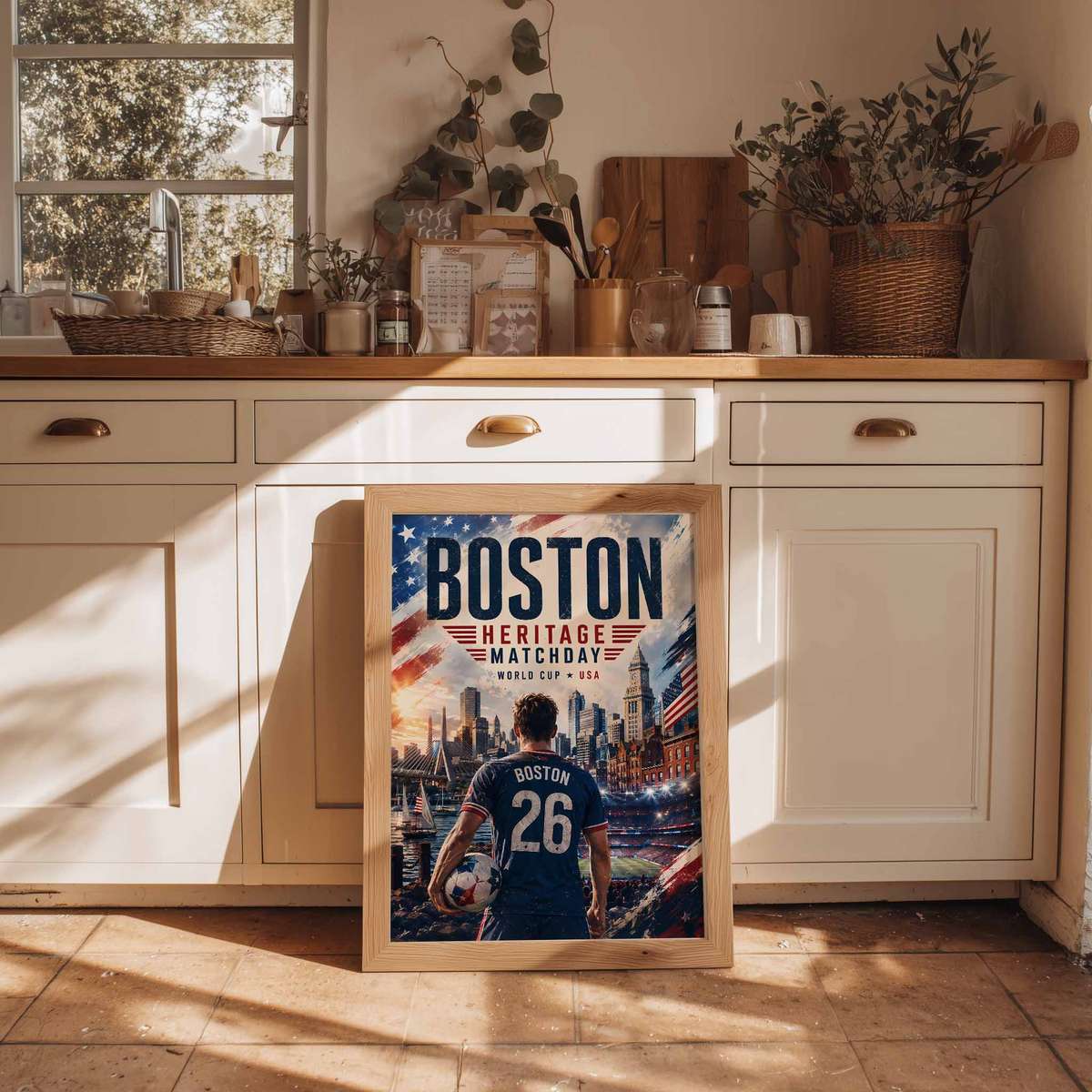
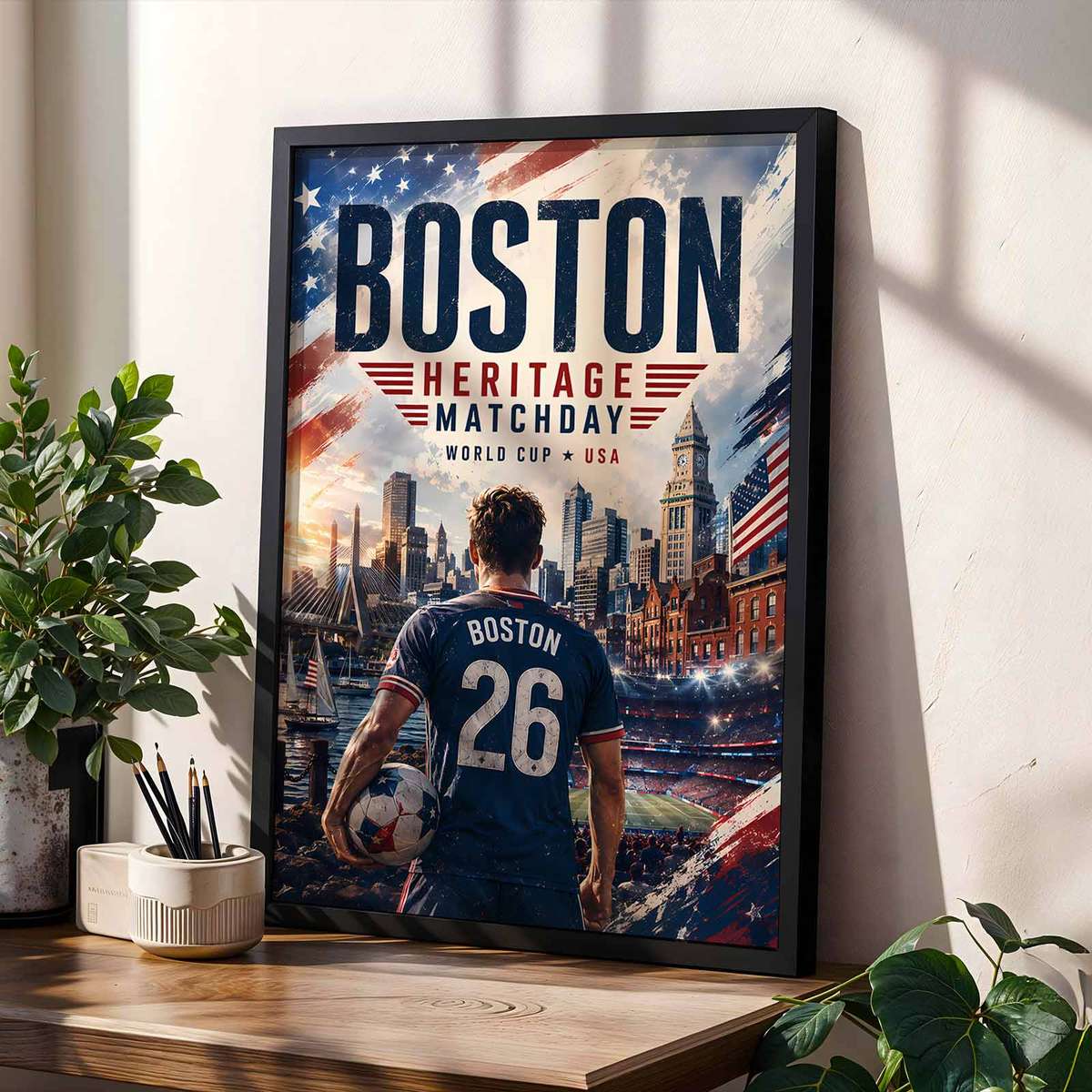
The poster’s design language matters. Clean, bold soccer visuals—a strong silhouette, directional light that suggests final-night intensity, and the subtle inclusion of familiar landmarks—hold up as wall art because they translate motion and atmosphere into a single, composed image. Placed over a bed, above a desk, or on a curated memory wall in a living room or game room, the print acts like a theatrical still: it invites retelling. Every time someone looks at it, they recall the crowd’s roar, the late-game tension, or a teammate’s gesture, and the poster quietly reconnects the viewer to that feeling.
A Boston-centered poster also carries place-based pride. The skyline and regional cues anchor the memory to a city that hosted part of a global event, mixing local identity with international significance. That blend is powerful: it says, not only did this moment matter to me as a player or fan, it happened in a specific place that shaped the memory. For teenage players, that connection can become part of a room’s identity; for alumni and families, it becomes a shared artifact of a season worth remembering.
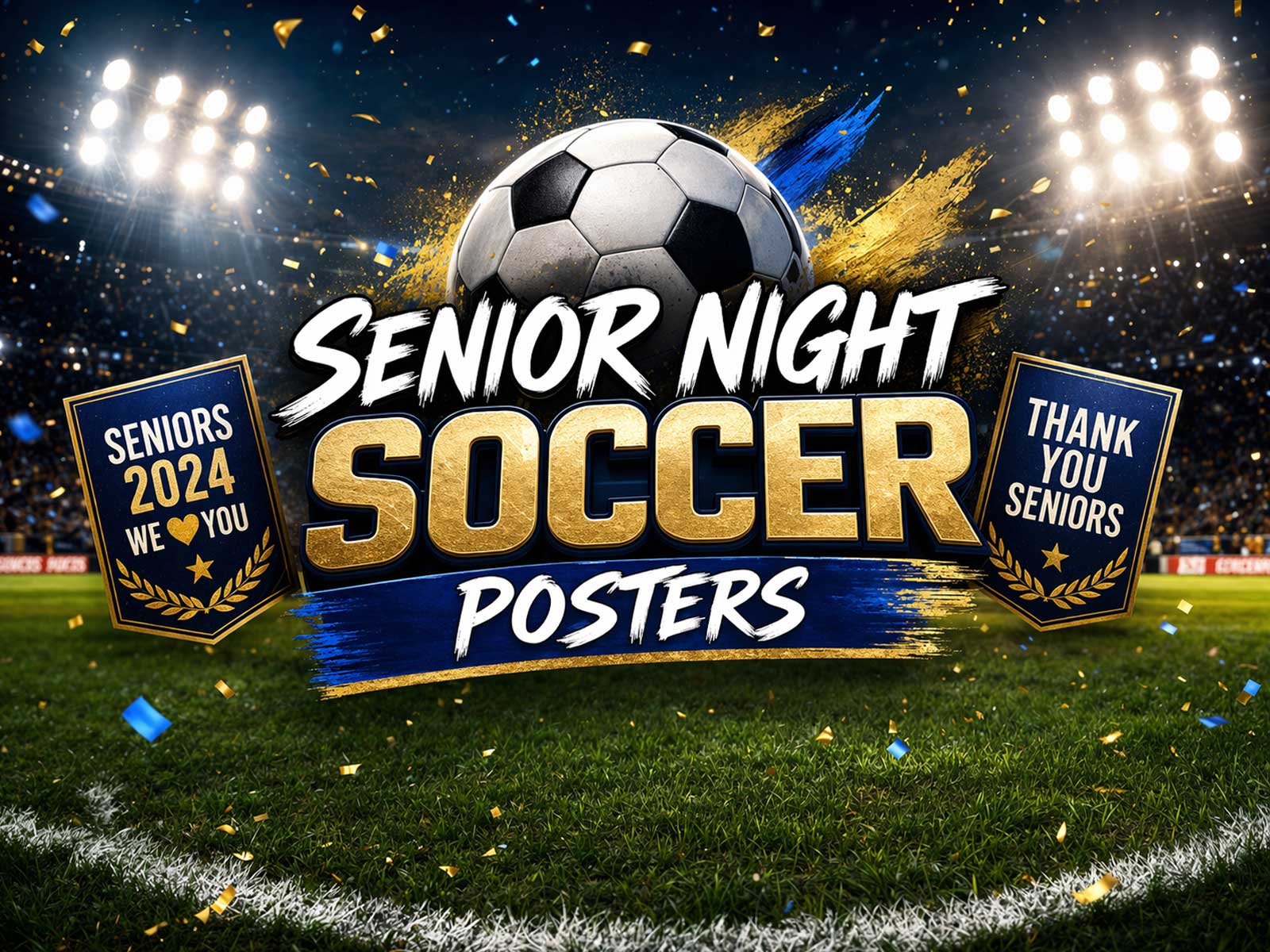
Consider the occasions this kind of poster marks. End-of-season gifts, senior-night presentations, or a coach’s thank-you to a team take on more meaning when the image names a season and shows a recognizable backdrop. A poster framed and given after a decisive match can be a quiet form of acknowledgment—less transient than a trophy speech, more intimate than a team photo. It’s a physical reminder of progress and belonging that players carry with them as they move into new teams or phases of life.
The emotional power of a custom poster is practical, too. Unlike memorabilia that crowds a shelf, a well-composed print integrates visually with room decor while still standing apart as a story object. Its scale and placement can transform a bedroom, locker area, or den into a space that reflects personal history. Good design choices—contrasting light, restrained color accents from team kits, and a composed focal point—ensure the poster remains visually striking without shouting, allowing it to grow with the player as a dignified record rather than a youthful fad.
Finally, the poster’s value comes from how it prompts memory and conversation. Guests ask about the match. Younger siblings point to the player and hear the story. Teenagers revisit the poster on tough days and remember what practice and teamwork produced. That slow accretion of meaning—the way a single framed moment accumulates private references and family stories—turns an image into a keepsake.
In short, a Boston World Cup 2026 poster that combines skyline, final-night light, and named identity does what a photograph alone cannot: it composes memory into a visual emblem. It holds pride and place, marks a season, and becomes part of the room—and the life—it represents.